
Customer Relationship Management (CRM) systems are essential for businesses today. They help manage interactions with customers effectively.
Understanding the different types of CRM can guide you in selecting the right one for your needs. Whether you run a small business or a large corporation, choosing the appropriate CRM system can streamline your operations and boost customer satisfaction.
This blog post will explore various types of CRM, explaining their unique features and benefits. By the end, you’ll have a clearer understanding of which CRM type suits your business best. Let’s dive in and discover the options available to enhance your customer relationship management.
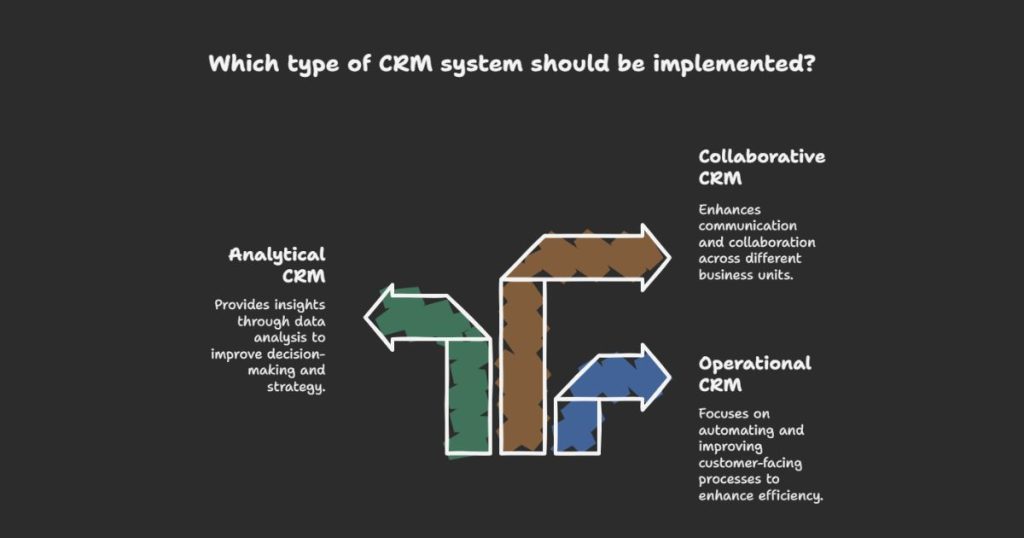
Operational CRM
Operational CRM is a vital tool for businesses aiming to streamline their processes. It assists in managing customer interactions effectively. This type of CRM focuses on improving daily operations.
Features Of Operational CRM
Operational CRM comes with several key features:
- Contact Management: Organize and track customer information.
- Sales Automation: Automate sales tasks and workflows.
- Customer Support: Manage and resolve customer issues quickly.
- Marketing Automation: Run targeted marketing campaigns.
- Lead Management: Capture and nurture leads seamlessly.
Benefits For Businesses
Businesses can gain several benefits from using Operational CRM:
- Enhanced Efficiency: Streamline processes and save time.
- Improved Customer Service: Respond to queries faster.
- Better Sales Management: Track sales progress easily.
- Effective Marketing: Reach the right audience.
- Informed Decisions: Access accurate data for better decisions.
Operational CRM helps businesses grow by improving their daily functions.
Analytical CRM
When diving into the world of Customer Relationship Management (CRM), you’ll find there are several types to explore. Today, let’s talk about Analytical CRM. This type of CRM focuses on analyzing customer data to enhance and streamline business decisions. Think of it as a tool that helps you understand your customers better and make smarter moves.
Key Components
Analytical CRM is built on a few key components that make it a powerful ally for any business. Let’s break them down:
- Data Warehousing: This is where all your customer data is stored. It’s like a massive library of information that you can tap into whenever needed.
- Data Mining: This involves digging through your data to find patterns and insights. Imagine being a detective, looking for clues about what your customers want.
- OLAP (Online Analytical Processing): This allows for complex queries and helps you analyze data from multiple perspectives. It’s like having a magnifying glass to look closer at your data.
Data Analysis And Reporting
The heart of Analytical CRM lies in its ability to analyze data and generate reports that offer actionable insights. Here’s how it works:
- Data Collection: Gather data from various customer touchpoints – emails, social media, sales reports, and more.
- Data Integration: Combine this data to get a complete picture of each customer’s journey. It’s like putting together pieces of a puzzle.
- Analysis: Use tools to analyze this integrated data. Look for trends, behaviors, and patterns that can inform your strategy.
- Reporting: Generate reports that are easy to understand. These reports can help you make informed decisions about marketing, sales, and customer service.
Imagine discovering that most of your customers prefer shopping on weekends. With this insight, you can tailor your marketing campaigns to target this specific time, potentially boosting your sales!
Remember, Analytical CRM is not just about collecting data; it’s about making sense of it. It’s like having a crystal ball that helps you predict customer needs and behaviors. So, are you ready to harness the power of your data?
Collaborative CRM
Collaborative CRM is a vital type of Customer Relationship Management. It focuses on improving customer interaction. This CRM type helps businesses share information across departments. It ensures a seamless customer experience.
Functions And Tools
Collaborative CRM offers various functions. It integrates communication channels like email, chat, and social media. This CRM type enhances teamwork across different departments. Sales, marketing, and customer service can share insights easily.
Tools in Collaborative CRM include contact management systems. These tools track customer interactions. They help teams understand customer needs better. Another tool is document management. It stores important files for easy access.
Enhancing Customer Interaction
Collaborative CRM improves customer interaction significantly. It allows real-time sharing of customer data. This means faster response to queries. Customers get accurate information without delays.
It also personalizes communication. Teams can tailor messages based on customer history. This creates a more engaging experience. Customers feel valued and understood.
Strategic CRM
When it comes to managing customer relationships, there are various types of CRM systems that cater to different business needs. One such type is Strategic CRM. This approach is all about building long-term relationships with customers by understanding their needs and preferences. It focuses on aligning the company’s vision with customer satisfaction and loyalty. Let’s dive deeper into the key aspects of Strategic CRM.
Long-term Planning
Strategic CRM involves long-term planning to create and maintain lasting relationships with customers. It’s not just about quick sales; it’s about developing a strong connection over time. Think of it as planting a tree. You nurture it, take care of it, and eventually, it bears fruit.
Here are some key elements involved in long-term planning:
- Understanding customer needs and preferences
- Personalizing communication and offers
- Focusing on customer retention strategies
By focusing on long-term planning, businesses can ensure that they are not just meeting the immediate needs of their customers but also anticipating future needs.
Customer-centric Approach
At the heart of Strategic CRM is a customer-centric approach. This means putting the customer at the center of all business decisions. Imagine walking into a store where the staff knows your name, remembers your preferences, and genuinely cares about your experience. That’s the essence of a customer-centric approach.
Key aspects of a customer-centric approach include:
- Listening to customer feedback
- Personalizing customer interactions
- Offering exceptional customer service
By adopting a customer-centric approach, businesses can build trust and loyalty, leading to repeat business and positive word-of-mouth recommendations.
Strategic CRM is a vital component for any business looking to build strong, lasting relationships with their customers. It requires a shift in focus from immediate sales to long-term customer satisfaction and loyalty. By implementing long-term planning and a customer-centric approach, businesses can create a solid foundation for sustained growth and success.
Sales CRM
Sales CRM systems help businesses manage customer relationships and boost sales. They offer various features to streamline sales processes and enhance customer interactions. Two key features of Sales CRM are Sales Force Automation and Pipeline Management.
Sales Force Automation
Sales Force Automation (SFA) tools minimize manual tasks for sales teams. SFA tools can automate repetitive tasks such as data entry and follow-up emails. This allows sales reps to focus on selling and building relationships. SFA tools can also track customer interactions and analyze sales data. This helps in making informed decisions and improving sales strategies.
Pipeline Management
Pipeline Management helps visualize and manage the sales process. It involves tracking leads from the first contact to closing the deal. A clear view of the sales pipeline helps identify potential bottlenecks. Sales teams can prioritize leads and allocate resources effectively. This ensures a steady flow of opportunities and maximizes conversion rates. Pipeline Management also aids in forecasting sales and setting realistic goals.
Marketing CRM
Marketing CRM helps businesses manage and improve customer relationships. It focuses on understanding and meeting customer needs. This CRM type helps businesses streamline marketing processes and achieve better results.
Campaign Management
Campaign management in marketing CRM involves planning, executing, and analyzing marketing campaigns. It helps businesses target the right audience with tailored messages. By using data, businesses can optimize campaigns for better performance. Tracking and reporting features provide insights for future campaigns. This leads to increased efficiency and better ROI.
Lead Generation
Lead generation is crucial for business growth. Marketing CRM helps identify potential customers and capture their information. It uses various tools to attract leads through different channels. Businesses can then nurture these leads with personalized content. This improves the chances of converting leads into paying customers.
Support CRM
When we talk about CRM (Customer Relationship Management), one crucial type that stands out is Support CRM. This is a system designed to enhance customer service and ensure that every interaction with a customer is smooth and satisfying. Now, let’s dive into the specifics of Support CRM and understand how it can elevate your customer support game.
Customer Support Features
Support CRMs come packed with features that make managing customer queries a breeze. Here’s a quick look:
- Ticketing System: Keeps track of customer issues and assigns them to the right team members.
- Knowledge Base: A repository of FAQs and how-to guides that help customers find solutions on their own.
- Live Chat: Allows real-time interaction with customers for instant support.
- Automated Responses: Quick replies to common questions, reducing response time.
- Customer History: Access to all previous interactions with a customer, ensuring personalized support.
Improving Service Quality
So, how does Support CRM improve service quality? Let’s break it down:
- Efficient Issue Resolution: The ticketing system ensures that no customer query falls through the cracks. Each issue is tracked until resolved.
- Consistent Communication: With all customer information in one place, your team can provide consistent and informed responses.
- Proactive Support: Automated responses and a robust knowledge base empower customers to find answers quickly, reducing their wait time.
- Data-Driven Insights: Support CRM systems offer analytics that help you understand common issues and improve your services.
Imagine this: A customer contacts you about an issue they had with a purchase. With a Support CRM, you can see their entire purchase history, previous support tickets, and any past feedback they’ve given. This context allows you to provide a tailored and efficient response, making the customer feel valued and heard.
In conclusion, investing in a Support CRM can transform your customer service from good to exceptional. It not only helps in managing customer interactions but also in building long-lasting relationships with them. And who doesn’t want happy, loyal customers?
Choosing The Right CRM
Choosing the right CRM can transform your business operations. It helps manage customer relationships efficiently. But with so many options available, how do you pick the right one? This section will guide you through assessing your business needs and evaluating CRM solutions.
Assessing Business Needs
Before selecting a CRM, identify your business requirements. Understand what features you need. Do you need lead management? Or maybe customer support tracking? List down your must-have features. This will narrow down your choices.
Consider your team’s size and capabilities. A small team might need a simple CRM. A larger team may require advanced features. Think about your budget too. Some CRMs come with hefty price tags. Decide what you can afford.
Evaluate your current processes. How do you handle customer interactions now? What works? What doesn’t? These insights will help you choose a CRM that fits your workflow.
Evaluating CRM Solutions
Now that you know your needs, start evaluating CRM solutions. Check out different CRM providers. Look for features that match your requirements. Compare the ease of use. A user-friendly CRM saves time and reduces errors.
Read reviews from other users. They provide honest feedback. Look for recurring issues or praise. This helps you gauge the CRM’s reliability.
Take advantage of free trials or demos. Use them to test the CRM. See if it integrates well with your existing systems. Ensure it scales with your business growth.
Consider customer support from the CRM provider. Good support can solve issues quickly. It can also provide training for your team.
Finally, weigh the costs. Compare the CRM’s value against its price. Make sure it fits within your budget.
Frequently Asked Questions
What Are The 3 Types Of CRM?
The three types of CRM are operational, analytical, and collaborative. Operational CRM focuses on automation of sales, marketing, and customer service. Analytical CRM analyzes customer data for better decision-making. Collaborative CRM enhances communication and collaboration between the business and its customers.
What Is The Most Popular CRM?
The most popular CRM is Salesforce. It offers comprehensive features, customization, and scalability for businesses of all sizes.
What Are The 3 Common CRM Models?
The three common CRM models are Operational CRM, Analytical CRM, and Collaborative CRM. Operational CRM streamlines business processes. Analytical CRM focuses on data analysis. Collaborative CRM enhances communication.
What The The 4 Main Types Of CRM Software And What Are Their Uses?
The four main types of CRM software are Operational, Analytical, Collaborative, and Strategic. Operational CRM streamlines daily business operations. Analytical CRM helps in data analysis. Collaborative CRM focuses on customer interaction. Strategic CRM aims at long-term customer relationships.
Conclusion
Choosing the right CRM type boosts your business efficiency. Each CRM type serves specific needs. Understand your goals. Select a CRM that aligns with those goals. Remember, the right CRM helps manage customer relationships better. Explore your options. Make an informed choice.
Your business growth depends on it. Happy CRM hunting!