
Customer Relationship Management (CRM) and project management are essential tools for businesses. They help streamline processes and improve efficiency.
But what exactly are they, and how do they work together? In today’s fast-paced business world, managing customer interactions and overseeing projects can be challenging. CRM systems help businesses track and manage customer data, while project management tools ensure projects are completed on time and within budget.
Combining these two systems can lead to improved collaboration, better decision-making, and increased productivity. Understanding how CRM and project management work together can give your business a competitive edge. This blog post will explore the benefits of integrating CRM with project management, and how it can enhance your business operations.
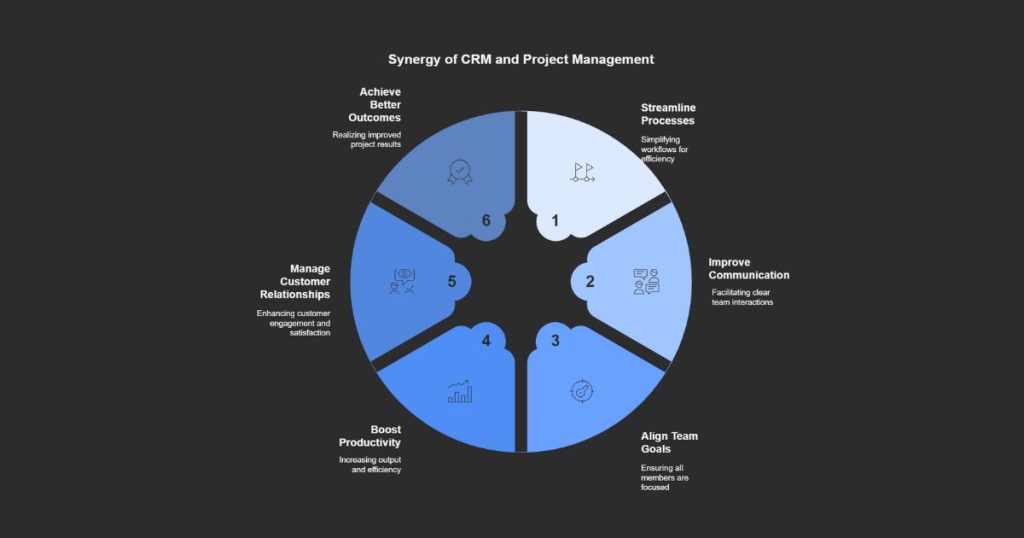
Introduction To CRM And Project Management
In today’s fast-paced business world, managing customer relationships and projects efficiently is crucial. Integrating Customer Relationship Management (CRM) with Project Management tools can be a game-changer. It helps streamline processes, improve communication, and boost productivity. But what exactly is CRM and Project Management, and why is their integration so important?
Importance Of Integration
Combining CRM and Project Management systems offers numerous advantages. Imagine a scenario where your sales team closes a deal, but the information doesn’t seamlessly transfer to the project team. This gap can lead to miscommunication and delays. By integrating these systems, you ensure that everyone has access to the same data, enabling smoother transitions and better coordination.
Moreover, integration helps in tracking customer interactions and project milestones in one place. This unified approach not only saves time but also enhances transparency. It ensures that all team members are on the same page, reducing the chances of errors and missed deadlines.
Key Benefits
There are several key benefits to integrating CRM and Project Management systems:
- Improved Efficiency: With an integrated system, data silos are eliminated, and information flows seamlessly between teams. This leads to faster decision-making and more efficient processes.
- Enhanced Customer Experience: When your team has a complete view of customer interactions and project progress, they can provide better support and build stronger relationships.
- Better Resource Management: Integration allows for better tracking of resources, ensuring that projects are staffed appropriately and that workloads are balanced.
- Increased Accountability: With integrated systems, it’s easier to assign tasks, set deadlines, and monitor progress. This increases accountability and ensures that projects stay on track.
Let’s not forget the convenience of having all your tools in one place. No more switching between different platforms or struggling with data discrepancies. An integrated CRM and Project Management system simplifies your workflow and helps you stay organized.
So, whether you’re a small business or a large enterprise, the integration of CRM and Project Management tools can significantly enhance your operations. It’s like having the best of both worlds, working together to achieve your business goals.
Core Features Of CRM Systems
In today’s fast-paced business world, CRM systems have become essential tools for managing customer relationships and streamlining operations. Understanding the core features of CRM systems can help you make an informed decision when selecting the right software for your organization. Below, we delve into two critical components of CRM systems: Customer Data Management and Sales and Marketing Automation. These features not only enhance productivity but also improve customer satisfaction, driving growth and success.
Customer Data Management
Effective customer data management is the backbone of any CRM system. Imagine trying to keep track of hundreds or even thousands of customers using spreadsheets or sticky notes – it’s a nightmare, right? A robust CRM system centralizes all customer information in one place, making it easily accessible and manageable. Here are a few key aspects:
- Contact Information: Store essential details like names, phone numbers, and email addresses.
- Interaction History: Keep track of every interaction you’ve had with your customers, from emails to phone calls.
- Customer Preferences: Understand what your customers like and tailor your services accordingly.
By organizing and managing this data efficiently, you can personalize your communication, anticipate customer needs, and build stronger relationships. Think of it as having a superpower that allows you to know your customers inside and out!
Sales And Marketing Automation
Sales and marketing automation is another crucial feature of CRM systems. It’s like having a personal assistant who never sleeps. These tools automate repetitive tasks, saving you time and ensuring consistency in your efforts. Here’s what you can expect:
- Email Campaigns: Automatically send personalized emails to your customers based on their preferences and behavior.
- Lead Scoring: Identify and prioritize potential customers who are most likely to convert.
- Sales Pipeline Management: Keep track of your sales process from start to finish, ensuring no opportunity slips through the cracks.
With sales and marketing automation, you can focus on what you do best – building relationships and closing deals. It’s like having a trusty sidekick who handles the grunt work, allowing you to shine in front of your customers.
In conclusion, understanding the core features of CRM systems is key to leveraging their full potential. Customer Data Management and Sales and Marketing Automation are just the tip of the iceberg, offering powerful tools to enhance efficiency and drive business growth. So, if you’re ready to take your customer relationships to the next level, investing in a CRM system might just be the game-changer you need.
Core Features Of Project Management Tools
Project management tools have become essential for streamlining workflows. They ensure tasks are completed on time and within budget. These tools offer a range of features that enhance productivity and collaboration. Let’s explore the core features of project management tools.
Task Management
Task management is a vital feature. It allows teams to break down projects into smaller tasks. Each task can have its own deadlines, priorities, and assignments. This helps in organizing work efficiently.
Task lists and boards help visualize progress. Team members can see what needs to be done and by whom. This reduces confusion and increases accountability. With task management, teams stay focused and on track.
Resource Allocation
Resource allocation ensures the right resources are available at the right time. This includes assigning team members, equipment, and budget to tasks. Proper allocation prevents bottlenecks and overloading team members.
Resource allocation tools provide a clear view of resource availability. Managers can adjust assignments based on workload and deadlines. This ensures balanced workloads and efficient use of resources. In turn, projects run smoothly and efficiently.
Synergy Between CRM And Project Management
CRM and project management often operate separately. CRM focuses on customer relationships. Project management handles tasks and timelines. But combining them can create powerful synergy. It streamlines workflows and enhances communication.
Streamlined Workflows
CRM integrated with project management tools can streamline workflows. Teams access customer data and project details in one place. This reduces the time spent searching for information. It also ensures that everyone is on the same page.
Workflows become more efficient. Tasks can be assigned based on customer needs. Deadlines align with client expectations. This improves overall productivity and satisfaction.
Enhanced Communication
Effective communication is vital in any project. With CRM and project management integration, teams communicate better. They share updates and feedback easily. This helps avoid misunderstandings and delays.
Customers also benefit. They receive timely updates about project progress. Questions and concerns are addressed faster. Clear communication builds trust and stronger relationships.
Boosting Efficiency With CRM And Project Management
Boosting efficiency with CRM and project management tools can transform business operations. These tools streamline tasks, manage customer interactions, and help teams work together better. This section explores how automated processes and real-time tracking enhance efficiency.
Automated Processes
Automation reduces the time spent on repetitive tasks. CRM systems can automate customer data entry, follow-up emails, and task assignments. This frees up time for more critical activities. In project management, automation helps with scheduling, reminders, and status updates. Teams can focus on what matters most, improving overall productivity.
Real-time Tracking
Real-time tracking provides immediate insights into project progress. CRM tools offer up-to-date information on customer interactions and sales pipelines. Project management tools show the current status of tasks and milestones. This transparency helps teams make quick, informed decisions. It also ensures everyone stays on the same page. Efficiency improves as potential issues are identified and addressed promptly.
Improving Collaboration With Integrated Systems
In today’s fast-paced business world, collaboration is crucial for success. But, how do you ensure that every team member is on the same page? Enter integrated systems for CRM and project management. These tools not only streamline your processes but also significantly enhance team collaboration. Let’s dive into how they work.
Centralized Information
One of the biggest headaches in any team is scattered information. Have you ever wasted hours searching for a document or email? Integrated systems solve this by centralizing all your data.
- All client information in one place
- Access project details easily
- No more lost files or emails
Imagine having a single dashboard where you can see everything. From client interactions to project updates, it’s all there. This not only saves time but also ensures that everyone has access to the most up-to-date information. No more miscommunications or outdated data!
Collaborative Platforms
Remember the last time you tried to coordinate with your team using just emails and phone calls? It can be a nightmare. Integrated systems offer collaborative platforms that make working together seamless.
- Real-time messaging and chat
- Task assignment and tracking
- Shared calendars and schedules
These platforms bring all your communication into one place. You can chat with your team in real-time, assign tasks, and even share calendars. It’s like having a virtual office where everyone can collaborate effortlessly.
| Benefit | Impact |
|---|---|
| Real-time updates | Immediate access to the latest information |
| Task management | Clear responsibilities and deadlines |
| Improved communication | Fewer misunderstandings and faster problem resolution |
With these tools, there’s no more “I didn’t get the memo” moments. Everyone stays informed and aligned, making your team more productive and efficient.
So, if you’re still relying on old-school methods, it’s time to upgrade. Integrated CRM and project management systems are the key to better collaboration and success. Ready to give it a try?
Choosing The Right Tools
Choosing the right tools for CRM and project management can be challenging. The right tools streamline processes, improve communication, and boost productivity. Here, we’ll explore key considerations and popular solutions to help you make an informed decision.
Key Considerations
First, identify your business needs. What features are essential for your team? Consider ease of use. Tools should be user-friendly and require minimal training. Check for integration capabilities. Can the tool work with your existing software? Scalability is crucial. The tool should grow with your business. Lastly, consider the cost. Ensure it fits your budget without compromising on features.
Popular Solutions
Several tools are popular for CRM and project management. Salesforce is a top CRM choice, known for its robust features. It integrates well with many applications. Asana excels in project management. It offers a clean interface and easy task tracking. Trello is another favorite, especially for small teams. Its visual boards make project tracking simple. Zoho CRM is a budget-friendly option, offering many features at a lower cost. Monday.com is also worth mentioning. It’s versatile and suits various project needs.
Case Studies And Success Stories
Exploring case studies and success stories in CRM and project management reveals the tangible benefits organizations have experienced. Real-world examples offer insights and lessons that can guide your own implementation. Let’s dive into specific industry examples and measurable outcomes that showcase the power of effective CRM and project management.
Industry Examples
In the healthcare industry, a mid-sized clinic implemented a CRM system to manage patient interactions. With the new system, patient follow-ups and appointment scheduling became more streamlined. The clinic saw a 20% increase in patient retention within six months.
In the construction sector, a project management tool helped a company coordinate multiple projects simultaneously. The tool provided real-time updates, reducing project delays by 30%. Teams could track progress and allocate resources more effectively.
Measurable Outcomes
Companies often see significant improvements in efficiency and productivity. For instance, a marketing agency using a CRM system noted a 25% boost in lead conversions. The agency could better segment its audience and tailor communication strategies.
Another example comes from the IT sector, where a project management tool reduced project completion times by 15%. Teams could identify bottlenecks quickly and adjust plans accordingly. This led to faster delivery times and happier clients.
These case studies highlight the concrete benefits of adopting CRM and project management tools. They not only improve operational efficiency but also enhance customer satisfaction and project success rates.
Future Trends In CRM And Project Management
The world of CRM and Project Management is continuously evolving, driven by technological advancements and changing business needs. As we look into the future, several trends are poised to redefine how companies manage customer relationships and projects. In this blog post, we’ll delve into two significant trends: AI and Machine Learning, and Mobile Integration.
Ai And Machine Learning
Artificial Intelligence (AI) and Machine Learning (ML) are not just buzzwords; they are transforming CRM and Project Management in profound ways. Imagine having a system that predicts customer needs before they even arise or automates repetitive tasks so your team can focus on creative work. That’s the power of AI and ML.
- Predictive Analytics: AI can analyze vast amounts of data to forecast trends and behaviors. This helps in making informed decisions and personalized recommendations.
- Automation: Machine Learning algorithms can automate routine tasks such as data entry, follow-up emails, and scheduling, thereby saving time and reducing human errors.
- Enhanced Customer Insights: AI can sift through customer data to provide deeper insights into preferences and pain points, enabling more targeted marketing strategies.
Picture this: You’re at a business meeting, and your CRM system alerts you about a client’s recent activity and preferences. With AI, this scenario becomes a reality. The future of CRM and Project Management is all about efficiency and personalization, making AI and ML indispensable tools.
Mobile Integration
In today’s fast-paced world, mobile integration is not just a luxury; it’s a necessity. As businesses become more mobile, CRM and Project Management tools must adapt to keep up with the on-the-go lifestyle.
- Accessibility: Mobile integration ensures that you can access your CRM and project management tools from anywhere, anytime. No more being tied to your desk.
- Real-time Updates: Mobile apps provide real-time updates, allowing team members to stay in sync regardless of their location.
- Enhanced Collaboration: Mobile platforms foster better collaboration among team members by making communication and document sharing seamless.
Imagine being able to update your project status while sipping coffee at a café or checking customer data during your commute. Mobile integration makes all this possible. It ensures that your business operations are as dynamic and flexible as the modern workforce demands.
In conclusion, the future of CRM and Project Management is geared towards greater efficiency, personalization, and mobility. Embracing AI, Machine Learning, and Mobile Integration will not only keep your business ahead of the curve but also make daily operations smoother and more intuitive. Are you ready to ride the wave of innovation?
Frequently Asked Questions
What Is CRM In Project Management?
CRM in project management stands for Customer Relationship Management. It helps manage interactions with clients, track project progress, and improve customer satisfaction. CRM tools streamline communication, organize data, and enhance collaboration, ensuring successful project delivery.
What Are The 4 Types Of CRM?
The 4 types of CRM are operational, analytical, collaborative, and strategic. Operational CRM focuses on automation. Analytical CRM deals with data analysis. Collaborative CRM improves communication. Strategic CRM centers on long-term customer relationships.
What Are The 4 Pillars Of CRM?
The 4 pillars of CRM are customer satisfaction, employee engagement, data management, and technology integration. These elements enhance relationships and drive business success.
What Are The Five Phases Of CRM Projects?
The five phases of CRM projects are planning, analysis, design, implementation, and evaluation. Each phase ensures successful CRM integration.
Conclusion
CRM and project management together boost productivity and team collaboration. These tools streamline tasks and enhance customer interactions. Simplifying workflows saves time and reduces errors. Teams work better, achieving goals faster. Adopting these systems leads to improved efficiency and success.
Consider integrating CRM with project management to transform your operations. Your team and customers will see the benefits.