
Return on Invested Capital (ROIC) is a key financial metric. It helps businesses evaluate their efficiency in generating profits from invested capital.
Understanding the ROIC formula is crucial for investors and business owners. It provides insight into how well a company uses its capital to generate returns. This metric can guide strategic decisions, improve profitability, and attract investors. In this blog post, we will break down the ROIC formula.
We will explain its components and show you how to calculate it. By the end, you will have a clear understanding of ROIC and its importance. Let’s dive in and explore the basics of this essential financial tool.
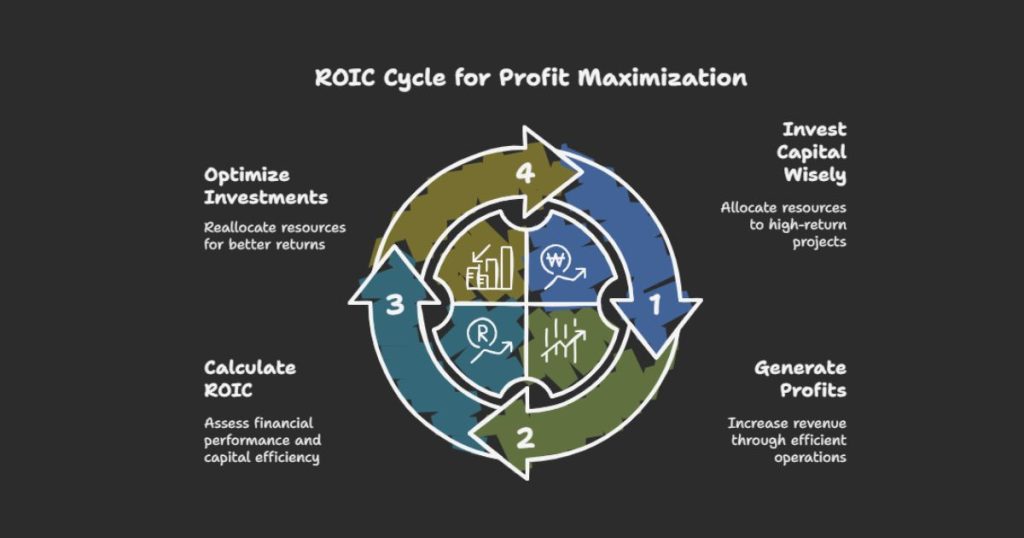
Introduction To ROIC
Return on Invested Capital (ROIC) is a critical financial metric for businesses. It helps measure the efficiency of a company’s investment decisions. Understanding ROIC can provide valuable insights into a company’s profitability and growth potential.
Importance In Business
ROIC is essential for both investors and business managers. For investors, it shows how well a company is using its capital to generate profits. A high ROIC indicates that a company is efficiently turning investment into net income.
For business managers, ROIC can guide strategic decisions. It helps identify which projects or initiatives are yielding the best returns. This can lead to more informed and effective allocation of resources.
Imagine you have two investment opportunities. One has an ROIC of 20%, while the other has 10%. Where would you put your money? The answer is clear. Focusing on ROIC helps in making such decisions.
Basic Concept
The basic concept of ROIC is simple. It’s calculated by dividing the net operating profit after taxes (NOPAT) by the invested capital. This ratio shows how much profit a company is making per dollar of invested capital.
Think of invested capital as the total amount of money invested in the business. This includes both debt and equity. NOPAT is the profit a company makes from its operations, excluding tax effects and non-operating items.
Here’s a quick example. If a company has a NOPAT of $1 million and an invested capital of $5 million, the ROIC would be 20%. This means the company is generating 20 cents of profit for every dollar invested.
ROIC can be a powerful tool in your financial toolkit. It helps you understand the effectiveness of your investments. Are you curious to see how your company stacks up? Start calculating your ROIC today and gain a clearer picture of your financial health.
Calculating Roic
Calculating Return on Invested Capital (ROIC) is essential for understanding the efficiency and profitability of your investments. This metric helps you determine how well a company is using its capital to generate returns. Let’s break down the formula to make it easy to calculate and understand.
Formula Breakdown
To calculate ROIC, you need to use the following formula:
ROIC = (Net Operating Profit After Taxes – Dividends) / (Invested Capital)
It might look complex at first glance, but breaking it down simplifies the process. Net Operating Profit After Taxes (NOPAT) is your starting point. Subtract any dividends paid out to get the true profit available for reinvestment.
Next, you need the Invested Capital, which includes all the funds invested in the business, both debt and equity. This gives you a clear picture of how well your investment is performing.
Key Components
Understanding NOPAT is crucial. This is the profit a company makes after operating expenses and taxes, but before interest and dividends. Think of it as the money available to grow the business.
Dividends are the payments made to shareholders. Subtracting dividends from NOPAT shows you the profit actually reinvested into the business.
Invested Capital includes both equity (funds from shareholders) and debt (loans). It’s the total money invested in the company’s operations.
Imagine you invested in a small tech startup. You want to know if your investment is yielding good returns. By calculating ROIC, you can see if the startup is using your money wisely.
For instance, if the startup has high NOPAT but pays out large dividends, the ROIC might be lower than expected. This insight helps you decide if reinvesting or looking for other opportunities is better.
Consider asking yourself: Are my investments generating the returns I expect? Is the company using its capital efficiently?
By breaking down the ROIC formula and understanding its components, you gain actionable insights. This knowledge empowers you to make informed investment decisions.
Interpreting Roic Results
Return on Invested Capital (ROIC) is a crucial metric for evaluating the efficiency of a company in generating returns from its capital. Understanding how to interpret these results can help you make better investment decisions and gauge a company’s financial health.
High Vs. Low Roic
A high ROIC indicates a company is effectively using its capital to generate profits. This often signifies strong management and a competitive advantage in the market.
Conversely, a low ROIC might suggest inefficiencies or poor management decisions. It could mean the company is struggling to convert invested capital into profitable returns.
Consider your investment strategy. Are you looking for high-growth companies with strong ROIC or undervalued companies with potential for improvement?
Industry Comparisons
ROIC can vary significantly across different industries. Comparing companies within the same sector can provide more accurate insights.
For example, tech companies often have higher ROIC due to lower capital requirements and high profit margins. Manufacturing companies might show lower ROIC, reflecting higher capital investments.
Use industry benchmarks to understand what constitutes a good ROIC within a specific sector. This helps in making informed decisions.
Have you considered how industry norms impact your investment choices? Comparing ROIC across sectors can highlight which industries are more capital efficient.
Interpreting ROIC results requires context. Look beyond the numbers and understand the factors influencing them. This approach will empower you to make smarter investment decisions and achieve better financial outcomes.
Improving Roic
Boosting Return on Invested Capital (ROIC) involves using the formula: ROIC = Net Operating Profit After Tax / Invested Capital. This helps measure how efficiently a company uses its capital to generate profits.
Improving your Return on Invested Capital (ROIC) can greatly enhance your business’s profitability and efficiency. By focusing on key areas like cost management and revenue growth, you can make significant strides in increasing your ROIC. Let’s dive into some actionable tips on how to improve these areas.
Cost Management
Effective cost management is critical for boosting your ROIC. Start by identifying areas where you can reduce unnecessary expenses.
Consider conducting a regular audit of your operational costs. This can help you spot inefficiencies and areas where you might be overspending.
Automating routine tasks is another way to cut costs. Implementing software solutions for billing, customer service, or inventory management can save both time and money.
Negotiate better terms with your suppliers. Building strong relationships with your suppliers can lead to better pricing and discounts.
Every dollar you save goes directly towards improving your ROIC. Think about which costs are essential and which can be trimmed without affecting quality.
Revenue Growth
Growing your revenue is another direct way to improve your ROIC. Focus on strategies that increase your sales and expand your customer base.
Enhance your marketing efforts. Use social media, SEO, and email campaigns to reach a larger audience.
Diversify your product or service offerings. Adding new products can attract different customer segments and increase your sales.
Improve customer retention. Happy customers are more likely to make repeat purchases and refer others to your business. Offer loyalty programs or excellent customer service to keep them coming back.
Ask yourself: Are you fully utilizing your existing assets to generate revenue? Sometimes, the answer lies in making better use of what you already have.
By managing costs effectively and focusing on revenue growth, you can significantly enhance your ROIC. What strategies will you implement today to start seeing better returns?
Common Mistakes In Roic Calculation
Calculating the Return on Invested Capital (ROIC) can be tricky. Many businesses make common errors. These mistakes can lead to incorrect financial decisions. Let’s explore some frequent errors in ROIC calculation.
Excluding Relevant Costs
One common mistake is excluding relevant costs. Some businesses forget to add all costs. These include expenses related to new projects. Leaving out these costs can inflate the ROIC.
For example, not including research and development costs. This can give a false sense of profitability. Always include all relevant costs in your calculations.
Misinterpreting Data
Another frequent error is misinterpreting data. Incorrect data can lead to wrong calculations. This often happens with outdated or incomplete data.
For instance, using last year’s data instead of the current year’s data. This can skew the results. Ensure all data is current and accurate.
Double-check your data sources. This helps in getting a true picture of ROIC.
Case Studies
Understanding the Return on Invested Capital (ROIC) formula is crucial for evaluating a company’s efficiency in generating profits from its investments. Real-world case studies offer insightful lessons on both successful and failed implementations of ROIC strategies. By examining these examples, you can better grasp how to apply ROIC effectively in your own financial analysis.
Successful Implementations
Consider the case of Apple. Apple has consistently demonstrated high ROIC, driven by its innovative products and efficient use of capital. By focusing on high-margin products like the iPhone, Apple maximizes returns on every dollar invested. You can learn from Apple’s strategy by prioritizing high-value projects that offer significant returns.
Another example is Starbucks. Starbucks has achieved impressive ROIC by expanding strategically and maintaining tight control over operating expenses. They open new stores in high-traffic areas and streamline operations to boost profitability. This approach shows the importance of strategic growth and operational efficiency in improving ROIC.
Learning From Failures
Not all companies succeed in applying the ROIC formula effectively. Take the case of Sears. Sears struggled with low ROIC due to inefficient capital allocation and poor strategic decisions. Investing in underperforming assets and failing to innovate led to declining returns. This teaches you the importance of strategic foresight and continuous innovation.
Another cautionary tale is Kodak. Kodak failed to adapt to the digital revolution, sticking to its film-based business model for too long. This resulted in poor ROIC and eventual bankruptcy. The lesson here is clear: stay adaptable and be willing to pivot your strategy to stay relevant.
What steps will you take to ensure your investments generate high returns? Reflecting on both successes and failures can guide you in making informed, strategic decisions. Remember, the key to a strong ROIC lies in efficient capital allocation and continuous innovation.
Tools And Resources
Discover essential tools and resources for calculating the Return on Invested Capital (ROIC) formula. Streamline your financial analysis process and make informed investment decisions.
To effectively calculate and enhance your Return on Invested Capital (ROIC), you need the right tools and resources. These tools not only simplify the process but also provide valuable insights that can help optimize your investments. Let’s dive into some practical solutions and expert advice that can aid in calculating and improving your ROIC.
Software Solutions
Utilizing software solutions is one of the most efficient ways to manage your ROIC. Many platforms are designed to automate calculations, track metrics, and provide real-time data analysis.
For instance, financial management tools like QuickBooks and Xero offer built-in features for tracking investments and returns. These tools are user-friendly and integrate seamlessly with other financial data sources.
You might also consider specialized investment software like Morningstar Direct or FactSet. These programs offer advanced analytics and reporting capabilities, making it easier to analyze trends and make informed decisions.
Having the right software can save you time and reduce errors. It allows you to focus more on strategic planning rather than manual calculations.
Expert Consultations
Sometimes, the best tool is a human one. Expert consultations can provide personalized advice tailored to your specific financial situation.
Financial advisors and investment consultants have the experience and knowledge to offer insights that software alone cannot provide. They can help you understand the nuances of your investment portfolio and suggest strategies to improve your ROIC.
Engaging with experts can also help you stay updated on market trends and regulatory changes. This ensures that your investment strategies remain relevant and effective.
Have you ever considered how a fresh perspective could enhance your investment strategy? Consulting with an expert might be the missing piece in optimizing your ROIC.
In conclusion, leveraging both software solutions and expert consultations can significantly enhance your ability to calculate and improve your ROIC. By combining technology with human expertise, you can make more informed decisions and maximize your returns.
Frequently Asked Questions
How Do You Calculate Return On Invested Capital?
To calculate return on invested capital, divide net operating profit after taxes (NOPAT) by invested capital. This formula is: ROIC = NOPAT / Invested Capital.
What Is A Good Roic Ratio?
A good ROIC ratio is typically above 10%. This indicates efficient use of capital to generate profits.
What Is The Difference Between Roi And Return On Invested Capital?
ROI measures profitability relative to total investment, while ROIC assesses profitability relative to capital invested in the business.
How Do You Calculate Roi On Capital Investment?
Calculate ROI on capital investment by dividing net profit by the initial cost, then multiply by 100. This gives the ROI percentage.
Conclusion
Understanding the Return on Invested Capital formula is crucial. It helps measure how effectively a company uses its capital. Investors can gauge profitability and operational efficiency. Use this formula to make informed investment decisions. Keep track of your returns and compare them with industry standards.
This will help you identify growth opportunities. Remember, a higher ROIC indicates better performance. Regularly calculate and analyze ROIC to stay ahead. It’s a valuable tool in your financial toolkit. Make it a habit to review your investments’ ROIC. Stay informed and invest wisely.