
Understanding the difference between website hosting and a domain is crucial. They are both essential parts of having a website, but serve different purposes.
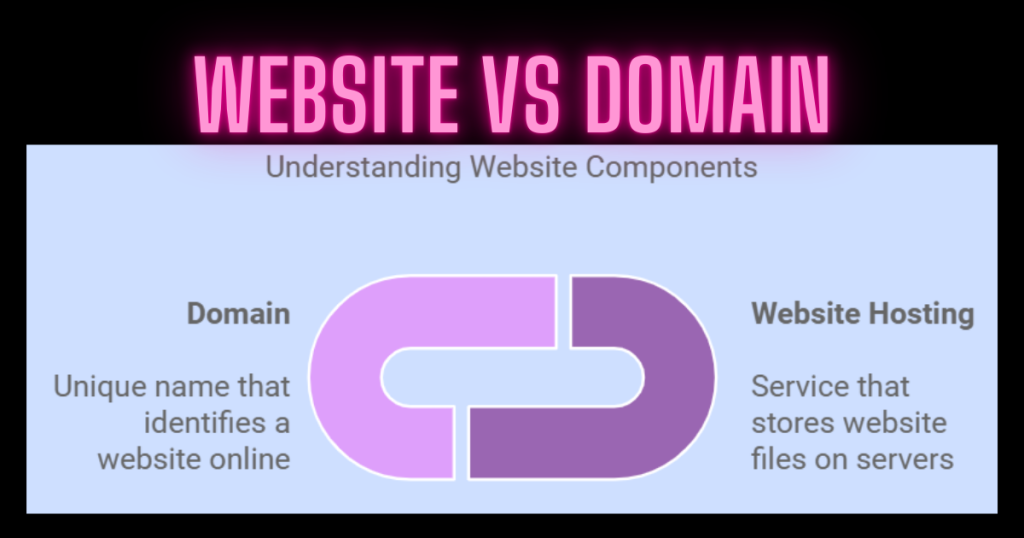
Website hosting is like renting space on the internet. It’s where your website lives. A domain, on the other hand, is the address people use to find your site. Knowing the difference helps you make better decisions for your website.
You need both to get your site up and running. This guide will clarify the roles of website hosting and domains. Understanding these basics will help you build and manage your website more effectively. Let’s dive in and explore what each one does and why they are important.
What Is Website Hosting?
Website hosting is a service that enables individuals and organizations to make their websites accessible via the Internet. When you create a website, it consists of files, images, and code. These need to be stored somewhere for people to access them online. That’s where website hosting comes in.
Definition
Website hosting is essentially renting space on a server where all your website files are stored. These servers are maintained by hosting providers. They ensure your site is always available and loading quickly. Without hosting, your website would not be accessible to anyone on the Internet.
Types Of Hosting
There are several types of website hosting to consider. Each type has its own pros and cons. Here are the main types:
- Shared Hosting: Multiple websites share the same server resources. It is affordable but can be slower if one site uses too many resources.
- VPS Hosting: Virtual Private Server hosting. Provides more control and resources than shared hosting. It’s a good middle ground between shared and dedicated hosting.
- Dedicated Hosting: You get an entire server to yourself. This offers maximum performance and control but at a higher cost.
- Cloud Hosting: Uses multiple servers to balance the load and maximize uptime. It is scalable and can handle high traffic levels.
Understanding these types helps you choose the right hosting for your needs. Consider your website’s size, traffic, and budget when making your decision.
What Is A Domain?
Understanding domains is crucial for your website. A domain is your website’s address. It helps users find you online. Without a domain, users cannot access your site.
Definition
A domain is a unique name. It identifies your website on the internet. Think of it as your digital address. Just like a street address for a house. It directs visitors to your web location.
Domains come in various extensions. Common ones are .com, .net, and .org. Each serves a different purpose. Choose one that suits your business.
Role Of Domain Names
Domain names make websites easy to remember. Instead of an IP address, users type a simple name. This makes navigation easier and more user-friendly.
Domains also build credibility. A professional domain name boosts trust. Users feel secure visiting your site. It shows you are serious about your online presence.
Domains aid in branding. A unique domain reflects your brand. It helps users associate your name with your services. This is key to building a strong online identity.
Key Differences
Understanding the key differences between website hosting and a domain is crucial for building a successful online presence. Both are essential, but they serve different purposes. Let’s explore their functionalities and costs involved.
Functionality
Website hosting refers to the service that stores your website files. These files include HTML, CSS, images, and more. Hosting providers make your website accessible on the internet. In contrast, a domain is the address people use to find your website. It’s the URL typed in the browser to reach your site.
Think of website hosting as renting space in a building. The domain is the street address that guides visitors to that space. Without a domain, people can’t find your website. Without hosting, your website won’t have a place to live.
Costs Involved
The costs involved in website hosting and domain registration differ. Hosting services often have various plans. These plans depend on storage, bandwidth, and additional features. You can expect to pay monthly or annually for hosting services. Common hosting plans include:
- Shared Hosting: $2.99 – $8.99 per month
- VPS Hosting: $20 – $100 per month
- Dedicated Hosting: $80 – $300 per month
Domains are usually cheaper. Registering a domain typically costs $10 – $15 per year. Some hosting providers offer free domain registration for the first year. Renewal prices may vary, so check the fine print.
Here’s a simple table to summarize the costs:
| Service | Cost Range |
|---|---|
| Shared Hosting | $2.99 – $8.99 per month |
| VPS Hosting | $20 – $100 per month |
| Dedicated Hosting | $80 – $300 per month |
| Domain Registration | $10 – $15 per year |
In essence, website hosting involves a recurring expense, while domain registration is a smaller annual fee. Understanding these costs helps in planning your budget effectively.
Choosing A Hosting Service
Choosing a hosting service is a critical step in building a website. Your hosting service will affect your site’s speed, security, and reliability. Let’s explore the key factors to consider and some popular hosting providers.
Factors To Consider
When selecting a hosting service, consider these factors:
- Uptime: Ensure the provider guarantees at least 99.9% uptime.
- Speed: Fast loading times are crucial for user experience.
- Support: Look for 24/7 customer support with multiple contact options.
- Security: Check for features like SSL certificates and backups.
- Scalability: Choose a provider that can grow with your business.
- Pricing: Compare costs and what you get for the price.
Popular Hosting Providers
Here are some popular hosting providers to consider:
| Provider | Key Features | Starting Price |
|---|---|---|
| Bluehost | Free domain, 24/7 support, 99.9% uptime | $2.95/month |
| SiteGround | Daily backups, free CDN, managed WordPress | $3.99/month |
| HostGator | Unmetered bandwidth, free SSL, 45-day money-back guarantee | $2.75/month |
| InMotion Hosting | Free domain, free SSL, 90-day money-back guarantee | $2.49/month |
Each provider offers unique benefits. Choose one that fits your needs and budget.
Selecting A Domain Name
Choosing the right domain name is crucial for your website’s success. A well-selected domain name improves visibility and enhances your brand. This section will guide you through selecting a domain name, ensuring it aligns with your business goals.
Tips For Choosing
- Keep it short and simple: Short domain names are easier to remember and type.
- Use keywords: Include relevant keywords that reflect your business or niche.
- Avoid numbers and hyphens: These can be confusing and hard to remember.
- Make it unique: Ensure your domain name stands out from competitors.
- Consider the extension: Common extensions like .com are usually preferred.
Domain Registration Process
- Search for availability: Use a domain registrar to check if your desired name is available.
- Select a registrar: Choose a reliable domain registrar to register your domain name.
- Register the domain: Complete the registration form with your details.
- Choose the registration period: Decide how long you want to register the domain, typically from 1 to 10 years.
- Complete the payment: Pay the registration fee to secure your domain name.
Once registered, you can manage your domain name through the registrar’s platform.
Combining Hosting And Domain
Combining website hosting and domain registration can simplify managing your online presence. By opting for integrated services, you streamline setup and ensure seamless functionality. Let’s explore the advantages of bundling hosting and domain services.
Integrated Services
Many providers offer combined hosting and domain services. This simplifies the process, especially for beginners. You get a one-stop solution for your website’s needs.
Integrated services often include:
- Domain registration
- Web hosting
- SSL certificates
- Email hosting
Having these services under one roof means fewer headaches. You don’t have to juggle multiple accounts. Everything is managed through a single dashboard.
Benefits Of Bundling
Bundling hosting and domain services offers several benefits:
| Benefit | Explanation |
|---|---|
| Cost Savings | Many providers offer discounts for bundled services, saving you money. |
| Simplified Management | Manage your hosting and domain in one place, saving time and effort. |
| Better Support | Get support from a single provider for both services, ensuring consistency. |
| Seamless Integration | Integrated services ensure compatibility, reducing technical issues. |
Bundling also means you deal with one billing cycle. This makes budgeting easier. Plus, renewals are straightforward, reducing the risk of service lapses.
Common Issues
Understanding the common issues related to website hosting and domains can save time and frustration. These issues often confuse beginners. Let’s explore some of these common problems.
Troubleshooting Hosting Problems
Web hosting issues can disrupt your site’s performance. Slow loading times are a frequent complaint. This can stem from inadequate server resources. Using shared hosting? Your site might compete for resources. This slows down the site.
Another issue is downtime. Downtime happens when your website becomes unavailable. This can be due to server maintenance. Or unexpected server crashes. It’s vital to monitor your site’s uptime. Choose a reliable hosting provider.
Security is also a concern. Websites are targets for hackers. Insecure hosting can lead to data breaches. Make sure your hosting provider offers robust security measures. Regular backups are essential too.
Domain-related Challenges
Domain issues can also cause headaches. One common problem is domain expiration. Forget to renew your domain? Your website goes offline. Set up auto-renewal to avoid this issue. Always keep your contact information up to date.
DNS configuration errors are another common issue. Incorrect DNS settings can make your site inaccessible. Check your DNS settings carefully. Ensure they point to the correct server.
Transferring domains can be tricky too. It involves several steps. Any mistake can lead to downtime. Follow the transfer instructions closely. Confirm the transfer with both registrars.
Protecting your domain privacy is also crucial. Public WHOIS information can expose your personal details. Consider using domain privacy protection services. This keeps your information safe.
Frequently Asked Questions
What Is The Difference Between Hosting And Domain?
Website hosting is where your website files are stored. A domain is the address users type to access your website.
Can I Have Hosting Without A Domain?
Yes, you can have hosting without a domain. However, a domain is needed for users to find your site.
Do I Need Both Hosting And A Domain?
Yes, both are needed. Hosting stores your website files, and the domain is the address to access them.
How Do I Choose A Domain Name?
Choose a domain name that is short, memorable, and relevant to your content. Avoid numbers and hyphens.
Conclusion
Choosing between website hosting and a domain name is crucial. Both are essential for a successful website. Hosting provides the space for your site. A domain gives your site a unique address. Together, they ensure your website functions and can be found online.
Consider your needs and budget. Make an informed decision. With the right choices, your website will thrive. Always keep your goals in mind. This will guide you to the best options. Happy website building!