
Cyber Security and Cybersecurity both refer to the same essential practice. They protect computers, networks, and data from attacks.
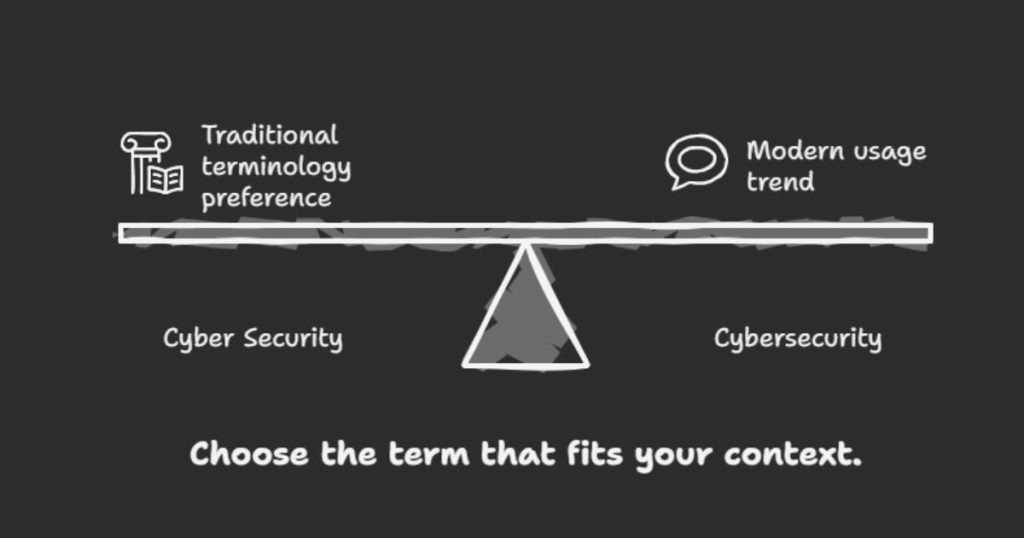
The digital world is full of threats. Hackers, malware, and other risks are ever-present. Cybersecurity, or cyber security, is vital for keeping information safe. Many people wonder about the correct term. Is it “cyber security” or “cybersecurity”? Both terms are widely used, and both are correct.
The choice often depends on style guides or personal preference. Understanding the importance of this field is more crucial than the spelling debate. This blog will explore the key aspects of cyber security, its significance, and the common threats it combats. Let’s dive into the world of digital protection.
Cyber Security Defined
Cyber security is the practice of protecting systems, networks, and programs from digital attacks. These cyber attacks aim to access, change, or destroy sensitive information. They also seek to extort money from users or disrupt normal business processes. Implementing effective cyber security measures is challenging today because there are more devices than people. Attackers are becoming more innovative.
Traditional Usage
Traditionally, cyber security focused on the protection of computer systems. It aimed to prevent unauthorized access and damage to hardware and software. The primary goal was to ensure data integrity and confidentiality. Antivirus software and firewalls were the main tools used. They helped to keep systems secure from known threats. Regular updates were crucial to maintain protection.
Scope And Meaning
Today, cyber security covers a broader scope. It includes protecting personal data, securing networks, and preventing cyber crimes. It also involves safeguarding critical infrastructure like power grids. Businesses must protect their online presence and customer information. Security measures now extend to mobile devices, cloud services, and IoT devices. Cyber security is no longer just an IT concern. Everyone has a role in maintaining a safe digital environment.
Cybersecurity Defined
Cybersecurity is the practice of protecting systems, networks, and programs from digital attacks. These attacks aim to access, change, or destroy sensitive information. They often seek to extort money from users or disrupt normal operations. Implementing effective cybersecurity measures is challenging today. Attackers are becoming more innovative and persistent.
Modern Usage
Cybersecurity is not just about protecting computers. It covers all devices connected to the internet. This includes smartphones, tablets, smart TVs, and even smart home devices. Each of these devices can be a target. Cybersecurity measures protect all these devices from threats.
Scope And Meaning
Cybersecurity encompasses several domains. One key area is network security. This protects internal networks from unauthorized access. Another important area is application security. This ensures that software and applications are safe from threats. Information security is also a crucial part. It safeguards the data stored and transmitted across systems.
Cybersecurity also includes operational security. It deals with how data is handled and protected. Lastly, disaster recovery and business continuity are vital. They ensure that organizations can recover quickly after a cyber attack.
Etymology Of Cyber Security
Cybersecurity is a term we often hear today. But where did it come from? Understanding the etymology of cybersecurity helps us appreciate its significance. Let’s dive into its origins and see how it has evolved over time.
Origins
The word “cybersecurity” is rooted in the term “cybernetics.” Cybernetics came from the Greek word “kybernētēs,” meaning “steersman” or “governor.” This term was first used in the 1940s to describe control and communication in machines and living beings.
During the 1980s, the concept of cybernetics expanded. It began to include computer networks and digital information. As technology grew, the need to protect information became clear. Thus, the term “cybersecurity” emerged.
Evolution Over Time
In the early days, cybersecurity focused on protecting data from unauthorized access. Simple passwords and basic firewalls were the primary tools. As threats became more complex, cybersecurity strategies evolved.
By the 2000s, the rise of the internet brought new challenges. Malware, phishing, and hacking became common. Cybersecurity had to adapt quickly. Advanced encryption, multi-factor authentication, and real-time monitoring became essential.
Today, cybersecurity is a vast field. It covers everything from personal devices to large corporate networks. The term has grown to include practices, policies, and technologies designed to safeguard digital assets.
Etymology Of Cybersecurity
Understanding the etymology of cybersecurity offers a fascinating glimpse into the evolution of a term that is now crucial in our digital age. This journey from its origins to its present-day usage reflects not only technological advancements but also shifts in societal priorities. Let’s dive into the history and transformation of the word “cybersecurity.”
Origins
The term “cybersecurity” is a blend of “cybernetics” and “security.” Cybernetics, coined in the 1940s by Norbert Wiener, refers to the study of control and communication in animals and machines. As computers began to emerge, the prefix “cyber” became synonymous with anything related to computer technology.
Security, on the other hand, has always been about protection and safety. Marrying these two concepts, “cybersecurity” started to take shape as the need to protect digital systems became apparent. The term began to gain traction in the late 20th century as computers and the internet started becoming integral to everyday life.
Evolution Over Time
Initially, cybersecurity focused on protecting computer systems from unauthorized access. In the early days, this meant safeguarding against simple viruses and hacking attempts. As technology advanced, so did the complexity of threats.
Today, cybersecurity encompasses a broad range of practices including data encryption, network security, and incident response. It’s no longer just about preventing unauthorized access but also about ensuring the integrity and availability of information.
Consider this: in the 1990s, a common cybersecurity threat was the email virus. Fast forward to today, and we’re dealing with sophisticated ransomware attacks and state-sponsored cyber-espionage. This evolution highlights the growing importance of robust cybersecurity measures.
Understanding where the term “cybersecurity” comes from and how it has evolved can help you appreciate the complexity and significance of protecting our digital world. What steps are you taking to safeguard your digital presence?
Usage In Industry
Cybersecurity has become a vital part of industries across the globe. With the rise in digital transformation, protecting sensitive data is more critical than ever. From tech companies to government agencies, everyone needs robust cybersecurity measures.
Tech Companies
Tech companies are at the forefront of cybersecurity implementation. They handle vast amounts of data daily, making them prime targets for cyberattacks. Ensuring that customer data is safe is not just a priority but a responsibility.
Many tech companies employ advanced encryption methods. This helps protect data both in transit and at rest. They also use multi-factor authentication (MFA) to add an extra layer of security.
Consider your own experience with tech products. Have you ever used two-step verification for your email or social media accounts? That’s a form of MFA that tech companies use to keep your information secure.
Government Agencies
Government agencies are also heavily invested in cybersecurity. They deal with sensitive information that, if leaked, could have severe consequences. This includes personal data of citizens, military secrets, and national security information.
These agencies use sophisticated firewalls and intrusion detection systems. These measures help to identify and block unauthorized access. They also conduct regular security audits to find and fix vulnerabilities.
Imagine if a government agency’s data was compromised. Think about the impact it would have on national security. That’s why these agencies take cybersecurity so seriously and invest heavily in it.
How secure do you feel about your data with these measures in place? Are there any steps you think could further enhance cybersecurity in these industries?
Usage In Academia
Cybersecurity has become an essential field of study in academia. As cyber threats continue to evolve, the demand for knowledgeable professionals who can protect and secure information systems has skyrocketed. Universities and colleges are responding by integrating cybersecurity into their curriculums, fostering a new generation of experts.
Research Papers
Research in cybersecurity is thriving. Students and scholars are continually publishing papers that address the latest threats and solutions. This body of work is crucial for developing new defense mechanisms and understanding hacker behavior.
Many universities host conferences where students can present their findings. This not only helps in disseminating knowledge but also in gaining feedback. Engaging in research can also open doors to scholarships and career opportunities.
Educational Programs
Universities now offer specialized programs in cybersecurity. These range from bachelor’s degrees to PhDs. Coursework often includes topics like ethical hacking, cryptography, and network security.
Practical labs are an essential part of these programs. They provide hands-on experience, which is invaluable. You get to simulate real-world scenarios and understand the intricacies of defending against cyber attacks.
If you’re considering a career in cybersecurity, look for a program that offers a balance of theory and practice. Take note of the faculty’s expertise and the resources available. These factors can greatly impact your learning experience and preparedness for the job market.
Have you ever considered how your current studies could benefit from a deeper understanding of cybersecurity? The integration of cybersecurity into various disciplines is not just a trend; it’s a necessity. As our world becomes more connected, the importance of securing our digital lives cannot be overstated.
Public Perception
Public perception of cybersecurity shapes how people think about online safety. Many factors influence this perception. Media representation plays a big role. So do common misconceptions.
Media Representation
The media often portrays cybersecurity in dramatic ways. News stories focus on major breaches and hacks. This creates fear and urgency in the public. Movies and TV shows add to this drama. They show hackers as mysterious and powerful figures. This can make cybersecurity seem like a distant problem. Many people think it’s something only experts can handle.
Common Misconceptions
There are many misconceptions about cybersecurity. One common myth is that only large companies are targets. In reality, anyone can be a victim. Another misconception is that antivirus software is enough. While important, it’s not a complete solution. Some people believe that strong passwords alone ensure safety. Cybersecurity requires more than just passwords. Awareness and education are key.
Frequently Asked Questions
Is Cybersecurity Two Words Or One Word?
Cybersecurity is one word. It is commonly used in the tech industry to describe measures taken to protect systems and data.
Does Cybersecurity Have A Hyphen?
No, “cybersecurity” does not have a hyphen. It is written as a single word.
Is Cybersecurity One Word Or Two Ap Style?
In AP style, cybersecurity is written as one word.
Can I Make $200,000 A Year In Cyber Security?
Yes, you can make $200,000 a year in cyber security. High-level positions and specialized roles often offer such salaries.
Conclusion
Choosing between “cyber security” and “cybersecurity” is a common dilemma. Both terms refer to protecting digital systems and data. “Cybersecurity” is more widely accepted and used. It simplifies communication and avoids confusion. Using this term helps ensure clarity in professional settings.
Understanding the importance of strong cybersecurity practices is crucial. It protects sensitive information from cyber threats. Stay informed and secure your digital world. Always prioritize cybersecurity for a safer online experience.