
Understanding the difference between cloud service and hosting is crucial. Both terms are often used interchangeably, but they are not the same.
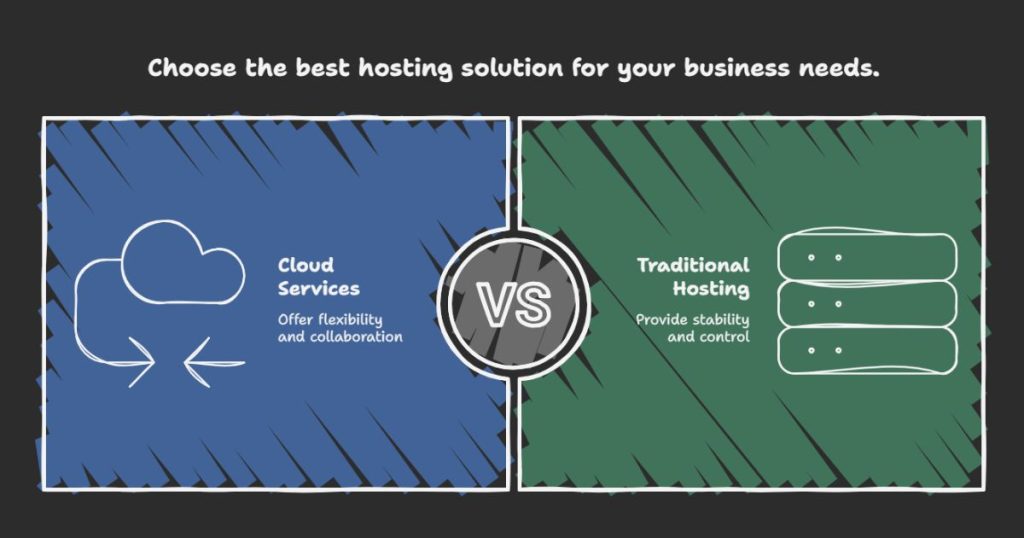
Cloud service and hosting serve unique purposes in the digital world. Cloud services offer flexibility, scalability, and manage applications or data online. Hosting, on the other hand, refers to where your website or data resides on a server. Knowing the differences helps you choose the right solution for your needs.
This guide will explore cloud services and hosting in detail. It will help you understand their unique features, benefits, and limitations. Whether you’re a business owner or a tech enthusiast, this comparison will provide clarity and assist you in making informed decisions. Let’s dive into the specifics to see what sets them apart.
Types Of Cloud Services
Cloud services have revolutionized the way businesses operate. They offer scalability, flexibility, and cost-efficiency. Understanding the types of cloud services can help you make better decisions for your business needs. Here, we break down the three primary types of cloud services: IaaS, PaaS, and SaaS.
Iaas
Infrastructure as a Service (IaaS) provides virtualized computing resources over the internet. It includes servers, storage, and networking. You can rent these resources and scale them based on your needs. This type of service is perfect for businesses needing full control over their infrastructure. Examples include Amazon Web Services (AWS) and Microsoft Azure.
Paas
Platform as a Service (PaaS) offers a platform allowing customers to develop, run, and manage applications. It removes the complexity of building and maintaining the underlying infrastructure. This service is ideal for developers. They can focus on coding and application logic. Google App Engine and Heroku are popular PaaS providers.
SaaS
Software as a Service (SaaS) delivers software applications over the internet. Users can access these applications through a web browser. SaaS eliminates the need to install and run applications on individual computers. It is suitable for businesses seeking ready-to-use software. Examples include Google Workspace and Salesforce.
Types Of Hosting
When deciding on hosting for your website, understanding the different types is crucial. Different hosting types cater to varied needs and budgets. Below, we explore three main types: Shared Hosting, VPS Hosting, and Dedicated Hosting.
Shared Hosting
Shared hosting is the most basic type. Multiple websites share one server. This makes it affordable. But, performance can be inconsistent. If one site gets heavy traffic, others might slow down. It is best for small websites or blogs.
Vps Hosting
VPS stands for Virtual Private Server. It is a step up from shared hosting. It divides a physical server into multiple virtual ones. Each VPS acts like a dedicated server. It offers better performance and flexibility. Good for growing businesses needing more control.
Dedicated Hosting
Dedicated hosting provides an entire server for one website. It offers the best performance and security. You have full control over the server. It is ideal for large businesses with high traffic. The cost is higher, but the benefits are significant.
Key Differences
Understanding the key differences between cloud services and hosting is essential. Both options offer unique advantages. But they serve different needs. Let’s explore the main differences. We’ll focus on scalability, cost, and management.
Scalability
Cloud services provide high scalability. You can increase or decrease resources as needed. This flexibility is perfect for growing businesses. Traditional hosting lacks this feature. You often need to predict your resource needs in advance. If you outgrow your plan, you’ll face downtime or extra costs.
Cost
Cost structures differ between cloud services and hosting. Cloud services usually follow a pay-as-you-go model. You only pay for what you use. This can be cost-effective for fluctuating workloads. Traditional hosting often involves a fixed monthly fee. This can be beneficial if your resource needs are stable. But it can be costly if you overestimate your needs.
Management
Management is another key difference. Cloud services often include managed options. The provider handles updates, security, and maintenance. This can save you time and effort. Traditional hosting usually requires more hands-on management. You are responsible for maintaining the server. This can be challenging if you lack technical skills.
Performance Comparison
When it comes to choosing between cloud services and traditional hosting, performance is a crucial factor. It determines how fast and reliable your applications and websites will run. Let’s dive into the performance aspects by comparing Speed, Reliability, and Downtime between these two options.
Speed
Speed is a key element in the digital world, affecting user experience and search engine rankings. Cloud services often have an edge here due to their use of Content Delivery Networks (CDNs) and load balancers. These technologies distribute your content across multiple servers worldwide, ensuring that users access data from the nearest server, reducing latency.
Traditional hosting, on the other hand, relies on a single server or a small cluster. This can lead to slower load times, especially if your audience is global. Imagine trying to load a website hosted in the US from Asia – it can be painfully slow. Cloud services mitigate this issue effectively.
Reliability
Reliability is another major consideration. Cloud service providers like AWS, Azure, and Google Cloud offer redundancy and failover mechanisms that ensure your website or application stays online even if one server goes down. They have data centers spread across the globe, providing multiple layers of redundancy.
In contrast, traditional hosting can be less reliable. If the server hosting your site crashes, your site goes down. Some hosting providers offer backup solutions, but they often come at an extra cost and may not be as seamless as cloud services.
Downtime
Downtime can be a nightmare for any business. Cloud services boast impressive uptime statistics, often offering 99.9% uptime guarantees. Their infrastructure is designed to handle failures gracefully, with automatic failovers and real-time backups.
With traditional hosting, downtime can be more frequent and longer-lasting. If the server hosting your site needs maintenance or encounters an issue, your site could be offline until the problem is resolved. This could mean lost revenue and frustrated users.
| Feature | Cloud Services | Traditional Hosting |
|---|---|---|
| Speed | Fast, with global CDNs | Slower, single server or small cluster |
| Reliability | High, with redundancy | Moderate, dependent on single server |
| Downtime | Minimal, 99.9% uptime | More frequent and longer |
In conclusion, if performance is a priority for you, cloud services often outshine traditional hosting. They offer faster speeds, greater reliability, and minimal downtime. Of course, every situation is unique, so it’s essential to consider your specific needs and budget before making a decision. Remember, a fast and reliable website can significantly impact your success online!
Security Aspects
When it comes to choosing between cloud services and traditional hosting, the security aspects are crucial to consider. Security can often be the deciding factor, especially for businesses handling sensitive data. Below, we break down the security aspects into three main areas: Data Protection, Compliance, and Threat Management.
Data Protection
One of the biggest concerns for any business is ensuring that their data is protected from breaches and unauthorized access. In the realm of cloud services, data protection is often robust. Cloud providers usually offer advanced encryption methods, both for data at rest and in transit. This means your information is scrambled and unreadable to anyone without the right decryption keys.
On the other hand, traditional hosting providers might not always offer such sophisticated encryption by default. You might need to implement your own security measures, which can be both time-consuming and costly. Moreover, physical security in cloud data centers is typically top-notch, with 24/7 monitoring, biometric access controls, and other high-tech measures that might be out of reach for smaller businesses using traditional hosting.
Compliance
Compliance with industry regulations and standards is another significant factor. Cloud service providers often adhere to rigorous compliance standards, such as GDPR, HIPAA, and ISO/IEC 27001. They regularly undergo audits and certifications to ensure they meet these standards, which can give you peace of mind.
With traditional hosting, maintaining compliance might be more challenging. You are often responsible for ensuring your infrastructure meets the required standards, which can be a daunting task. If you lack the expertise, it can be easy to overlook critical compliance requirements, potentially leading to legal and financial repercussions.
Threat Management
In the ever-evolving landscape of cyber threats, proactive threat management is essential. Cloud providers typically employ a dedicated team of security experts who monitor and respond to threats around the clock. They use sophisticated tools and technologies to detect and mitigate attacks before they can cause harm.
Traditional hosting services might not provide the same level of vigilance. Often, the responsibility of threat management falls on your shoulders. This means you need to invest in security tools, hire skilled personnel, and continuously monitor your systems for vulnerabilities. For many businesses, especially smaller ones, this is not a feasible option.
In summary, when considering the security aspects of cloud services versus traditional hosting, cloud services tend to offer superior protection, compliance support, and threat management. This makes them a more attractive option for businesses looking to safeguard their data without the burden of managing security themselves.
Use Cases
When deciding between cloud services and traditional hosting, it’s essential to understand their distinct use cases. Each option has its own strengths and can be more suitable for different types of users and business needs. Let’s break down the use cases for small businesses, large enterprises, and developers to help you make an informed decision.
Small Businesses
Small businesses often operate with tight budgets and limited technical expertise. For them, cloud services can be a game-changer. Here are some reasons why:
- Scalability: Cloud services allow small businesses to scale resources up or down based on demand, which means they only pay for what they use. This is particularly beneficial during seasonal peaks.
- Cost-Effectiveness: With cloud services, there’s no need to invest in expensive hardware or worry about maintenance costs. This can be a huge relief for small businesses trying to manage their finances.
- Accessibility: Cloud services offer the flexibility to access data and applications from anywhere, enabling remote work and improving productivity.
For example, a small e-commerce store might use cloud hosting to handle website traffic during holiday sales without the headache of managing servers.
Large Enterprises
Large enterprises have different needs and resources compared to small businesses. They often require more robust solutions that offer high performance and security. Let’s see how each option fits their use cases:
- Cloud Services: Large enterprises can benefit from the flexibility and global reach of cloud services. They can deploy applications across different regions to ensure low latency and high availability.
- Traditional Hosting: For certain applications that require stringent security measures and control, traditional hosting might be preferred. Enterprises can have dedicated servers with full control over their infrastructure.
Imagine a multinational corporation needing to store sensitive customer data. They might use a combination of cloud services for general operations and traditional hosting for secure data storage.
Developers
Developers are the backbone of any tech-driven project. Their needs can vary widely depending on the type of projects they are working on. Let’s explore how both cloud services and traditional hosting serve developers:
- Cloud Services: Developers can leverage cloud services for rapid development and deployment. Features like serverless computing, containerization, and continuous integration make it easier to manage and scale applications.
- Traditional Hosting: For projects that require a stable environment with less frequent updates, traditional hosting can be a suitable choice. Developers can have full control over the server configuration and optimize it for performance.
Picture a developer working on a mobile app startup. They might use cloud services to quickly test and deploy updates, ensuring their app remains competitive in the market.
In conclusion, the choice between cloud services and traditional hosting depends largely on the specific needs and goals of the user. Whether you’re a small business, a large enterprise, or a developer, understanding these use cases can help you make the best decision for your situation.
Future Trends
As technology continues to evolve at a breakneck pace, the future of cloud services and hosting is packed with exciting potential. For those curious about what lies ahead, here’s a look at the future trends that will shape the way we understand and use these technologies. Whether you’re a tech enthusiast or just dipping your toes into the world of cloud computing, these trends are worth keeping an eye on.
Emerging Technologies
One of the most thrilling aspects of the tech world is the constant emergence of new technologies. In the realm of cloud services and hosting, several innovations are set to revolutionize the industry.
- Edge Computing: This technology brings computing power closer to the data source. It reduces latency and improves speed, which is crucial for applications like autonomous vehicles and smart cities.
- AI and Machine Learning: These technologies are becoming integral to cloud services. They help in automating tasks, predicting trends, and personalizing user experiences.
- Quantum Computing: Although still in its infancy, quantum computing promises to handle complex computations much faster than current systems. This could significantly enhance cloud capabilities.
Market Growth
The market for cloud services and hosting is not just growing; it’s booming! With businesses and individuals increasingly relying on cloud solutions, the sector is poised for substantial expansion.
- Increased Adoption: More companies, from startups to large enterprises, are migrating their operations to the cloud. This shift is driven by the need for scalability, cost-efficiency, and flexibility.
- Global Reach: The cloud market is expanding globally, with significant growth in regions like Asia-Pacific and Latin America. This is opening up new opportunities for service providers.
- Investment Surge: Major tech companies are investing heavily in cloud infrastructure. This investment is fueling innovation and competition, leading to better services and lower prices for consumers.
Innovation
Innovation is the heartbeat of technology, and the cloud services and hosting sector is no exception. The future holds numerous innovations that will enhance how we interact with and benefit from these services.
Imagine this: you’re a small business owner who needs to scale your operations quickly. In the past, this would have meant significant investment in hardware and software. But with innovative cloud solutions, you can do this seamlessly and cost-effectively.
- Serverless Computing: This model allows developers to build and run applications without managing servers. It simplifies the development process and reduces operational costs.
- Multi-cloud Strategies: Businesses are increasingly adopting multi-cloud strategies to avoid vendor lock-in and optimize performance. This approach offers greater flexibility and resilience.
- Enhanced Security: As cyber threats evolve, so do cloud security measures. Innovations in encryption, authentication, and threat detection are making cloud services more secure than ever.
In conclusion, the future of cloud services and hosting is bright and full of possibilities. With emerging technologies, robust market growth, and continuous innovation, the landscape is set to transform significantly. As we move forward, staying informed and adapting to these trends will be crucial for anyone looking to leverage the full potential of the cloud.
Frequently Asked Questions
What Is The Difference Between Hosting And Cloud Service?
Hosting provides dedicated server space. Cloud services offer scalable resources over multiple servers.
Is Cloud Hosting The Same As Cloud Computing?
No, cloud hosting and cloud computing are not the same. Cloud hosting focuses on website hosting. Cloud computing offers broader services like storage, processing, and analytics.
What Is The Difference Between Cloud And Managed Hosting?
Cloud hosting uses multiple servers to manage your website, ensuring reliability. Managed hosting offers personalized support and maintenance.
Is Hosted Storage The Same As Cloud Storage?
No, hosted storage and cloud storage are not the same. Hosted storage refers to data stored on a server managed by a hosting provider. Cloud storage involves storing data on remote servers accessed via the internet.
Conclusion
Cloud services and hosting have key differences. Cloud services offer flexibility. Hosting provides dedicated resources. Understand your needs to choose the best option. Evaluate costs, scalability, and control. Both have unique advantages. Make an informed decision. Your choice impacts your business success.