
The balance between productivity and wages is a hot topic. It impacts both workers and employers alike.
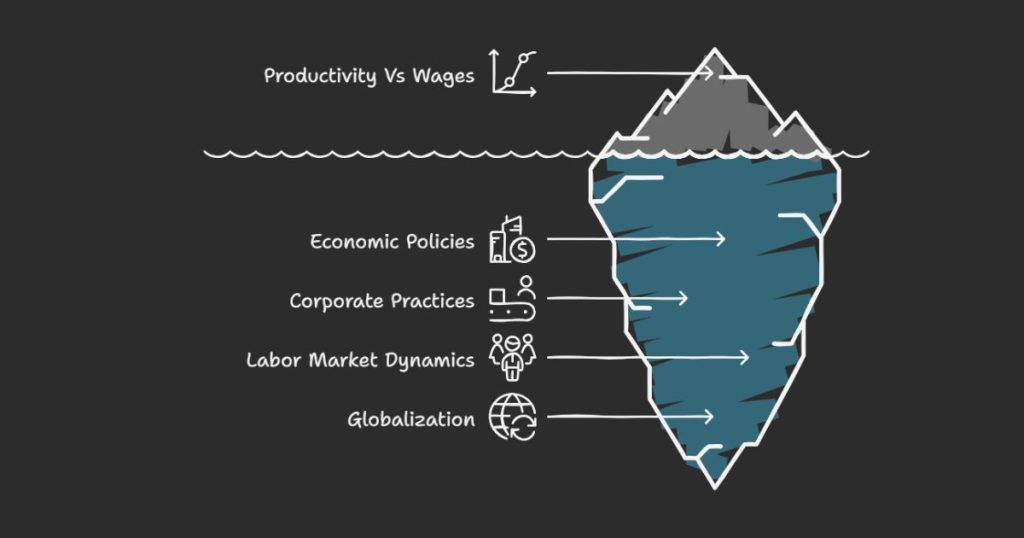
In recent years, many have noticed a gap between how much work gets done and how much workers get paid. This issue has sparked debates across various industries. The relationship between productivity and wages is complex. It involves factors like technology, worker skills, and economic policies.
Understanding this relationship is crucial. It helps in creating fair workplaces and boosting economic growth. In this post, we will explore the link between productivity and wages. We will discuss why this balance matters and how it affects everyone. Let’s dive in and see what’s at play in this important topic.
Historical Trends
Understanding the historical trends of productivity versus wages can provide valuable insights into the economic landscape and help us predict future patterns. Over the years, the relationship between productivity (how much work is done) and wages (how much workers are paid) has seen significant changes. These changes are influenced by various factors including technology, economic policies, and market dynamics.
Early Industrial Era
The early industrial era marked a transformative period where machines began to change the way work was done. Factories sprouted up, and production processes became more efficient. During this time, productivity saw a considerable increase. However, did wages follow the same trajectory? Not quite.
In the beginning, the rise in productivity did not immediately translate into higher wages for workers. Factory owners were more focused on maximizing profits and often kept wages low. This led to a significant disparity between the value created by workers and their compensation. Workers labored long hours in often harsh conditions, but their wages remained stagnant.
It wasn’t until the rise of labor unions and collective bargaining that wages began to see a gradual increase. Unions advocated for better pay and working conditions, helping to bridge the gap between productivity and wages. This period set the stage for future discussions and policies regarding fair compensation.
Post-war Boom
Fast forward to the post-war boom, a period of economic prosperity following World War II. This era was characterized by rapid industrial growth, technological advancements, and significant increases in productivity. Unlike the early industrial era, this time saw a more direct correlation between productivity and wages.
During the post-war boom, wages began to rise in tandem with productivity. This was due in part to the strong influence of labor unions and favorable economic policies that emphasized fair wages and job security. Companies benefited from high demand for goods and services, and they passed some of these gains onto their workers. The middle class expanded, and living standards improved for many families.
However, it’s interesting to note that this harmonious relationship between productivity and wages started to diverge in the late 20th century. Technological advancements continued to drive productivity, but wages began to stagnate. This divergence has led to ongoing debates about income inequality and the need for policies that ensure fair compensation for workers.
In conclusion, the historical trends of productivity versus wages highlight the complex interplay between economic growth, technological advancements, and labor policies. While early industrialization saw a slow translation of productivity gains into wages, the post-war boom era demonstrated a more balanced growth. Understanding these trends helps us appreciate the ongoing challenges and opportunities in achieving fair wages in today’s dynamic economy.
Productivity Growth
When we talk about productivity growth, it means how much more work can be done over time. This is important because it can affect wages. If workers can do more in less time, it seems logical that they should be paid more. But is this always the case? Let’s explore this through a couple of key factors: technological advancements and worker efficiency.
Technological Advancements
Technology has come a long way, hasn’t it? Think about how computers, the internet, and automation have changed the way we work. Machines can now do tasks that used to take hours in just a few minutes. This means that workers can be more productive without putting in extra hours. For example, in factories, robots can assemble products much faster than humans. This boosts productivity but does it always lead to higher wages?
Interestingly, while technology helps companies produce more, it doesn’t always mean workers get paid more. Sometimes, companies invest the extra profit into more technology rather than increasing salaries. So, while technological advancements do wonders for productivity, the impact on wages can be a bit of a mixed bag.
Worker Efficiency
Now, let’s talk about worker efficiency. This is about how well workers use their time and skills to complete tasks. Imagine a chef who can cook a meal in 10 minutes that usually takes 20. This chef is highly efficient. Businesses love efficient workers because they get more done in less time, which can lead to higher profits. But does this efficiency translate into higher wages?
Efficient workers are often seen as valuable assets. Some companies might reward this efficiency with bonuses or raises. However, it’s not always guaranteed. Sometimes, businesses might expect workers to maintain high efficiency without any additional compensation. It’s a bit like the saying, “Do more with less.” So, while being efficient is great, it doesn’t always mean you’ll see it in your paycheck.
In conclusion, productivity growth is influenced by both technological advancements and worker efficiency. While these factors can boost how much work gets done, they don’t always lead to higher wages. It’s a complex relationship, and understanding it can help workers navigate their careers better.
Wage Stagnation
Have you ever felt like you’re working harder but not seeing any extra money in your paycheck? You’re not alone. This phenomenon is called wage stagnation. While productivity has been going up, wages have not kept pace. Let’s dive into why this is happening.
Inflation Adjustments
Inflation is the steady increase in prices over time. Ideally, wages should rise with inflation to keep purchasing power stable. However, this is not always the case.
- Inflation eats away at the value of money.
- If wages do not rise with inflation, you can buy less with the same amount of money.
- This means your real earnings are not increasing, even if the numbers on your paycheck are.
Imagine you bought a loaf of bread for $1 last year, and now it costs $1.05. If your wage hasn’t increased, you’re effectively earning less. This is the crux of wage stagnation.
Income Disparity
Income disparity is another factor contributing to wage stagnation. This refers to the uneven distribution of income within a population.
Here are some points to consider:
- Top executives and higher-ups often see significant wage increases.
- Meanwhile, lower-level workers see minimal to no wage growth.
- This gap creates a wide income disparity, where the rich get richer, and the poor stay the same.
Have you ever wondered why CEOs make so much more than regular employees? This growing gap is a key reason why many feel stuck financially, despite working harder and being more productive.
In summary, wage stagnation is a pressing issue that affects many workers. Inflation adjustments and income disparity play significant roles in why your paycheck may not seem to stretch as far as it used to. Understanding these factors can help us advocate for fairer wage practices.
Stay tuned for more insights on productivity and wages in our upcoming posts. Feel free to share your thoughts and experiences in the comments below. Let’s keep this conversation going!
Economic Theories
Understanding the relationship between productivity and wages involves exploring economic theories. These theories explain how wages are determined and how they relate to worker productivity. They offer insights into why wages may not always increase with productivity.
Supply And Demand
Supply and demand play a crucial role in determining wages. When demand for labor is high, wages tend to rise. If the supply of workers is also high, wages may not increase much. This balance affects how much workers earn.
Higher productivity can increase demand for labor. Employers need more workers to meet production goals. This can lead to higher wages. But if many workers are available, the wage increase might be smaller.
Labor Market Dynamics
Labor market dynamics also influence productivity and wages. Factors like education, skills, and technology impact these dynamics. Skilled workers are often more productive and can command higher wages. Technological advancements can increase productivity but may not always lead to higher wages.
Sometimes, technology replaces jobs, reducing the demand for labor. This can lead to stagnant or lower wages. Understanding these dynamics helps explain why wages don’t always grow with productivity.
Global Comparisons
When it comes to understanding the relationship between productivity and wages, taking a global perspective can be eye-opening. Different countries have varying levels of productivity and wage growth, influenced by factors such as economic policies, labor markets, and technological advancements. Let’s dive into how these dynamics play out in both developed nations and emerging economies.
Developed Nations
In developed nations, the connection between productivity and wages tends to be more straightforward. These countries often have robust economic structures and high levels of technological innovation. For example:
- United States: Here, productivity has generally outpaced wage growth. Despite being a powerhouse of innovation, workers have seen slower wage increases relative to their productivity levels.
- Germany: Known for its engineering excellence, Germany shows a more balanced relationship. Productivity and wages grow in tandem, supported by strong labor unions and cooperative business practices.
- Japan: This country demonstrates a unique case. While productivity growth has been modest, wages have remained relatively stagnant, influenced by cultural norms and long-term employment practices.
What’s the takeaway? Even in developed nations, the link between productivity and wages can vary significantly. Factors like labor policies, industry composition, and social norms play crucial roles.
Emerging Economies
Emerging economies present a different story altogether. These nations are often characterized by rapid economic growth and significant changes in their industrial landscapes. Let’s look at a few examples:
- China: Over the past few decades, China has seen explosive productivity growth. However, wage increases have lagged, leading to a vast disparity between the two. This gap is slowly closing as the country shifts towards a more consumer-driven economy.
- India: Productivity in India has been on the rise, particularly in the tech and service sectors. Yet, wage growth remains uneven, with significant differences between urban and rural areas.
- Brazil: Brazil’s productivity and wages have both seen moderate growth. The country faces challenges like economic instability and political issues, which impact the consistency of this growth.
In emerging economies, the journey towards aligning productivity and wages is often fraught with challenges. These include economic volatility, political instability, and infrastructural limitations. However, the potential for rapid growth and improvement remains substantial.
So, next time you think about productivity and wages, remember—context matters. Whether it’s the established systems of developed nations or the dynamic landscapes of emerging economies, each tells a unique story worth exploring.
Corporate Practices
Corporate practices significantly influence the relationship between productivity and wages. Companies often make strategic decisions that impact how profits and compensation are distributed. These decisions can affect workers’ wages and overall productivity.
Profit Prioritization
Many corporations prioritize profits over other factors. This practice often leads to cutting costs to maximize profits. Reducing employee benefits and wages becomes a common strategy. Companies may invest in technology to boost productivity but not raise wages. This creates a gap between productivity and compensation. Workers produce more but do not see wage increases.
Executive Compensation
High executive compensation is another corporate practice affecting wages. Top executives receive large salaries, bonuses, and stock options. This takes a significant portion of a company’s budget. Little is left for wage increases for regular employees. This disparity can demotivate workers and affect productivity. Employees feel undervalued when executives receive excessive compensation.
Policy Impacts
When examining the relationship between productivity and wages, the role of government policies cannot be overlooked. Policy decisions significantly impact how productivity gains translate into wages for workers. This section explores the effects of two key policy areas: Minimum Wage Laws and Tax Policies.
Minimum Wage Laws
Minimum wage laws set the lowest hourly rate that employers can legally pay their workers. These laws aim to ensure that workers earn a decent living. But how do they affect productivity and wages?
Consider a factory worker named Maria. Maria works hard and her productivity increases over time. If the minimum wage is raised, Maria’s wages will also go up, which can boost her morale and further enhance her productivity. However, higher minimum wages might lead some employers to cut jobs or reduce hours to manage costs.
In essence, while minimum wage laws can uplift wages for many, they can also pose challenges for businesses, especially small ones. Balancing these effects is crucial for policymakers.
Tax Policies
Tax policies play a pivotal role in determining how much of their earnings workers take home and how much businesses invest in productivity improvements. Let’s break down their impacts:
- Income Tax: Lower income taxes mean workers keep more of their earnings, which can incentivize them to work harder and be more productive. On the flip side, higher taxes might discourage extra effort.
- Corporate Tax: Lower corporate taxes can leave companies with more capital to invest in technology and training, boosting productivity. However, if corporate taxes are too high, companies might reduce investments, impacting productivity negatively.
Take an example of a tech company. If the government lowers corporate taxes, the company might invest more in new software or employee training, enhancing productivity. Conversely, higher taxes might force the company to cut costs elsewhere, possibly affecting wages or job growth.
In conclusion, the interplay between productivity and wages is complex and deeply influenced by policy decisions. While minimum wage laws and tax policies can drive positive outcomes, they require careful calibration to avoid unintended consequences. As we navigate these economic waters, it’s essential to consider the broader impacts on both workers and businesses.
Future Outlook
As we look ahead to the future of productivity and wages, it’s clear that a dynamic transformation is on the horizon. With the rapid pace of technological advancement and the potential for significant reforms, the relationship between productivity and wages is poised to evolve in ways we may not yet fully comprehend. Let’s delve into what the future holds.
Technological Integration
Technology is advancing at an unprecedented rate, reshaping industries and altering the nature of work itself. Automation, artificial intelligence, and machine learning are just a few examples of how technological integration is impacting productivity and wages.
- Automation: Machines are increasingly performing tasks that were once done by humans. This can lead to higher productivity but may also result in job displacement.
- Artificial Intelligence (AI): AI can analyze vast amounts of data, leading to more efficient decision-making processes. This can enhance productivity but may also require workers to develop new skills.
- Machine Learning: This technology allows systems to learn and improve from experience. As machine learning becomes more prevalent, it can significantly boost productivity across various sectors.
However, the integration of technology into the workplace is a double-edged sword. While it can drive productivity and potentially increase wages, it also raises concerns about job security and the need for continuous skill development. After all, who wants to be left behind in the digital dust?
Potential Reforms
In response to these technological advancements, various reforms may be necessary to ensure a balanced and fair economic landscape. Here are a few potential reforms that could shape the future of productivity and wages:
- Education and Training: Investing in education and training programs can help workers develop the skills needed to thrive in a technology-driven economy. This can lead to higher productivity and, consequently, higher wages.
- Universal Basic Income (UBI): With the potential for job displacement due to automation, UBI could provide a safety net for workers, allowing them to pursue new opportunities without the fear of financial instability.
- Labor Laws and Regulations: Updating labor laws to reflect the changing nature of work can ensure fair wages and working conditions. This may include regulations around gig economy jobs and remote work.
It’s important to remember that these reforms are not one-size-fits-all solutions. Different countries and industries may require tailored approaches to address their unique challenges. And let’s be honest, what works for Silicon Valley might not work for a small town in the Midwest.
In conclusion, the future of productivity and wages is a complex and multifaceted issue. By embracing technological integration and considering thoughtful reforms, we can navigate this evolving landscape and create a more equitable and prosperous future for all. So, are we ready to embrace change and shape the future? Only time will tell.
Frequently Asked Questions
What Is The Difference Between Productivity And Wages?
Productivity measures the output per worker, while wages represent the earnings employees receive for their work. They are related but distinct.
Why Does Higher Productivity Lead To Higher Wages?
Higher productivity increases company profits, enabling businesses to pay higher wages to attract and retain skilled workers.
Are American Workers’ Wages Really Lagging Behind Productivity?
Yes, American workers’ wages have lagged behind productivity. This trend has been evident since the 1970s.
What Is The Relationship Between Productivity And Labor?
Productivity measures output per labor hour. Higher productivity means more output with the same labor input. Efficient labor increases productivity.
Conclusion
Balancing productivity and wages is crucial. Fair pay motivates employees. Increased productivity boosts company profits. Aligning both benefits everyone. Employees feel valued and work harder. Companies grow and achieve success. Clear goals and fair compensation create a win-win situation. Regular reviews help maintain this balance.
Addressing issues promptly ensures ongoing harmony. Keep striving for equitable practices. Everyone wins when productivity and wages align.