
To improve productivity in the workplace, start by identifying key areas needing enhancement. Simple changes can lead to significant improvements.
In today’s fast-paced business world, productivity is crucial for success. High productivity means better results, efficiency, and job satisfaction. Yet, many employees struggle to stay focused and efficient. With distractions and stress, maintaining productivity can be challenging. But, there are effective strategies to help boost productivity.
From organizing tasks to fostering a positive work environment, these methods can transform your workplace. By implementing the right techniques, you can enhance performance and achieve your goals. Let’s explore how you can make your workplace more productive and enjoyable for everyone.
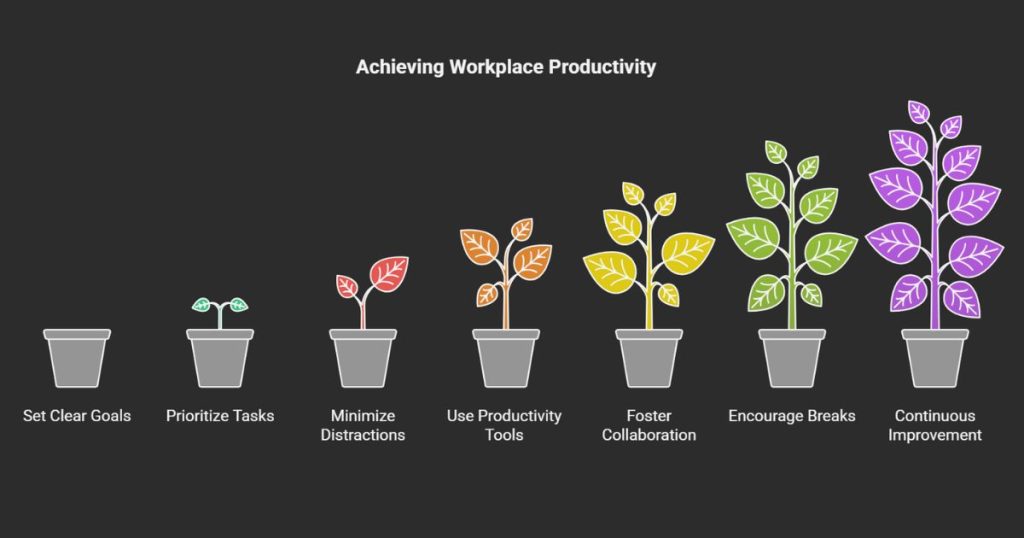
Identify Goals
Productivity in the workplace hinges on clearly identifying goals. Without set objectives, employees may feel lost. Clear goals provide direction and motivation. This guide will help you understand how to identify and achieve these goals effectively.
Set Clear Objectives
Start by defining what you want to achieve. These objectives should be specific and measurable. Clear objectives give a sense of purpose and direction. Employees know exactly what is expected. This clarity helps in planning and executing tasks efficiently.
Prioritize Tasks
Not all tasks are created equal. Some tasks are more important than others. Prioritize tasks based on their importance and deadlines. Focus on high-priority tasks first. This ensures that critical work is completed on time. It also reduces stress and improves overall productivity.
Time Management
Effective time management is key to boosting productivity. It helps you complete tasks efficiently. You can focus better and reduce stress. Good time management means you can do more in less time. Let’s explore some practical tips for better time management.
Use Time Blocking
Time blocking involves setting specific time slots for tasks. It helps you stay focused. You allocate a block of time for each activity. This reduces distractions and helps you concentrate. You know exactly what to work on and when.
To start, list your tasks. Then, assign a time block for each task. Be realistic about how long each task will take. Stick to your schedule as much as possible. Adjust if needed but keep your blocks intact. This method ensures you make steady progress.
Avoid Multitasking
Multitasking can seem efficient, but it often leads to mistakes. Switching between tasks wastes time. You lose focus and productivity drops. Instead, focus on one task at a time. Complete it before moving to the next one.
When you avoid multitasking, you do each task better. Your mind stays clear and you feel less stressed. Prioritize your tasks and tackle them one by one. This approach boosts the quality of your work and saves time.
Leverage Technology
In today’s fast-paced work environment, leveraging technology is crucial for improving productivity. It helps streamline processes, reduce manual errors, and save time. By incorporating the right tools, you can transform your workflow and achieve better results.
Use Productivity Apps
Productivity apps are game-changers. They help manage tasks, set reminders, and organize projects efficiently. Tools like Trello or Asana allow you to create to-do lists, assign tasks, and track progress. You can visualize your work in a way that keeps everything on track.
Think about the last time you missed a deadline because you forgot about it. With productivity apps, you receive timely notifications, ensuring nothing slips through the cracks. These apps can be customized to fit your specific needs, making them versatile and user-friendly.
Automate Repetitive Tasks
Repetitive tasks can drain your energy and time. Automating these tasks can free up your schedule for more important work. Tools like Zapier or IFTTT connect different apps and automate actions based on triggers.
For example, you can set up automation to save email attachments directly to your cloud storage. This eliminates the need for manual downloads and uploads, saving you valuable minutes every day. Automation reduces errors and keeps your workflow consistent.
Have you ever wondered how much time you spend on routine tasks? By automating them, you can focus on strategic activities that drive your business forward. It’s like having an extra set of hands working for you.
What technology do you currently use to boost productivity? Consider integrating productivity apps and automation tools into your daily routine. You might find yourself accomplishing more with less effort.
Work Environment
The work environment greatly impacts productivity. A well-designed space can boost morale. It can also improve focus and efficiency.
Create A Comfortable Space
A comfortable workspace is essential. Start with ergonomic furniture. An ergonomic chair supports your back. It reduces strain and improves posture. A good desk height also matters. It prevents neck and wrist pain.
Lighting plays a key role too. Natural light increases alertness. Use adjustable lamps for tasks. Keep the room at a comfortable temperature. Too hot or too cold can distract you.
Minimize Distractions
Distractions lower productivity. Identify common distractions first. Phones are a major culprit. Use apps to block notifications. Set specific times to check messages.
Noise is another distraction. Use noise-canceling headphones. They help you concentrate better. Create a quiet zone if possible. Inform others of your focus times.
Keep your workspace tidy. Clutter can overwhelm you. A clean desk promotes clear thinking. Organize your tools and documents. Use storage solutions to keep things in place.
Effective Communication
Boost productivity in the workplace by improving effective communication. Clear messages reduce misunderstandings and save time. Encourage open dialogue for better teamwork.
Effective communication is vital for improving productivity in the workplace. When employees communicate effectively, tasks are completed more efficiently, misunderstandings are minimized, and a sense of unity is fostered. This section will delve into practical ways to enhance communication among your team.
Encourage Open Dialogue
Creating an environment where open dialogue is encouraged can significantly improve communication. When team members feel safe to express their opinions and ideas, creativity and problem-solving thrive.
For example, during team meetings, invite everyone to share their thoughts. You might be surprised at the innovative solutions your team members come up with. When I managed a small team, we implemented a “no idea is a bad idea” policy. This simple practice led to breakthroughs we had never imagined.
Encourage feedback loops. Ask your team what they need to communicate better and act on it. This shows you value their input and are committed to improvement.
Use Collaboration Tools
In today’s digital age, collaboration tools can significantly enhance communication. Tools like Slack, Microsoft Teams, and Trello can streamline information sharing and keep everyone on the same page.
Suppose your team struggles with keeping track of project updates. Using Trello, you can create boards for each project, with cards detailing tasks, deadlines, and responsible persons. This visual aid helps everyone understand their roles and responsibilities clearly.
Instant messaging platforms like Slack can facilitate quick, real-time communication. Instead of lengthy email threads, a simple message on Slack can resolve issues promptly.
Consider scheduling regular check-ins through video calls. This human touch can build stronger relationships and ensure everyone is aligned.
Effective communication is a continuous effort. Implementing these strategies can make a significant difference in your team’s productivity. Are you ready to improve how your team communicates?
Employee Well-being
Employee well-being is crucial for improving productivity in the workplace. When employees feel healthy, balanced, and appreciated, they are more likely to perform at their best. Enhancing their well-being involves creating an environment that supports physical, mental, and emotional health. Let’s explore some effective strategies to boost employee well-being.
Promote Work-life Balance
Encouraging a healthy work-life balance is essential. Employees need time to recharge and spend time with family and friends. You can achieve this by promoting flexible work hours and remote work options. For instance, offering the option to work from home one or two days a week can significantly improve morale.
Consider setting clear boundaries for after-hours communication. If employees know they are not expected to respond to emails after a certain time, they can fully unwind and return to work refreshed. Encourage taking regular breaks throughout the day. Simple practices, like a short walk or a coffee break, can do wonders for mental clarity and productivity.
Offer Wellness Programs
Wellness programs are a great way to show you care about your employees’ health. These programs can include gym memberships, yoga classes, or even mental health support. Providing access to these resources can make a big difference in your employees’ overall well-being.
Consider organizing regular wellness activities. A weekly yoga class or a monthly health seminar can be both fun and beneficial. You might also think about offering healthy snacks in the office. Replacing the usual junk food with fresh fruits and nuts can promote better eating habits.
How about initiating a wellness challenge? A step-count competition or a hydration challenge can inject some fun into the workplace while promoting healthy habits. Remember, a healthier employee is a happier and more productive employee.
By focusing on employee well-being, you not only improve productivity but also create a more positive and supportive workplace. What steps will you take to enhance your team’s well-being today?
Continuous Learning
Continuous learning boosts workplace productivity. Employees gain new skills and stay updated with industry changes. Regular training improves efficiency and innovation.
Continuous Learning
Continuous learning is key to improving productivity in the workplace. By continuously expanding your knowledge and skills, you stay ahead of the curve and can tackle new challenges more effectively. It creates a culture of growth and innovation.
Provide Training Opportunities
Providing training opportunities is crucial. Regular workshops and seminars keep your team updated with the latest trends and technologies.
Consider offering online courses that employees can complete at their own pace. This flexibility caters to different learning styles and schedules.
It’s essential to invest in your employees. When they see you’re committed to their growth, their engagement and productivity increase.
Encourage Skill Development
Encourage skill development within your team. Offer mentorship programs where experienced employees guide newer team members.
Create a safe space for sharing knowledge. When someone masters a new tool or technique, let them teach others.
Ask your team what skills they want to develop. Tailor opportunities to their interests to keep them motivated.
Continuous learning isn’t just good for business; it’s good for your team’s morale. What steps will you take to foster a culture of learning in your workplace?
Regular Feedback
Regular feedback is vital for improving productivity in the workplace. It helps employees understand their strengths and areas for improvement. Consistent feedback fosters growth and builds a positive work environment. It also encourages open communication between team members and leaders.
Conduct Performance Reviews
Performance reviews should be conducted regularly. They help employees know how well they are doing. These reviews should be clear and specific. Focus on both strengths and areas that need improvement. This balanced approach helps employees feel valued and understood.
Set aside time to discuss goals and expectations. Use these sessions to align on future objectives. Encourage employees to ask questions and share their concerns. This open dialogue can lead to better understanding and collaboration. Document the outcomes of these reviews. This helps in tracking progress over time.
Recognize Achievements
Recognizing achievements boosts morale. It shows employees that their hard work is valued. Simple gestures like a thank-you note can make a big difference. Public recognition during team meetings can also be motivating.
Consider implementing an employee of the month program. It can create a healthy competitive spirit. Celebrate small wins along the way. These moments of recognition can inspire others to strive for excellence. Consistent recognition can lead to higher job satisfaction and retention.
Frequently Asked Questions
How Do You Improve Your Productivity At Work?
Improve productivity at work by prioritizing tasks, setting clear goals, minimizing distractions, taking regular breaks, and using productivity tools.
What Are The 5 Main Factors That Affect Productivity?
The 5 main factors that affect productivity are time management, work environment, employee skills, technology, and motivation. Effective time management ensures tasks are completed efficiently. A positive work environment boosts morale. Skilled employees perform tasks better. Advanced technology streamlines processes.
Motivation drives employees to achieve goals.
How Can Employee Productivity Be Improved?
Improve employee productivity by setting clear goals, offering regular feedback, and providing necessary tools. Encourage collaboration and create a positive work environment. Offer training and development opportunities.
How Do You Fix Lack Of Productivity?
Identify distractions and eliminate them. Set clear goals and prioritize tasks. Take regular breaks to avoid burnout. Use productivity tools and techniques like the Pomodoro method. Stay organized and maintain a healthy work-life balance.
Conclusion
Boosting workplace productivity is essential for success. Implement clear goals and priorities. Encourage open communication among team members. Provide tools and resources for efficiency. Recognize and reward hard work. Foster a positive work environment. Promote regular breaks to avoid burnout.
Streamline workflows for better results. With these steps, productivity will improve. Everyone benefits from a more productive workplace. Start implementing these tips today. Notice the positive changes soon.