
Productivity is defined as the efficiency of producing results. It measures how well resources are used to achieve goals.
In today’s fast-paced world, productivity is essential for success. Whether you’re a student, professional, or entrepreneur, maximizing productivity can lead to significant achievements. Understanding what productivity means can help you set better goals and manage time effectively. It involves using resources wisely to achieve desired outcomes.
This concept isn’t limited to work; it applies to personal life too. By improving productivity, you can achieve more with less effort. In this blog, we’ll explore the true meaning of productivity and how it impacts various aspects of life. Let’s dive in and understand why productivity is crucial for achieving success.
Importance Of Productivity
The importance of productivity cannot be overstated. It is the cornerstone of success. Productive individuals and teams achieve more in less time. This leads to better results and satisfaction. In this section, we will explore why productivity matters.
Boosting Efficiency
Being productive means working smarter, not harder. It involves using time and resources wisely. Here are some ways to boost efficiency:
- Prioritize tasks: Focus on the most important tasks first.
- Eliminate distractions: Minimize interruptions to stay focused.
- Use tools: Leverage productivity tools like calendars and apps.
- Set deadlines: Give yourself a timeline to complete tasks.
These strategies help in completing tasks faster. They also improve the quality of work. Efficiency is key to achieving more with less effort.
Meeting Goals
Productivity is essential for meeting goals. Goals give direction and purpose. Here’s how productivity helps:
- Clarity: Break down goals into smaller tasks. This makes them easier to manage.
- Consistency: Stay on track by working on goals daily.
- Motivation: Seeing progress boosts motivation. It encourages you to keep going.
- Achievement: Regular productivity leads to goal achievement.
Meeting goals brings a sense of accomplishment. It drives you to set new ones. Productivity creates a cycle of success and fulfillment.
Setting Clear Goals
Setting clear goals is vital for boosting productivity. Goals provide direction and focus. They help in measuring progress. Without clear goals, it is easy to lose track. Goals also motivate and guide efforts. Let’s explore how to set effective goals.
Smart Goals
SMART goals are specific, measurable, achievable, relevant, and time-bound.
- Specific: Clear and precise goals. Define what you want to achieve.
- Measurable: Goals should have metrics to track progress. This helps in knowing when the goal is achieved.
- Achievable: Set realistic goals. They should be challenging yet attainable.
- Relevant: Goals must align with your broader objectives. This ensures they are worthwhile.
- Time-bound: Set a deadline. A time frame creates urgency and encourages focus.
Use the SMART framework to create effective goals. This method enhances clarity and focus.
Prioritizing Tasks
Prioritizing tasks is essential for productivity. Not all tasks are equal. Some tasks have a greater impact.
| Priority | Task | Impact |
|---|---|---|
| High | Complete project report | Directly affects project success |
| Medium | Reply to emails | Ensures smooth communication |
| Low | Organize desk | Improves workspace efficiency |
Identify tasks with the highest impact. Focus on them first. Use a priority matrix to decide task importance.
- List all tasks.
- Identify their impact and urgency.
- Rank them accordingly.
This method ensures you work on what truly matters. It helps in managing time and resources effectively.
Time Management Techniques
Effective time management can boost productivity and reduce stress. With the right techniques, you can achieve more in less time. Below, we explore two popular time management methods that can help you stay focused and organized.
Pomodoro Technique
The Pomodoro Technique is a time management method developed by Francesco Cirillo. It uses a timer to break work into intervals, usually 25 minutes, separated by short breaks.
Here’s how to use the Pomodoro Technique:
- Choose a task you want to work on.
- Set a timer for 25 minutes.
- Work on the task until the timer rings.
- Take a 5-minute break.
- Repeat the process.
- After four intervals, take a longer break (15-30 minutes).
This technique helps maintain focus and prevents burnout. Short breaks give your brain a chance to rest.
Time Blocking
Time Blocking involves dividing your day into blocks of time. Each block is dedicated to a specific task or activity. This method helps you visualize your day and ensures you allocate time for important tasks.
To implement Time Blocking:
- List all the tasks you need to complete.
- Estimate the time needed for each task.
- Assign each task to a time block on your calendar.
- Stick to the schedule as closely as possible.
Here’s a simple example of a time-blocked schedule:
| Time | Task |
|---|---|
| 9:00 AM – 10:00 AM | Email and admin tasks |
| 10:00 AM – 12:00 PM | Project work |
| 12:00 PM – 1:00 PM | Lunch break |
| 1:00 PM – 3:00 PM | Client meetings |
| 3:00 PM – 4:00 PM | Report writing |
By clearly defining tasks and dedicating time to each, you can improve focus and productivity.
Eliminating Distractions
Productivity soars when distractions are eliminated. Removing interruptions helps you focus better and complete tasks efficiently. Here, we explore ways to reduce distractions for enhanced productivity.
Digital Detox
Digital devices often distract us. Phones, tablets, and computers pull our attention away from work. A digital detox involves reducing screen time. It helps in minimizing these interruptions.
Consider the following tips for a successful digital detox:
- Set specific times for checking emails and messages.
- Turn off notifications for non-essential apps.
- Use apps that limit your time on social media.
By controlling digital distractions, you can stay focused on your work.
Creating A Focused Environment
A focused environment is crucial for productivity. Your workspace should be organized and free from distractions. Here are some tips to create a productive workspace:
- Keep your desk clean and uncluttered.
- Use noise-canceling headphones to block out background noise.
- Ensure proper lighting to reduce eye strain.
Having a dedicated, distraction-free workspace can help you concentrate better and work more efficiently.
Building Healthy Habits
To boost productivity, building healthy habits is essential. Small changes in daily routines can lead to significant improvements. Here, we will explore the importance of morning routines and consistent breaks.
Morning Routines
Starting the day with a structured morning routine sets a positive tone. A good morning routine includes activities that energize and focus the mind.
- Wake up at the same time every day.
- Drink a glass of water to rehydrate.
- Engage in light exercise or stretching.
- Have a healthy breakfast.
- Spend a few minutes planning your day.
These simple activities can improve your mood and readiness for the day ahead.
Consistent Breaks
Taking consistent breaks during work hours is crucial. Regular pauses can maintain high energy levels and prevent burnout. Here are some tips:
- Take a 5-minute break every hour.
- Stand up and stretch your legs.
- Look away from screens to rest your eyes.
- Go for a short walk if possible.
Including these breaks will help you stay focused and productive throughout the day.
Leveraging Technology
In today’s fast-paced world, leveraging technology can significantly boost productivity. With the right tools, you can streamline tasks, save time, and stay organized. Let’s explore some essential tools that can help you achieve these goals.
Productivity Apps
Productivity apps are designed to help you manage tasks efficiently. These apps often come with features like to-do lists, reminders, and project tracking. Here are some popular productivity apps:
- Todoist: Helps you create and manage task lists.
- Evernote: A note-taking app that keeps your ideas organized.
- Trello: A project management tool with boards, lists, and cards.
These apps enable you to break down tasks into manageable steps. They also help you prioritize and focus on what’s important.
Automation Tools
Automation tools can save you a lot of time by performing repetitive tasks. By automating routine activities, you can focus on more critical work. Here are some common automation tools:
- Zapier: Connects different apps and automates workflows.
- IFTTT (If This Then That): Automates tasks based on specific triggers.
- Microsoft Power Automate: Automates repetitive tasks within Microsoft apps.
These tools can handle tasks like sending emails, updating spreadsheets, and posting on social media. Automation reduces errors and increases efficiency.
By leveraging these technologies, you can significantly improve your productivity. Start using these tools to make your daily tasks more manageable.
Maintaining Work-life Balance
Finding the right balance between work and personal life is important. It helps reduce stress and improves overall well-being. Achieving this balance is not easy, but it is possible with some effort and planning.
Setting Boundaries
Clear boundaries between work and personal life are essential. Without them, work can easily take over. To set boundaries:
- Define specific work hours and stick to them.
- Turn off work notifications after hours.
- Have a dedicated workspace to avoid distractions.
Communicate these boundaries to your colleagues and family. This will help them respect your time. Remember, your personal time is just as important as work time.
Self-care Practices
Self-care is vital for maintaining balance. It keeps you healthy and energized. Some self-care practices include:
- Regular exercise, like walking or yoga.
- Healthy eating habits.
- Getting enough sleep every night.
- Taking breaks throughout the day.
- Engaging in hobbies and activities you enjoy.
Make time for yourself each day. Even small self-care acts can make a big difference. Listen to your body and mind, and give them what they need.
| Practice | Benefit |
|---|---|
| Exercise | Boosts energy and mood |
| Healthy Eating | Improves overall health |
| Sleep | Enhances focus and productivity |
| Breaks | Prevents burnout |
| Hobbies | Reduces stress |
Maintaining work-life balance is a continuous process. It requires dedication and conscious effort. By setting boundaries and practicing self-care, you can achieve a healthier and more fulfilling life.
Measuring Progress
Measuring progress is vital for improving productivity. It helps you understand where you are and what needs to be done. By tracking your progress, you can see the impact of your efforts. This clarity allows you to make informed decisions about what to do next.
Tracking Milestones
Tracking milestones is essential for measuring progress. Milestones act as checkpoints on your journey. They help you break down tasks into smaller, manageable parts.
Here are some ways to track milestones:
- Use a calendar to mark important dates.
- Maintain a checklist of tasks.
- Set reminders for key deadlines.
Tracking milestones keeps you focused. It also motivates you to keep moving forward.
Adjusting Strategies
Sometimes, things do not go as planned. In such cases, adjusting strategies becomes necessary. This means changing your approach to achieve your goals.
Consider these steps to adjust strategies:
- Review your current progress.
- Identify what is not working.
- Brainstorm new ideas and solutions.
- Implement the new plan.
Adjusting strategies ensures you stay on track. It helps you overcome obstacles and improve productivity.
| Milestones | Strategies |
|---|---|
| Mark dates on a calendar | Review progress regularly |
| Maintain a checklist | Identify issues |
| Set reminders | Implement new ideas |
By measuring progress, tracking milestones, and adjusting strategies, you can boost your productivity effectively.
Frequently Asked Questions
What Is The Definition Of Productivity?
Productivity is the measure of how efficiently tasks and goals are completed. It involves maximizing output while minimizing input.
Why Is Productivity Important?
Productivity is crucial for achieving goals efficiently. It helps in saving time, reducing stress, and improving overall performance.
How Can I Improve Productivity?
Improve productivity by setting clear goals, prioritizing tasks, minimizing distractions, and taking regular breaks to recharge.
What Factors Affect Productivity?
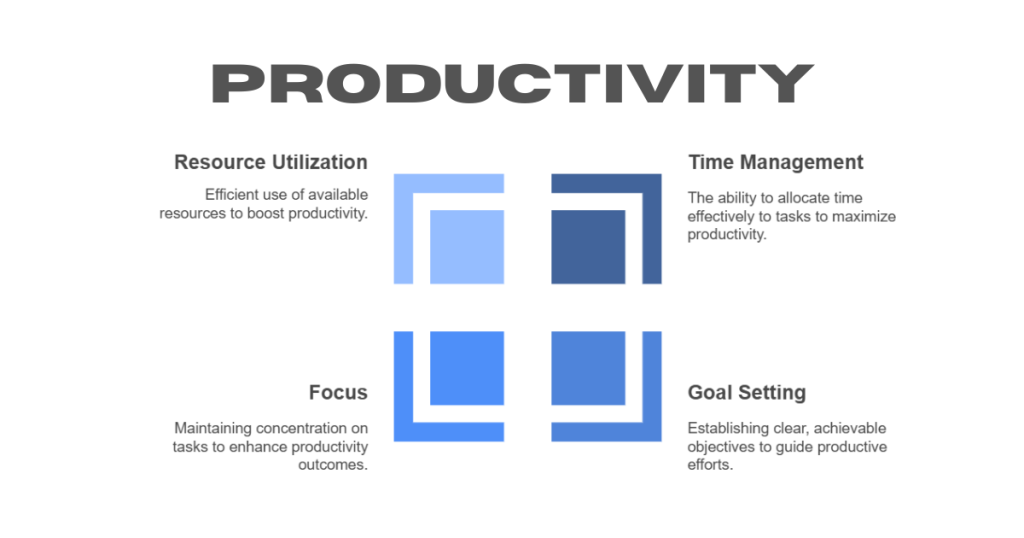
Factors affecting productivity include time management, work environment, motivation, and available resources. Personal habits and organizational culture also play a role.
Conclusion
Achieving productivity means managing time and tasks efficiently. Prioritize your goals daily. Break larger tasks into smaller steps. Stay organized and focused. Minimize distractions. Use tools that help track progress. Regular breaks boost creativity and energy. Consistent effort leads to better results.
Remember, productivity is about quality, not just quantity. Keep learning and adapting. Small changes can make a big difference. Stay motivated and patient. Success will follow.