
Creating a personal website can seem like a big task. But it’s easier than you think.
A personal website is your digital business card. It showcases your skills, work, and personality. It’s a place where people can learn about you. Whether you want to share your portfolio, blog, or resume, a personal website can help. It can also boost your online presence and help you stand out.
In this post, we’ll explore why you need a personal website and how to create one. It’s simpler than it sounds and can be done with basic tools. Let’s get started on building your corner of the internet.
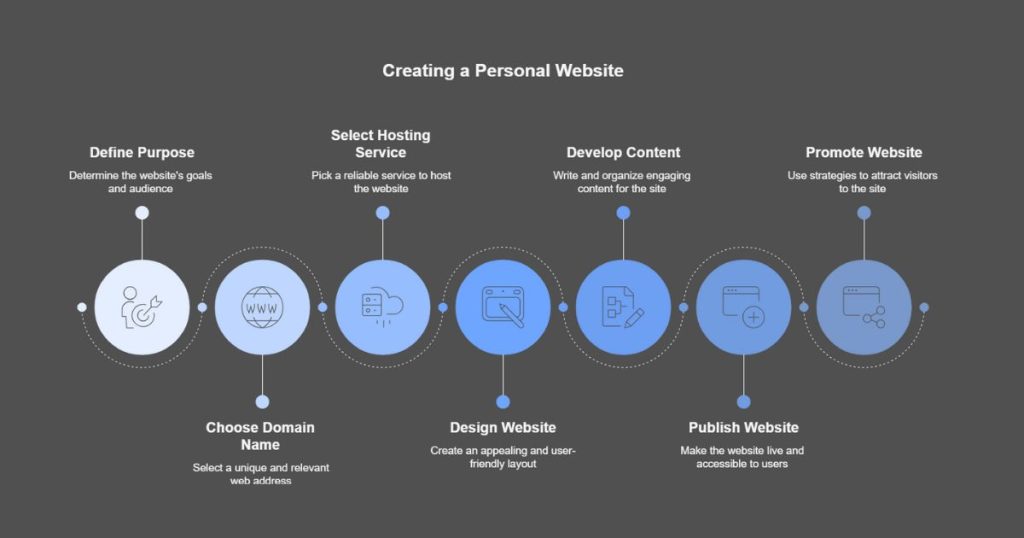
Planning Your Website
Start by outlining your website’s purpose and goals. Choose a user-friendly platform. Focus on creating engaging content that reflects your personal brand.
Creating a personal website is an exciting venture. It gives you a unique space online to showcase your skills, share your thoughts, or even start a business. But before diving into design and content creation, it’s crucial to plan your website. Effective planning helps you define clear goals and understand your audience better, ensuring your website meets its purpose.
Identifying Your Goals
First, ask yourself: What do you want to achieve with your website? Your goals will guide every decision you make, from design to content.
Are you building a portfolio to attract potential employers? Or perhaps you want to start a blog to share your expertise on a topic you love? Maybe you’re aiming to sell products or services.
Write down your primary goal. Then list secondary goals that support the main objective. For example, if your main goal is to attract employers, a secondary goal might be to showcase your best projects and skills.
Defining Your Audience
Who is your website for? Understanding your audience helps you create content that resonates with them.
Think about their demographics: age, profession, interests, and online behavior. Are they tech-savvy professionals looking for in-depth articles or casual readers who prefer quick tips?
Use your personal experiences to refine this. If you’ve ever received feedback on your work, use it to understand what people find valuable.
Create a profile of your ideal visitor. It doesn’t have to be perfect, but it should guide your content and design choices. Imagine speaking directly to this person when you write your content.
Choosing A Domain Name
Selecting a domain name is crucial for your personal website. It should be simple, memorable, and reflect your identity.
Choosing the perfect domain name is crucial for your personal website. It not only reflects your brand but also impacts your online presence. A memorable and relevant domain name helps people find your site easily.
Tips For Selecting A Domain
Start with brainstorming ideas. Think of words that relate to your content. Keep it short and simple. Short names are easy to remember and type. Avoid using numbers and hyphens. They can confuse users. Try to choose a .com extension. It is the most recognized and trusted.
Think about keywords. Keywords describe your website. They help with search engine rankings. Make sure your domain name is unique. Check if it is available on social media. Consistency across platforms strengthens your brand.
Registering Your Domain
Once you have a name, it’s time to register. Choose a reliable domain registrar. Compare prices and services. Look for features like privacy protection. Privacy protection keeps your personal information safe.
Follow the registrar’s instructions. Enter your chosen domain name. Complete the registration form. Pay the fee. The domain is now yours. Make sure to renew it on time. You don’t want to lose it.
Creating a personal website is exciting. Selecting the right domain name is a vital step. It sets the foundation for your online presence.
Selecting A Hosting Provider
Choosing the right hosting provider is key to creating a personal website. Reliable hosting ensures your site is always accessible and loads quickly.
Creating a personal website is an exciting journey, but selecting a hosting provider can feel overwhelming. Your choice here can impact your site’s performance, security, and scalability. Let’s break this down and make it simple.
Types Of Hosting Services
There are several types of hosting services available, each catering to different needs. Shared hosting is the most common and budget-friendly option. It’s great for beginners and small websites because you share server resources with other sites.
If you expect higher traffic or need more control, VPS (Virtual Private Server) hosting is a step up. It provides more resources and flexibility, as you share the server with fewer users.
For large-scale websites or businesses, dedicated hosting is the best choice. You get an entire server to yourself, offering maximum performance and security. However, it’s more expensive and requires technical know-how.
Cloud hosting is another option, ideal for scalable resources. Your site uses a network of servers, which can handle traffic spikes without downtime.
Recommended Hosting Providers
Choosing the right hosting provider is crucial. Some of the most recommended ones include Bluehost, SiteGround, and HostGator.
Bluehost is popular for its ease of use and excellent customer service. It’s perfect for beginners and offers a free domain for the first year.
SiteGround is known for its top-notch performance and security features. It’s slightly pricier but worth it if uptime and speed are your priorities.
HostGator provides a balance between affordability and functionality. It’s user-friendly and has a variety of plans to choose from.
If you’re looking for cloud hosting, DigitalOcean and Amazon Web Services (AWS) are great options. They offer scalable solutions and are favored by developers for their flexibility.
Think about your website’s needs and budget when selecting a hosting provider. Your decision will affect your site’s speed, security, and user experience. So, take your time and choose wisely.
Have you ever struggled with a slow-loading website? Share your experiences in the comments and let’s help each other out!
Designing Your Website
Creating a personal website is a fun and rewarding experience. Designing your website is an important step. It helps you showcase your personality and brand. A good design makes your site user-friendly and attractive.
Choosing A Website Builder
Choosing the right website builder is crucial. Many options are available online. Each has its own features and benefits. Some popular choices are WordPress, Wix, and Squarespace. WordPress is great for customization. Wix is user-friendly. Squarespace has beautiful templates.
Think about your needs. Do you need a simple blog? Or a portfolio? Consider the ease of use and support. Some builders have drag-and-drop features. These make designing easier. Others offer more control but need coding skills.
Creating A Layout
A good layout is key to a successful website. Start with a clear structure. Divide your content into sections. Use headers, paragraphs, and images. Keep it simple and clean.
Think about the user experience. Make navigation easy. Use menus and links wisely. Ensure your site looks good on all devices. Mobile-friendly design is important. Test your layout on different screen sizes.
Include a call-to-action. Encourage visitors to engage. Whether it’s subscribing to a newsletter or contacting you. A well-designed layout guides the visitor smoothly.
Adding Content
Adding content to your personal website is crucial. It defines your online presence. Your content needs to be engaging and relevant. This keeps visitors interested and makes them return.
Writing Engaging Content
Engaging content is key. Write in a clear and friendly tone. Use short sentences. This makes your content easy to read. Focus on topics that interest your audience. Personal stories work well. They create a connection with readers. Always proofread your writing. Correct any errors. This keeps your content professional.
Using Images And Multimedia
Images and multimedia can enhance your website. They make your site more attractive. Use high-quality images. They should relate to your content. Avoid using too many images. This can slow down your website. Videos are also effective. They engage users and keep them on your site longer. Remember to add captions to your images and videos. This helps with SEO and makes your site more accessible.
Optimizing For Seo
Building a personal website involves optimizing for SEO to increase visibility. Use keywords effectively to attract more visitors. Regular updates and quality content are essential.
Creating a personal website is just the first step. To attract visitors, you need to optimize your site for search engines. This process, known as SEO, helps your site appear in search results. Let’s explore some basic SEO practices and how to use keywords effectively.
Basic Seo Practices
SEO starts with a few simple practices. First, ensure your website loads quickly. Fast-loading websites rank higher in search engines. Use clean and organized code. This helps search engines understand your content better.
Next, create a mobile-friendly website. Many users browse on their phones. A mobile-friendly site improves user experience and boosts your SEO. Also, use descriptive alt text for images. This helps search engines index your images. It also makes your site accessible to visually impaired users.
Using Keywords Effectively
Keywords are crucial for SEO. They help search engines understand what your site is about. Start by researching keywords related to your content. Tools like Google Keyword Planner can help.
Use these keywords naturally throughout your site. Place them in titles, headers, and content. Avoid keyword stuffing. This can hurt your SEO. Instead, focus on creating high-quality, relevant content.
Don’t forget about long-tail keywords. These are longer phrases that users search for. They often have less competition and can bring targeted traffic to your site. Using a mix of short and long-tail keywords will improve your SEO.
“`
Launching Your Website
Launching your website is an exciting step. You’ve put in the work and now it’s time to share it with the world. But before you go live, there are some crucial steps to ensure a smooth launch. Let’s dive into these key actions to make your website launch a success.
Final Checks Before Launch
Before going live, review your website carefully. Check for broken links and ensure all pages load correctly. Make sure your content is free of spelling and grammar mistakes. Test your website on different devices to ensure it is responsive.
Verify that all images are optimized for fast loading. Slow images can deter visitors. Make sure your website’s navigation is intuitive and user-friendly. A clear structure keeps visitors engaged. Lastly, ensure your website is secure. Use HTTPS to protect your users’ data.
Promoting Your Website
Once your website is live, it’s time to promote it. Share your website on social media platforms. This will help reach a wider audience. Inform your friends and family about your new website. Word of mouth can be very effective.
Consider starting a blog to drive traffic to your site. Regular posts keep your audience engaged. Use SEO techniques to improve your search engine ranking. This will make it easier for people to find your website. Lastly, join online communities related to your website’s niche. Engage with members and share your site where appropriate.
Maintaining Your Website
Building a personal website keeps your online presence strong. Regular updates ensure your content stays fresh and engaging. Maintaining it improves user experience and search engine rankings.
Maintaining Your Website
Creating a personal website is just the beginning. To keep your site effective and engaging, you need to maintain it regularly. Maintenance ensures that your website remains up-to-date, performs well, and meets the needs of your audience.
Regular Updates
Keeping your website updated is crucial. Add new content frequently to keep visitors coming back. This could be blog posts, new projects, or updated information about yourself.
Updating your site also means keeping software and plugins current. Outdated software can be a security risk. Regular updates help protect your site from hackers.
Don’t forget about design updates. A fresh, modern look can make your site more appealing. Small changes can make a big difference.
Monitoring Performance
Performance monitoring helps you understand how your site is doing. Use tools like Google Analytics to track visitor behavior. This data can show you what’s working and what’s not.
Pay attention to load times. A slow website can frustrate users. Optimize images and minimize code to improve speed.
Check your site’s SEO performance. Are people finding your site through search engines? Adjust your content and keywords to improve your rankings.
By regularly updating and monitoring your website, you ensure it remains a valuable resource for your visitors. What steps will you take today to maintain your website?
Frequently Asked Questions
Can I Make A Personal Website For Free?
Yes, you can create a personal website for free. Use platforms like WordPress, Wix, or Weebly.
How Can I Create My Own Personal Website?
To create a personal website, choose a domain name, select a hosting service, and use a website builder. Customize your design and add content relevant to your audience. Regularly update and optimize for SEO.
Can I Create A Website By Myself?
Yes, you can create a website by yourself. Use website builders like WordPress, Wix, or Squarespace. These platforms offer easy-to-use templates and tools. No coding skills required.
How Much Does It Cost To Build A Website On My Own?
Building a website on your own can cost between $100 and $500. This includes domain, hosting, and basic design tools.
Conclusion
Creating a personal website is an excellent way to showcase your talents. It’s a platform for expressing your creativity and sharing your interests. By following simple steps, anyone can build a website that looks professional. Start with a clear purpose and design layout.
Add engaging content and keep it updated regularly. A well-maintained website can open doors to new opportunities. Take the leap and build your personal site today. Your online presence can make a lasting impact. Happy website building!