
Disputes over business information can be complex. They often require legal help to resolve.
In today’s fast-paced business world, information disputes can arise unexpectedly. These disputes might involve confidential data, intellectual property, or trade secrets. Resolving such issues is crucial for the smooth operation of any business. Legal help becomes essential to navigate these disputes effectively.
Lawyers with expertise in business law provide valuable guidance. They help protect your business interests and ensure compliance with regulations. Understanding the importance of legal assistance in these matters can save time and resources. In this blog, we explore why legal help is vital for resolving business information disputes. Let’s dive into the details.
Introduction To Business Information Disputes
Business information disputes can be challenging and disruptive. They arise when there’s a disagreement over data or documents critical to your business operations. Resolving these disputes promptly is essential to avoid further complications.
Common Causes
Disputes often start from unclear contracts. When terms are vague, it’s easy for parties to have different interpretations.
Another common cause is data discrepancies. For instance, financial reports showing different figures can spark significant conflicts.
Miscommunication is also a major factor. If the information shared isn’t clear or complete, misunderstandings can escalate into disputes.
Impact On Businesses
These disputes can disrupt your operations. Imagine a critical project delayed because of a contract disagreement.
They can also damage relationships. Trust is hard to rebuild once it’s lost over conflicting information.
Moreover, resolving these disputes often involves legal costs. These expenses can strain your budget and impact your bottom line.
Have you faced a business information dispute before? How did it impact your operations?
Addressing these issues early on can save time and resources. Clear communication and precise documentation are key to preventing disputes.
Identifying Information Disputes
Identifying information disputes in a business setting is critical. These disputes can arise from several sources, leading to significant consequences. Recognizing the early signs can prevent these issues from escalating. This section delves into the signs and symptoms of information disputes and highlights the benefits of early detection.
Signs And Symptoms
Information disputes often manifest through various signs. One common symptom is inconsistent data. This can occur across departments or within reports. Frequent data errors are another indicator. You may notice discrepancies in customer information. Inconsistent financial records also signal a problem. These inconsistencies can disrupt business operations.
Communication breakdowns are another sign. If employees struggle to find accurate data, there may be an underlying issue. Misunderstandings between teams can also point to information disputes. Watch for increased employee frustration. This can be a symptom of deeper data problems.
Early Detection Benefits
Early detection of information disputes offers several benefits. It helps maintain data integrity. This ensures your business operations run smoothly. Accurate data enhances decision-making processes. It allows for more informed business strategies.
Identifying disputes early also saves time and resources. Addressing issues before they escalate reduces the need for extensive corrections. This can prevent costly legal battles. Early resolution fosters a positive work environment. Employees feel confident in the information they use.
Overall, early detection supports business growth. It ensures reliable data, smooth operations, and a harmonious workplace.
Legal Framework For Information Disputes
When your business faces information disputes, understanding the legal framework is crucial. It can help you protect your rights and resolve conflicts effectively. Let’s dive into the key components of this framework.
Relevant Laws
Several laws govern information disputes in business. These laws ensure transparency and fairness. They cover aspects like data protection, intellectual property, and contract enforcement.
Data protection laws, like the GDPR, safeguard personal information. They impose strict rules on how data is collected and used. Intellectual property laws protect your creations, preventing unauthorized use.
Contract enforcement laws ensure that business agreements are honored. They provide legal remedies if a party breaches a contract. Understanding these laws can help you navigate disputes confidently.
Regulatory Bodies
Regulatory bodies play a vital role in overseeing business information disputes. They enforce laws and provide guidelines. Familiarizing yourself with these bodies can be beneficial.
For example, the Federal Trade Commission (FTC) monitors data privacy and consumer protection in the United States. The Information Commissioner’s Office (ICO) in the UK ensures compliance with data protection laws.
These organizations offer resources and support for businesses facing disputes. They can provide mediation services and legal advice. Knowing where to turn can save you time and stress.
Have you ever faced an information dispute in your business? How did you handle it? Understanding the legal framework can make a significant difference. Equip yourself with knowledge to protect your business effectively.
Choosing The Right Legal Help
Choosing the right legal help for business information disputes can be challenging. The right legal expert can make a significant difference. They ensure your business is protected and your interests are represented. Here’s what you need to know about selecting the best legal help.
Qualities To Look For
First, consider experience. An experienced lawyer understands the nuances of business disputes. They have likely dealt with cases similar to yours. This experience can be invaluable.
Next, look for good communication skills. Your lawyer should explain legal terms in a way you understand. They should keep you informed about your case’s progress. You need to feel comfortable asking questions.
Availability is another key quality. Your lawyer should be accessible. They should return your calls and emails promptly. This shows they are committed to your case.
Lastly, consider their reputation. Look for reviews or ask for references. A lawyer with a good track record is more likely to achieve favorable outcomes.
Types Of Legal Experts
Different disputes may require different types of legal experts. Business lawyers specialize in various aspects of business law. They handle contracts, mergers, and general legal advice.
Litigation lawyers are essential if your dispute goes to court. They represent you in legal proceedings. They focus on building a strong case to defend your interests.
Intellectual property lawyers are crucial for disputes involving patents or trademarks. They protect your business’s intellectual assets. They ensure your ideas and products are legally safeguarded.
Employment lawyers deal with conflicts involving employees. They help with issues like wrongful termination or workplace discrimination. They ensure your business complies with employment laws.
Choosing the right type of legal expert depends on your specific needs. Evaluate your situation carefully. Then select the lawyer best suited to resolve your dispute.
Expert Solutions For Dispute Resolution
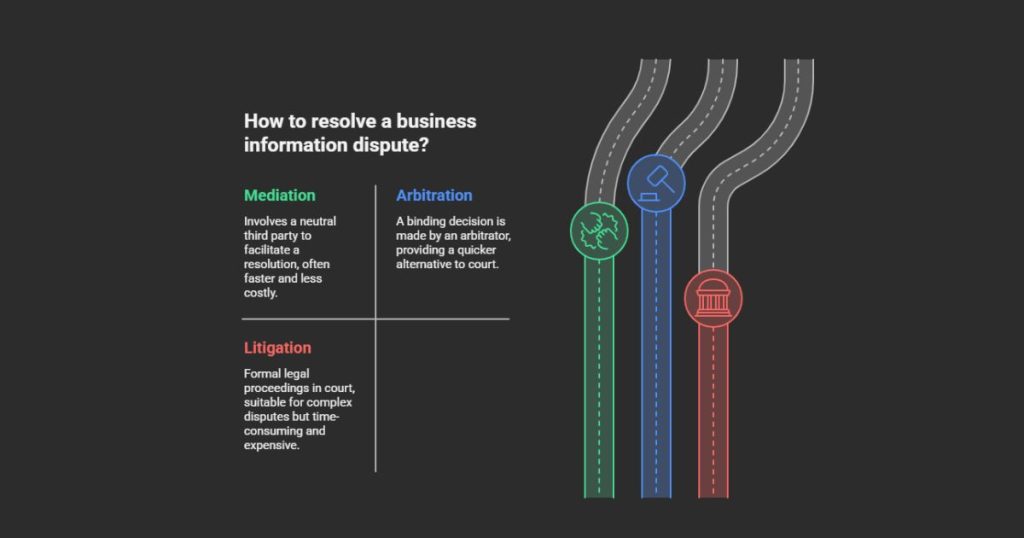
Disputes can disrupt business operations. Resolving them effectively is crucial. Expert solutions offer a structured approach. Two common methods are mediation and arbitration. These methods provide clarity and fairness. They also save time and resources.
Mediation
Mediation involves a neutral third party. This mediator helps both sides communicate. The goal is to find a mutual agreement. Mediation is often less formal. It allows for flexible solutions. Both parties must agree to the outcome. This method can preserve business relationships. It is also usually faster and cheaper.
Arbitration
Arbitration is more formal than mediation. An arbitrator hears both sides. They make a binding decision. This process resembles a court trial. But it is private and faster. The arbitrator’s decision is final. Both parties must follow it. Arbitration can be less expensive than court. It also offers a clear resolution.
Steps In Legal Dispute Resolution
Businesses often face disputes over information. Legal help involves steps like negotiation, mediation, and arbitration to resolve these issues. Seeking legal advice can save time and protect business interests.
When your business faces a dispute, it can be overwhelming. Understanding the steps in legal dispute resolution can help you navigate this challenging process. By knowing what to expect, you can better prepare and protect your interests.
Initial Consultation
The first step in resolving a business information dispute is to seek an initial consultation with a legal expert. This meeting helps you understand your position and options.
During the consultation, you’ll share the details of your case. The lawyer will assess the situation, and provide preliminary advice. This advice can help you decide whether to pursue legal action or consider alternative solutions.
Ask questions during this meeting. Make sure you understand the potential costs, timeline, and outcomes. This knowledge will help you make informed decisions.
Legal Documentation
Proper documentation is crucial in any legal dispute. Collect and organize all relevant documents before proceeding.
Examples of important documents include contracts, emails, and financial records. These documents serve as evidence, supporting your claims or defense.
Keeping detailed records can make or break your case. Ensure you have everything in order to present a strong argument.
Understanding these initial steps can make legal disputes less daunting. Have you ever had to resolve a business dispute? How did you handle it?
Case Studies Of Successful Resolutions
Facing a business information dispute can be daunting. However, it can be reassuring to know that many companies have successfully navigated these challenges. Let’s dive into some real-life examples and the lessons learned from these cases.
Real-life Examples
One small tech startup faced a major dispute over intellectual property rights. They were accused of infringing on a larger competitor’s patent. Instead of going to court, they opted for mediation and reached an agreement that allowed them to continue their operations. They even formed a partnership with their competitor.
Another example is a retail business that had a conflict with a supplier over contract terms. They resolved the issue through arbitration, which led to a renegotiation of the contract that benefited both parties. The business saved time and money by avoiding a lengthy court battle.
In both instances, choosing alternative dispute resolution methods proved beneficial. It not only saved resources but also helped maintain professional relationships.
Lessons Learned
From these examples, it’s clear that alternative dispute resolution methods can be effective. Mediation and arbitration often lead to quicker and less costly resolutions. They also help preserve business relationships.
Another lesson is the importance of being open to negotiation. Flexibility can lead to mutually beneficial outcomes. Rigid stances often prolong disputes and increase costs.
Lastly, having legal help is crucial. Expert advice can guide you through the process, ensuring your rights are protected and the resolution is fair. Are you prepared to seek legal help when facing a business dispute?
These case studies highlight practical approaches. Applying these lessons can lead to successful resolutions in your business disputes. How would you handle a similar situation?
Preventing Future Disputes
Legal assistance can help businesses avoid future disputes over information. Expert advice ensures clarity and reduces misunderstandings. Proper documentation and clear communication are key to preventing conflicts.
Preventing future disputes is crucial for any business. Disputes can be costly, time-consuming, and stressful. By taking proactive steps, you can safeguard your business against potential conflicts. Let’s dive into some best practices and the importance of continuous monitoring.
Best Practices
Adopting best practices can significantly reduce the chances of disputes. Clear communication is key. Ensure all agreements and terms are in writing. This avoids misunderstandings.
Regularly update contracts and policies. Laws and regulations change, and your documents should reflect that.
Another useful practice is to train your staff. Make sure they understand the importance of compliance and the specifics of your business agreements.
Continuous Monitoring
Continuous monitoring is essential. Keep track of your business relationships and transactions. This helps you spot potential issues early.
Use technology to your advantage. There are various tools available that can help you monitor contracts and compliance. These tools can send alerts if something seems off.
Regular audits are also beneficial. They provide a comprehensive review of your practices and highlight areas for improvement.
In my experience, having a dedicated team for monitoring can make a huge difference. They can focus solely on ensuring everything runs smoothly and address issues before they escalate.
How do you currently monitor your business activities? Could enhancing this process help you avoid disputes?
By implementing these best practices and continuous monitoring, you can create a more secure and dispute-free business environment.
Frequently Asked Questions
What Is The Best Way To Resolve Business Disputes?
Mediation is the best way to resolve business disputes. It is cost-effective, confidential, and promotes mutual agreement.
What Information Do You Need To Sue A Company?
To sue a company, you need the company’s name, address, evidence of wrongdoing, legal basis for the claim, and damages suffered.
How Much Does A Lawyer Cost For A Small Business?
A lawyer for a small business typically costs between $150 to $350 per hour. Rates can vary based on location and experience.
Can I Call A Lawyer And Ask A Question For Free?
Yes, many lawyers offer free initial consultations. You can ask questions during this session. Check their website or call to confirm.
Conclusion
Resolving business information disputes can be challenging. Legal help offers clarity and support. It ensures fair handling of conflicts. Expert advice protects your business interests. Always consult a professional for guidance. Stay informed and proactive. Protect your business from unnecessary risks.
Legal assistance is a wise investment. It can save time and resources. Make informed decisions to keep your business strong.