
Augmented Reality (AR) is transforming ecommerce. It blends digital elements with the physical world, enhancing the shopping experience.
Imagine trying on clothes without leaving home or visualizing furniture in your living room. AR makes this possible. It bridges the gap between online and in-store shopping. For ecommerce businesses, AR offers a way to engage customers more deeply. It provides interactive and immersive experiences.
These experiences can lead to higher customer satisfaction and reduced return rates. AR is not just a trend. It’s a game-changer in the ecommerce landscape. Embracing AR can set businesses apart in a competitive market. Let’s explore how AR is reshaping the future of ecommerce.
Introduction To AR Ecommerce
Augmented Reality (AR) Ecommerce is transforming the way people shop online. It blends the digital world with the real world, creating an immersive shopping experience. This technology allows customers to visualize products in their own environment before making a purchase. This section will explore the basics of AR Ecommerce, its importance, and how it enhances online shopping.
What Is Augmented Reality?
Augmented Reality adds digital elements to the real world through a device. This could be a smartphone, tablet, or AR glasses. These elements can be images, sounds, or other sensory stimuli. AR enhances the user’s perception of reality. It differs from Virtual Reality, which creates an entirely new environment.
Importance In Online Shopping
AR Ecommerce helps customers make better buying decisions. They can see how furniture fits in their home. They can try on clothes or accessories virtually. This reduces the uncertainty and guesswork of online shopping. AR also decreases the rate of returns. Customers are more satisfied with their purchases.
AR provides a more interactive and engaging shopping experience. It helps brands stand out in a competitive market. Retailers can showcase their products in a unique way. This technology appeals to tech-savvy shoppers. It creates a memorable shopping journey.
Benefits Of AR In Ecommerce
Augmented Reality (AR) in ecommerce offers several benefits. It transforms how customers interact with products. This technology brings products to life, boosting customer engagement. Let’s explore the key benefits of AR in ecommerce.
Enhanced Customer Experience
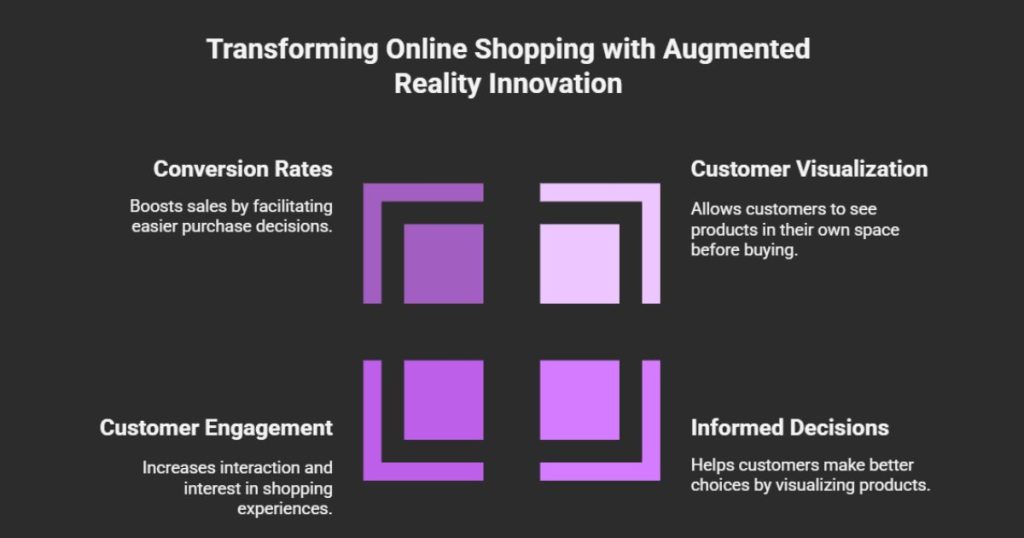
AR provides an immersive shopping experience. Customers can visualize products in their environment. This helps them understand the product better. They can see how a sofa fits in their living room. Or how a dress looks on them. This leads to informed purchasing decisions. It reduces the uncertainty of online shopping.
Increased Conversion Rates
AR can boost conversion rates significantly. Customers feel more confident about their purchases. They are less likely to return products. This leads to higher customer satisfaction. Businesses see more completed transactions. AR bridges the gap between online and in-store shopping. It offers a unique and engaging way to shop.
AR Technologies In Ecommerce
Augmented Reality (AR) is revolutionizing the ecommerce industry by providing a unique and immersive shopping experience. Imagine being able to try on clothes, visualize furniture in your living room, or test makeup without ever leaving your home. That’s the magic of AR in ecommerce! Let’s dive into some of the technologies making this possible.
AR Apps
AR apps are the most popular way to experience augmented reality in ecommerce. These apps are designed to work on smartphones and tablets, making them accessible to a wide audience. With a simple download, customers can unlock a new world of interactive shopping.
- Virtual Try-On: Imagine being able to try on clothes, shoes, and accessories virtually. AR apps can superimpose these items onto your image, giving you a realistic preview.
- Product Visualization: AR apps allow users to see how products like furniture, electronics, and decor will look in their own space. This helps make more informed purchasing decisions.
- Interactive User Manuals: Some AR apps provide interactive guides for products, making it easier to understand how to use them without fumbling through lengthy manuals.
One of my friends recently used an AR app to buy a couch. She was able to see how it fit in her living room before hitting the ‘buy’ button. Talk about convenience!
Web-based AR
Web-based AR is another exciting development in the ecommerce space. Unlike AR apps, web-based AR doesn’t require any downloads. Customers can access AR features directly through their web browsers.
- Ease of Access: Since there’s no need to download an app, customers can jump into the AR experience quickly. This is perfect for those who want a fast and seamless shopping journey.
- Universal Compatibility: Web-based AR works across different devices and operating systems, ensuring everyone gets the same high-quality experience.
- Enhanced Customer Engagement: Websites incorporating AR can keep customers on their pages longer, increasing the chance of making a sale. Who wouldn’t want to spend more time playing around with cool AR features?
During a recent online shopping spree, I stumbled upon a website that used web-based AR to showcase their products. I was able to see how a lamp would look on my desk right from my browser. It felt like magic!
In conclusion, AR technologies like apps and web-based AR are revolutionizing ecommerce. They offer customers a more interactive, engaging, and convenient shopping experience. As these technologies continue to evolve, the future of online shopping looks brighter than ever. So, next time you’re shopping online, look out for those AR features. Who knows, you might just find your next favorite item through a virtual try-on or product visualization!
Case Studies
Augmented Reality (AR) eCommerce is revolutionizing the way we shop online. But how does it work in real life? Let’s dive into some real-world examples to understand better. We’ll explore success stories, and the challenges faced by businesses implementing AR in their online stores.
Success Stories
AR in eCommerce is more than just a buzzword. It has transformed the shopping experience for many businesses. Let’s look at a few success stories.
- IKEA: The furniture giant has been a pioneer in AR. With their IKEA Place app, customers can visualize how furniture would look in their homes before making a purchase. The app’s success is evident, with millions of downloads and a significant boost in customer engagement.
- Sephora: This beauty retailer uses AR to let customers try on makeup virtually. The Sephora Virtual Artist app has been a game-changer, reducing product returns and increasing customer satisfaction. It’s like having a personal makeup artist in your pocket!
- Warby Parker: Known for their stylish eyewear, Warby Parker’s AR app allows customers to try on glasses virtually. This has led to a notable increase in online sales and reduced the need for physical store visits.
Challenges Faced
While AR eCommerce has its advantages, it’s not without challenges. Here are some common hurdles businesses face:
- Technology Integration: Integrating AR technology with existing eCommerce platforms can be complex and costly. Businesses need to invest in skilled developers and advanced software.
- Customer Adoption: Not all customers are tech-savvy. Some might find AR tools challenging to use, which could limit the technology’s reach.
- Data Privacy: AR applications often collect data to provide personalized experiences. Ensuring this data is secure and used ethically is crucial, but it can be a daunting task.
- Quality Control: Ensuring that AR experiences are accurate and high-quality is vital. Poor AR experiences can lead to customer dissatisfaction and harm the brand’s reputation.
Despite these challenges, the potential benefits of AR in eCommerce are immense. By learning from these case studies, businesses can better understand how to harness the power of AR and overcome the obstacles they might face.
Implementing Ar In Online Stores
Implementing Augmented Reality (AR) in online stores can enhance the shopping experience. AR allows customers to visualize products in their environment. It bridges the gap between physical and online shopping. Shoppers can see how a product looks before purchasing. This can reduce returns and increase satisfaction. Here’s how to integrate AR into your online store.
Steps To Integrate AR
Start by identifying suitable products for AR visualization. Not all products need AR. Focus on items that benefit from visual representation, like furniture or clothing.
Next, create 3D models of these products. High-quality models are crucial for a good AR experience. Use professional tools to ensure accuracy and detail.
Then, choose an AR platform that suits your needs. Several platforms offer AR solutions for ecommerce. Evaluate their features and pricing.
Integrate the chosen AR platform with your online store. Most platforms provide plugins or APIs for easy integration. Follow the instructions provided by the platform.
Finally, test the AR features before going live. Ensure everything works smoothly on different devices. User experience should be seamless and intuitive.
Tools And Platforms
Many tools and platforms can help implement AR in ecommerce. Some popular options include ARKit, ARCore, and Vuforia.
ARKit is developed by Apple. It works well with iOS devices. It provides powerful AR capabilities for ecommerce.
ARCore is Google’s AR platform. It supports both Android and iOS. It offers robust features for creating AR experiences.
Vuforia is another leading AR platform. It supports a wide range of devices. It provides tools for both beginners and advanced users.
Each platform has its strengths. Choose one that fits your technical requirements and budget.
Impact On Consumer Behavior
Augmented Reality (AR) is revolutionizing the way we shop online. It’s not just a buzzword; it’s a game-changer. Imagine trying on clothes without leaving your house or seeing how a new couch fits in your living room before buying it. This technology is making online shopping more interactive and engaging, and it’s having a significant impact on consumer behavior. Let’s dive into how AR is shaping our shopping habits and decision-making processes.
Shopping Habits
AR is transforming our shopping habits in remarkable ways. For instance:
- Interactive Experience: Shoppers can now try before they buy. This interactive experience is not just fun; it’s practical. Who wouldn’t want to see how a pair of shoes looks on their feet before purchasing?
- Convenience: AR reduces the need for physical store visits. It saves time and effort, which is a boon for busy individuals.
- Enhanced Engagement: AR apps and features keep customers engaged longer. The more time they spend on an app, the higher the chances of them making a purchase.
Think about it, wouldn’t you prefer to see how a new pair of glasses suits your face instantly? AR makes that possible, changing the way we shop forever.
Decision-making Process
When it comes to making purchase decisions, AR plays a crucial role. Here’s how:
- Confidence in Purchase: By providing a realistic preview, AR boosts consumer confidence. Shoppers feel more secure in their choices, knowing exactly what they’re getting.
- Reduction in Returns: With a clearer idea of how products look and fit, the chances of returns and exchanges decrease. This is a win-win for both consumers and retailers.
- Personalization: AR allows for a more personalized shopping experience. Consumers can see how products will look in their unique environments, making the decision-making process more tailored and effective.
Ever been unsure about buying a piece of furniture online? With AR, you can place that virtual chair in your actual living room and see if it matches your decor. It’s like having a personal shopping assistant right in your phone.
In summary, AR is not just a fleeting trend. It’s here to stay and is profoundly changing how we shop and decide on purchases. Whether it’s enhancing our shopping habits or making our decision-making process easier, AR in eCommerce is truly impactful.
Future Trends
Augmented Reality (AR) is transforming the ecommerce landscape. As we look forward, exciting innovations and predictions are on the horizon. Let’s dive into what’s coming next in the world of AR ecommerce.
Innovations In AR
We are on the cusp of some groundbreaking AR innovations that will change how we shop online. Imagine trying on clothes without ever stepping into a store! Here are a few innovations to watch:
- Virtual Try-Ons: Using AR, shoppers can see how clothes, accessories, and even makeup look on them in real-time.
- Interactive Product Demos: Detailed 3D models allow users to interact with products, seeing every angle and feature.
- Personalized Shopping Experiences: AR can tailor recommendations and create a unique shopping journey for each user.
Predictions For Ecommerce
What does the future hold for ecommerce with the advent of AR? Here are some predictions:
- Increased Conversion Rates: As customers gain confidence through virtual try-ons and demos, purchase decisions will become easier and faster.
- Reduced Return Rates: With a clearer idea of what they are buying, customers are less likely to return products.
- Enhanced Customer Engagement: AR experiences are interactive and engaging, leading to higher customer satisfaction and loyalty.
AR in ecommerce is not just a fad; it’s the future. Imagine telling your grandchildren about the days when we shopped online without seeing how things looked on us first! The future is bright, and these trends are just the tip of the iceberg. Are you ready to embrace the AR revolution?
Frequently Asked Questions
How Is Augmented Reality Used In Ecommerce?
Augmented reality in eCommerce enhances shopping experiences by allowing customers to visualize products in their space. It boosts engagement and reduces returns.
What Are The Disadvantages Of Ar In Ecommerce?
AR in eCommerce can be expensive to implement. Technical issues may arise, affecting user experience. Not all customers have compatible devices.
Does Shopify Have Ar?
Yes, Shopify supports AR. Merchants can use 3D models to enhance their product listings and provide immersive experiences.
How Does Amazon Use Augmented Reality?
Amazon uses augmented reality to help customers visualize products in their homes. The AR View feature allows users to see how items will look in real-life settings before purchasing. This technology enhances the shopping experience and reduces the need for returns.
Conclusion
Augmented reality ecommerce offers exciting opportunities for businesses and consumers. It enhances shopping experiences, making them more interactive. Customers can try products virtually, boosting confidence in purchases. This technology improves customer satisfaction and reduces returns. Businesses can showcase products in innovative ways, attracting more buyers.
As AR evolves, its impact on ecommerce will grow stronger. Embrace this technology to stay ahead in the competitive market. Augmented reality is not just a trend; it’s a valuable tool for modern ecommerce. Explore its potential and see the benefits firsthand.