
Augmented Reality (AR) is transforming the way we interact with digital content. It blends the physical world with virtual elements, creating immersive experiences.
Augmented Reality is not just for gaming anymore. It has found its way into various fields like education, healthcare, retail, and more. Imagine students exploring ancient civilizations in 3D, or doctors practicing surgeries with virtual tools. Retailers can offer virtual fitting rooms, and real estate agents can provide virtual home tours.
These are just a few examples of how AR can be used. This blog will explore a range of exciting AR ideas. Each idea is practical, innovative, and ready to inspire. Let’s dive into the world of Augmented Reality and see what’s possible.
Augmented Reality In Education
Augmented Reality (AR) is changing the face of education. It brings lessons to life and makes learning fun. Teachers and students benefit from this technology. Here are some ways AR is used in education.
Interactive Learning
AR makes learning interactive and engaging. Students can see 3D models of complex objects. They can explore the human body, planets, and historical sites. This hands-on experience helps in better understanding. It also keeps students interested in the lesson. Interactive learning with AR makes subjects like science and history exciting.
Virtual Classrooms
AR creates virtual classrooms that break physical boundaries. Students from different locations can join the same class. They can interact with each other and the teacher. This fosters a collaborative learning environment. Virtual classrooms can include AR elements. These elements make the learning experience more immersive. For example, a history lesson can take students back in time to ancient civilizations.
AR In Shopping
Experience shopping with Augmented Reality (AR) ideas. Try on clothes virtually or see furniture in your room before buying. Enhance your shopping journey with interactive AR features.
Augmented Reality (AR) is revolutionizing shopping, making it more interactive, convenient, and personalized. Imagine trying on clothes without stepping into a fitting room, or visualizing how a new couch would look in your living room before buying it. These advancements in technology are not just futuristic fantasies; they are real and transforming the shopping experience.
Virtual Try-on
Virtual try-on is one of the most exciting applications of AR in shopping. With this technology, you can try on clothes, accessories, and even makeup without physically touching them.
Have you ever felt the frustration of buying clothes online, only to find they don’t fit or look right? AR eliminates this hassle. You can see how a dress fits your body or how a pair of glasses looks on your face in real-time.
Apps like Warby Parker and Sephora have already adopted AR for virtual try-ons. By using your smartphone camera, these apps superimpose the product onto your image, giving you a realistic preview. This not only saves time but also makes online shopping more enjoyable and less risky.
Enhanced Product Visualization
Enhanced product visualization is another area where AR is making a significant impact. This feature allows you to see products in your own environment before making a purchase.
Ever wondered if that new table would match your existing decor? With AR, you can place a virtual version of the table in your room using your smartphone or tablet. You can walk around it, view it from different angles, and decide if it fits your space and style.
I once used an AR app to visualize a bookshelf in my apartment. Seeing it virtually helped me realize it wouldn’t fit the way I had imagined. It saved me from making a costly mistake.
Retailers like IKEA and Amazon are leveraging this technology to enhance the customer experience. By offering AR visualization, they empower you to make more informed decisions, reducing the likelihood of returns and increasing satisfaction.
How would you feel about making fewer purchase mistakes? AR in shopping is making this possible by bridging the gap between online and physical shopping.
Incorporate AR into your shopping routine and discover a new level of convenience and personalization. Whether it’s through virtual try-ons or enhanced product visualization, AR is here to transform how you shop.
Ar In Healthcare
Augmented Reality (AR) is transforming various fields, and healthcare is no exception. AR in healthcare offers innovative solutions for both medical professionals and patients. This technology is making medical training more effective and enhancing patient care. Let’s explore how AR is used in healthcare.
Medical Training
AR provides immersive medical training experiences. Students can interact with 3D models of the human body. This offers a deeper understanding of anatomy. They can practice surgeries in a virtual environment. This reduces the risk of errors in real-life procedures. AR also helps in visualizing complex medical concepts. This makes learning easier and more engaging.
Patient Care
AR improves patient care in many ways. Doctors can use AR to explain procedures to patients. This helps patients understand their treatment better. AR can guide doctors during surgeries. It overlays vital information on the patient’s body. This ensures precision and safety. AR also assists in remote consultations. Patients can receive care without visiting the hospital.
AR In Entertainment
Augmented Reality brings new ideas to entertainment, making experiences more interactive. Imagine seeing virtual concerts in your living room. Enjoy immersive stories that blend the real world with digital elements.
Augmented Reality (AR) is revolutionizing the entertainment industry by offering immersive and interactive experiences that were once the stuff of science fiction. From gaming to live events, AR is reshaping how we engage with our favorite forms of entertainment. This section delves into some of the most exciting AR applications in entertainment, focusing on immersive gaming and enhancing live event experiences.
Immersive Gaming
Imagine stepping into your favorite video game and interacting with the environment as if you were actually there. AR makes this possible. By overlaying digital elements onto the real world, AR creates a gaming experience that is both engaging and highly interactive.
Consider Pokémon Go, which took the world by storm. It encouraged players to explore their surroundings to find and capture virtual creatures. The game seamlessly blended the digital and physical worlds, making everyday locations part of the adventure.
Another example is Minecraft Earth, which allows players to build structures that can be seen in the real world through their smartphones. This brings a new level of creativity and collaboration, as you can invite friends to interact with your virtual builds.
So, why not explore AR games? They can transform your living room into a battlefield or a treasure hunt ground, offering endless fun and excitement.
Live Event Experiences
AR is also changing how we experience live events, such as concerts, sports, and theater. Imagine attending a concert where you can see virtual effects overlayed on the stage, enhancing the performance without needing special glasses or equipment.
For instance, at some music festivals, AR apps allow you to see additional visuals and information about the artists, making the experience richer and more engaging. You can even capture unique photos with AR filters that make it look like you’re part of the show.
In sports, AR can provide real-time stats and player information during a game, enhancing your understanding and enjoyment. Imagine watching a soccer match and seeing player stats pop up as they move around the field. It’s like having a personal commentator right in your pocket.
Have you ever wondered how AR could enhance your next live event experience? Give it a try and see how it can make your favorite activities even more enjoyable.
AR in entertainment is not just a passing trend; it’s a groundbreaking shift in how we experience fun and leisure. Whether through immersive gaming or enhanced live events, AR offers endless possibilities for creating memorable and interactive experiences.
AR For Travel
Augmented Reality (AR) is revolutionizing the travel industry. Imagine exploring new destinations with a digital layer of information enhancing your experience. AR for travel is not just about fun; it’s about making your travel more informative, engaging, and hassle-free. Let’s explore two exciting ways AR is changing the way we travel: virtual tours and navigation assistance.
Virtual Tours
Have you ever wished you could preview a destination before booking your trip? AR virtual tours make this possible. You can explore famous landmarks, museums, and even hotels from the comfort of your home. Picture yourself walking through the Louvre Museum in Paris, examining artworks closely, and reading detailed descriptions—all without leaving your living room.
Travel companies are increasingly offering AR virtual tours to help you make informed decisions. This way, you know exactly what to expect. It’s like having a sneak peek into your vacation. Wouldn’t it be amazing to check out the view from your hotel room or stroll through the neighborhood before making a reservation?
Navigation Assistance
Getting lost in a new city can be frustrating. AR navigation assistance turns your smartphone into a personal guide. With just a few taps, you can get real-time directions overlaid on your surroundings. Imagine holding up your phone and seeing arrows pointing you to the nearest café or historical site.
Navigation apps using AR can also provide information about the places you pass by. You can learn about the history of a building, find out the best time to visit a popular spot, or even discover hidden gems you might have missed otherwise. Have you ever stumbled upon a charming local shop that wasn’t in any guidebook? AR can help you find these hidden treasures effortlessly.
In what other ways do you think AR could enhance your travel experiences? The possibilities are endless, and as technology evolves, so will the ways we explore the world. Augmented reality is not just a trend; it’s a tool that can transform the way you travel, making each journey more enriching and enjoyable.
AR In Social Media
Augmented Reality (AR) is changing how we use social media. AR brings new experiences to platforms like Instagram, Snapchat, and Facebook. Users enjoy more interactive and fun ways to share and connect.
In this section, we explore two popular AR uses in social media. Let’s dive into augmented filters and interactive stories.
Augmented Filters
Augmented filters are popular on social media. They add fun elements to photos and videos. Users can change their appearance or add animations. These filters can transform faces into animals or add virtual makeup. They make content more engaging and creative. Brands use AR filters for marketing. This attracts more users and builds brand loyalty.
Interactive Stories
Interactive stories are another exciting AR use. Social media stories are short, temporary posts. With AR, these stories become more engaging. Users can add interactive elements, like polls or quizzes. This makes stories more fun and keeps viewers interested. Brands use AR stories to connect with their audience. This creates a more immersive experience. It also increases engagement and interaction.
AR In Real Estate
Augmented Reality (AR) is changing the real estate industry. With AR, potential buyers can explore properties in new ways. This technology offers a more interactive experience. It helps buyers make informed decisions. Let’s explore how AR is being used in real estate.
Virtual Property Tours
Virtual property tours allow buyers to visit homes from anywhere. They can view every room and detail without leaving their house. This saves time and effort. Buyers can explore many properties in a short time. They get a realistic sense of space and design. It’s almost like being there in person.
Interactive Floor Plans
Interactive floor plans make it easy to understand a property’s layout. Users can see how rooms connect and flow together. They can visualize furniture placement and room sizes. This helps in planning and decision-making. Interactive floor plans can be adjusted in real-time. Buyers can see different configurations and options.
Future Of AR
The future of Augmented Reality (AR) looks promising. AR blends the digital world with the real world. This technology is gaining traction in various sectors. From education to healthcare, AR is making its mark. Let’s explore some innovative applications and the challenges and opportunities that lie ahead.
Innovative Applications
AR in education can make learning fun. Imagine studying history with a 3D model of ancient Rome. Students can interact with the model, making lessons memorable. In healthcare, AR assists surgeons. They can see 3D visuals of organs during surgery. This improves precision and reduces risks.
Retail is also benefiting from AR. Customers can try clothes virtually. This saves time and enhances the shopping experience. Real estate agents use AR to show properties. Potential buyers can take virtual tours from their homes. The possibilities are endless.
Challenges And Opportunities
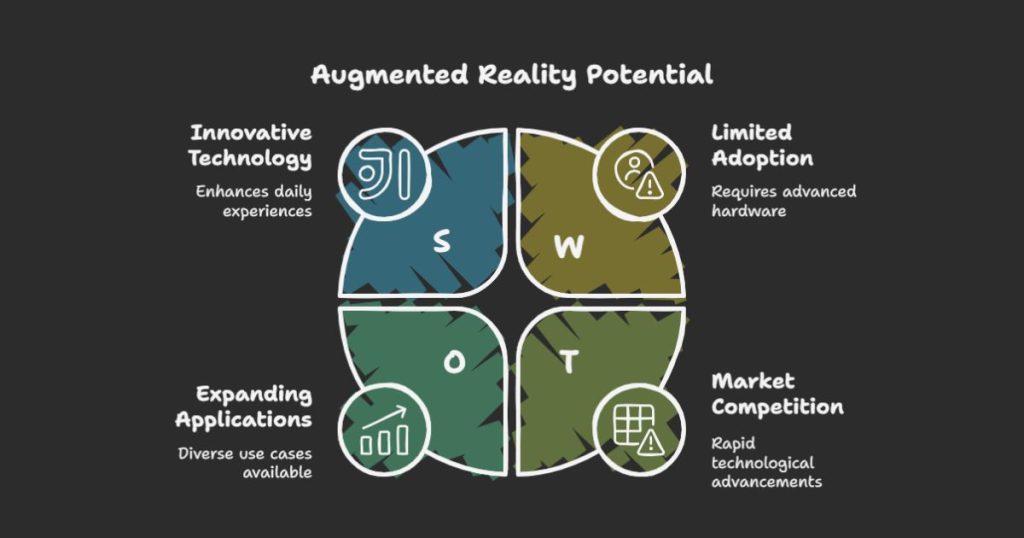
Despite its potential, AR faces challenges. One major issue is the cost. Developing AR applications can be expensive. This limits access for small businesses. Another challenge is user privacy. AR collects a lot of data. Ensuring this data is secure is crucial.
On the flip side, these challenges present opportunities. Companies can focus on creating affordable AR solutions. This will make the technology more accessible. Improving data security can build user trust. As AR evolves, addressing these challenges can lead to growth.
Frequently Asked Questions
What Are Some Examples Of Augmented Reality?
Examples of augmented reality include Pokémon Go, IKEA Place app, Snapchat filters, and Google Lens. These apps overlay digital elements onto the real world.
What Are The 3 Types Of Augmented Reality?
The three types of augmented reality are marker-based, markerless, and projection-based AR. Marker-based uses visual markers, markerless relies on GPS or other data, and projection-based uses light to overlay digital information.
How To Make Augmented Reality Projects?
To create augmented reality projects, choose a suitable AR platform, gather assets, and use AR development tools like Unity or ARKit. Test and refine your project regularly.
What Is The Idea Of Augmented Reality?
Augmented reality overlays digital elements onto the real world through devices like smartphones or AR glasses. It enhances user experiences by blending virtual and physical environments.
Conclusion
Augmented reality offers endless possibilities for creativity and innovation. Businesses can enhance customer experiences. Education can become more interactive and engaging. Healthcare can improve patient care. Artists can create immersive experiences. The opportunities are vast and exciting. Embrace augmented reality to stay ahead.
Explore new ideas and push boundaries. The future of augmented reality is bright. Keep experimenting and discovering new applications. Stay curious and creative.