
Augmented Reality (AR) is transforming how we interact with the world. It blends digital elements with our physical environment.
Imagine bringing digital content to life right in your surroundings. That’s the magic of AR. From gaming to education, AR offers endless possibilities. It’s not just about entertainment. Businesses use AR for training, marketing, and more. This technology is accessible and innovative, sparking creativity everywhere.
In this blog, discover exciting AR ideas that can inspire new projects and enhance experiences. Whether you’re a tech enthusiast or a curious beginner, these AR concepts will broaden your understanding and showcase the potential of this dynamic technology. Dive in to explore and get inspired by the fascinating world of Augmented Reality.
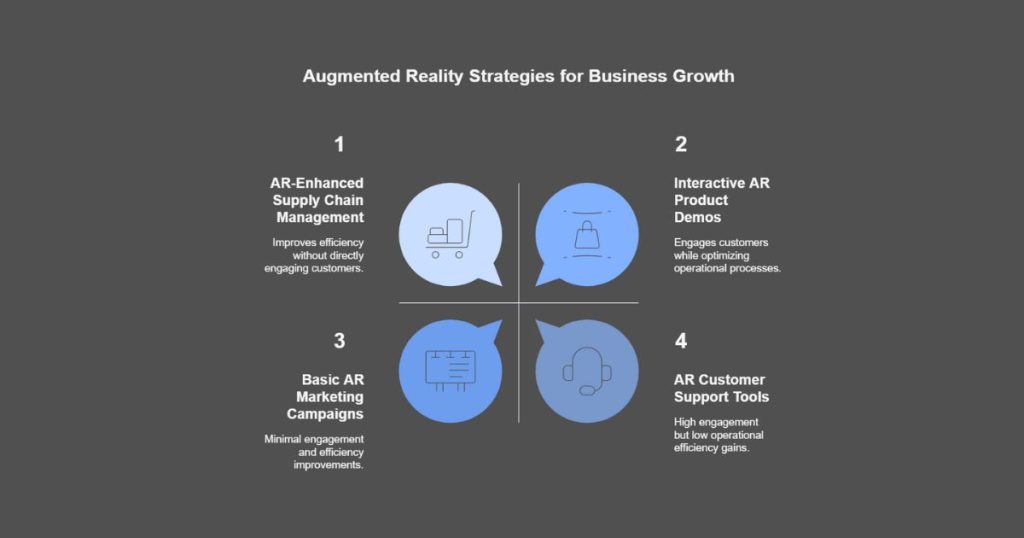
Introduction To Augmented Reality
Augmented Reality (AR) is an exciting technology. It blends the digital world with the real one. AR is changing how we see and interact with our surroundings. This section will provide an introduction to augmented reality. We will explore its definition and importance in modern business.
What Is Augmented Reality?
Augmented Reality (AR) is a technology. It overlays digital information on the real world. This can be through a smartphone, tablet, or special glasses. AR enhances our perception by adding images, sounds, and other data. Unlike Virtual Reality (VR), AR does not create a fully virtual environment. Instead, it adds to the existing world around us.
Importance In Modern Business
AR is valuable in many industries. Retailers use AR to create virtual fitting rooms. This helps customers see how clothes will look without trying them on. Real estate agents use AR to give virtual tours of properties. This saves time and makes the buying process easier.
In education, AR provides interactive learning experiences. Students can explore 3D models and visual aids. This makes learning more engaging and effective. In healthcare, AR assists doctors during surgeries. It provides real-time data and imaging. This improves accuracy and patient outcomes.
AR also benefits marketing and advertising. Brands create immersive experiences for customers. This increases engagement and brand loyalty. AR is not just a trend. It is becoming a key tool for businesses to connect with their audience.
Enhancing Customer Experience
Augmented Reality (AR) is transforming customer experiences in retail. It allows customers to interact with products in new ways. Enhancing customer experience through AR can boost engagement and sales.
Interactive Product Demos
Interactive product demos are a powerful AR tool. They let customers explore features and benefits. This hands-on experience can increase interest and trust. For example, customers can see how a gadget works before buying. This reduces doubts and improves satisfaction. Interactive demos make learning about products fun and engaging.
Virtual Try-ons
Virtual try-ons are a game-changer in fashion and beauty. Customers can see how clothes or makeup look on them. They do this without physically trying them on. This is especially useful for online shopping. It removes the guesswork and enhances confidence in purchases. Virtual try-ons can also reduce returns. They offer a personalized shopping experience that feels real and exciting.
Revolutionizing Retail Space
Augmented reality transforms retail by allowing customers to visualize products in their space. This technology enhances shopping experiences and boosts engagement.
Revolutionizing Retail Space
Augmented Reality (AR) is transforming how we shop. Imagine walking into a store and seeing products virtually appear in front of you. Or using your phone to navigate a store more efficiently. These AR innovations are changing the retail experience, making it more interactive and convenient. Let’s dive into some practical AR ideas that are revolutionizing retail space.
AR Shopping Apps
AR shopping apps are game changers. They allow you to try on clothes, shoes, or even makeup virtually. This way, you can see how items look on you before making a purchase.
I once used an AR app to visualize how a new sofa would fit in my living room. It saved me from the hassle of returning a bulky item. You can do the same for furniture, decor, and other large items.
These apps are perfect for online shopping. They reduce the uncertainty of buying items without seeing them in person. Wouldn’t it be amazing to know exactly what you’re getting before you click “buy”?
In-store Navigation
Navigating large stores can be overwhelming. AR can help with that too. In-store navigation apps use AR to guide you through the aisles.
Imagine holding up your phone and seeing a virtual path leading you to the exact product you need. No more wandering around aimlessly.
I’ve seen stores use AR to highlight special promotions and discounts as you walk by. It’s like having a personal shopping assistant in your pocket.
With AR, finding what you need becomes a breeze. It saves time and enhances your shopping experience. Wouldn’t you prefer a shopping trip that is efficient and stress-free?
Incorporate these AR ideas into your retail strategy and watch customer satisfaction soar. What AR innovation would you love to see in your favorite store?
Training And Development
Augmented Reality (AR) is transforming training and development. It offers interactive and immersive experiences. AR makes learning more engaging and efficient. Let’s explore some exciting AR ideas for training and development.
Employee Training Simulations
AR can create realistic training simulations for employees. It helps them practice in a safe environment. For example, retail employees can learn to handle customer interactions. Medical staff can practice emergency procedures without risk. AR simulations enhance skills through hands-on experiences.
Skill Development Programs
AR can support various skill development programs. It provides visual and interactive lessons. For instance, workers can learn complex machinery operations. Students can explore virtual labs for science experiments. AR helps in understanding and retaining information better.
Marketing And Advertising
Augmented Reality (AR) is transforming the landscape of marketing and advertising. It offers brands unique ways to engage with their audience, making their campaigns more interactive and memorable. With AR, you can create immersive experiences that capture attention and drive action. Let’s dive into some innovative AR ideas that you can use in your marketing and advertising strategies.
AR Campaigns
AR campaigns are a great way to stand out in a crowded market. Imagine a world where your customers can interact with your product in their living room before making a purchase. This isn’t just a dream—it’s reality with AR.
For instance, IKEA’s AR app allows users to visualize furniture in their homes. They can see how a sofa looks in their living room, making the shopping experience more personalized and reducing the risk of returns.
Another exciting example is the Pokémon Go marketing campaigns. Brands partnered with the game to create AR experiences that drew players to specific locations. This not only increased foot traffic but also offered unique engagement opportunities.
Interactive Advertisements
Interactive advertisements are another brilliant use of AR. These ads are not just informative; they are engaging and fun. They invite users to interact, making the advertising experience more memorable.
Take Pepsi’s AR bus shelter ad, for example. Commuters were surprised with AR experiences while waiting for their bus. They saw UFOs, tigers, and robots, creating a buzz and making the brand unforgettable.
Try creating AR ads that allow users to explore your product’s features in 3D. This approach can be particularly effective for tech gadgets or beauty products. Users can see, touch, and even try your product virtually, making the ad experience richer and more convincing.
Have you ever thought about how AR could transform your marketing strategy? The possibilities are endless and the tools are more accessible than ever. Start experimenting with AR and see how it can elevate your brand’s presence.
Improving Collaboration
Augmented reality ideas can greatly improve collaboration by providing interactive 3D models. Teams can work together more efficiently, visualizing complex concepts in real-time.
Augmented Reality (AR) is transforming the way we collaborate by making interactions more dynamic and engaging. Whether you’re in the same room or miles apart, AR offers innovative solutions for enhancing teamwork. Let’s delve into two key areas where AR is making a significant impact: remote meetings and virtual prototyping.
Remote Meetings
Imagine attending a meeting with your team, even though everyone is in different parts of the world. AR can bring everyone together in a shared virtual space. You can see lifelike avatars of your colleagues, making the experience feel almost like an in-person meeting.
You can also interact with virtual objects. For instance, you could manipulate a 3D model of a new product right there in the virtual meeting room. This hands-on approach can help you and your team make decisions faster and more effectively.
What if you need to explain a complex idea? With AR, you can draw, annotate, and highlight important points directly on the virtual space. This visual aid can help ensure everyone understands the concept clearly.
Virtual Prototyping
Creating physical prototypes can be time-consuming and costly. AR allows you to create virtual prototypes quickly and easily. You can experiment with different designs and features without the need for physical materials.
Imagine being able to walk around a virtual prototype. You can inspect it from every angle, making it easier to identify potential issues. This could save you a lot of time and money in the development process.
You can also share your virtual prototypes with team members and stakeholders. They can view and interact with the model, providing valuable feedback. This collaborative approach can lead to better designs and faster product development.
How do you think AR could improve collaboration in your team? Give it a try and see how it transforms your workflow.
By embracing AR, you can make your collaboration more interactive, efficient, and enjoyable.
Boosting Sales And Conversion
In the digital age, Augmented Reality (AR) offers businesses a unique way to boost sales and conversion rates. AR technology can transform the shopping experience, making it more engaging and interactive. This can lead to higher customer satisfaction and increased sales. By integrating AR into your sales strategy, you can create memorable experiences that drive purchase decisions.
Ar Sales Tools
AR sales tools can help your team close deals faster. They offer a hands-on experience that can be more effective than traditional methods. Sales representatives can use AR to provide a virtual tour of products. This allows potential customers to see and interact with items as if they were physically present.
These tools can also streamline the sales process. For example, AR can display product information in real-time. This reduces the need for lengthy explanations and can answer customer questions instantly. It makes the sales interaction smoother and more efficient.
Enhanced Product Visualization
Enhanced product visualization is another powerful feature of AR. It allows customers to see products in their own environment. They can visualize how a piece of furniture fits in their living room. Or how a new paint color looks on their walls.
This visualization helps customers make informed decisions. It reduces uncertainty and increases confidence in their purchase. Customers are more likely to buy when they can see the product in a realistic setting. This leads to higher conversion rates and fewer returns.
Challenges And Considerations
Creating and implementing augmented reality (AR) ideas can be exciting. However, there are several challenges and considerations to keep in mind. These hurdles can affect the success and usability of your AR project.
Technical Barriers
Technical limitations are a significant challenge. AR requires advanced hardware and software capabilities. Not all devices support AR, which can limit your audience.
Developing AR applications demands specific skills. You need expertise in 3D modeling, programming, and user interface design. These skills are not always readily available, leading to potential delays.
Additionally, ensuring your AR content is seamless and glitch-free is crucial. Poor performance can frustrate users and tarnish your brand’s reputation.
Cost And Implementation
Implementing AR can be costly. High-quality AR experiences often require substantial investment in technology and talent. Budget constraints can be a significant barrier.
Beyond the initial setup, maintaining AR applications can also be expensive. Regular updates and bug fixes are necessary to keep the experience smooth and engaging. Consider how you will manage these ongoing costs.
Scalability is another factor. As your audience grows, your AR solutions must scale efficiently. This can involve additional costs and technical adjustments.
Have you considered these challenges in your AR project? Addressing these factors early can help ensure a successful and sustainable AR experience for your users.
Future Of Augmented Reality In Business
Augmented Reality (AR) is no longer just a futuristic concept; it’s a powerful tool reshaping the business landscape. Companies are leveraging AR to enhance customer experiences, streamline operations, and open new revenue streams. The future of AR in business promises even more exciting developments.
Emerging Trends
One trend is AR in retail. Businesses use AR to create virtual fitting rooms, allowing customers to try on clothes or accessories from the comfort of their homes. This not only enhances convenience but also reduces return rates.
Another trend is AR in training and development. Companies are deploying AR to provide immersive training experiences. Imagine learning to operate complex machinery through a virtual overlay, reducing the risk of errors and accidents.
AR is also making waves in marketing. Interactive AR ads are engaging customers in ways traditional ads can’t. These ads allow users to interact with products in a virtual space, making advertising more personal and effective.
Long-term Benefits
AR can significantly improve efficiency. For instance, in manufacturing, AR can guide workers through intricate assembly processes, reducing downtime and errors. This boosts productivity and saves costs.
Customer satisfaction is another long-term benefit. AR can provide real-time information and support. Picture a customer pointing their phone at a product and instantly getting detailed information, reviews, and usage instructions.
AR also fosters innovation. By integrating AR, businesses can stay ahead of the curve, attracting tech-savvy customers and talented employees. This positions companies as leaders in their industries.
Have you considered how AR could transform your business? The possibilities are endless. Start exploring AR solutions today to stay competitive and meet evolving customer expectations.
Frequently Asked Questions
What Are Some Examples Of Augmented Reality?
Some examples of augmented reality include Pokémon GO, Snapchat filters, IKEA Place app, and Google Lens. These applications blend digital elements with the real world for interactive experiences.
What Are The 3 Types Of Augmented Reality?
The 3 types of augmented reality are marker-based AR, markerless AR, and projection-based AR. Marker-based AR uses visual markers. Markerless AR relies on GPS, digital compass, or accelerometer. Projection-based AR projects light onto surfaces.
How To Make Augmented Reality Projects?
Start with AR development platforms like ARKit or ARCore. Use 3D modeling software for assets. Integrate using coding languages such as C# or Swift. Test thoroughly on various devices. Publish and update regularly.
How Is Ar Used In Daily Life?
AR is used in daily life for navigation, gaming, shopping, and education. It enhances real-world experiences through interactive digital overlays.
Conclusion
Augmented Reality holds many exciting possibilities. It can enhance education, gaming, and shopping. AR brings experiences to life in a new way. Businesses and developers have countless opportunities to explore. The future of AR looks bright and promising. Embrace these ideas and see the changes unfold.
Stay updated and curious about new AR innovations. It’s time to explore and enjoy the wonders of Augmented Reality.