
Understanding basic legal terms is crucial. They help us navigate legal documents and situations.
Legal language can be confusing for many. Yet, knowing some basic terms can make things easier. You don’t need a law degree to understand these terms. In this blog, we will break down some common legal terms. This will help you better understand legal documents and discussions.
Whether you are signing a contract or reading a legal notice, these terms will come in handy. Stay with us as we simplify the world of legal jargon. Your confidence in handling legal matters will grow. Let’s dive in and make legal language more accessible.
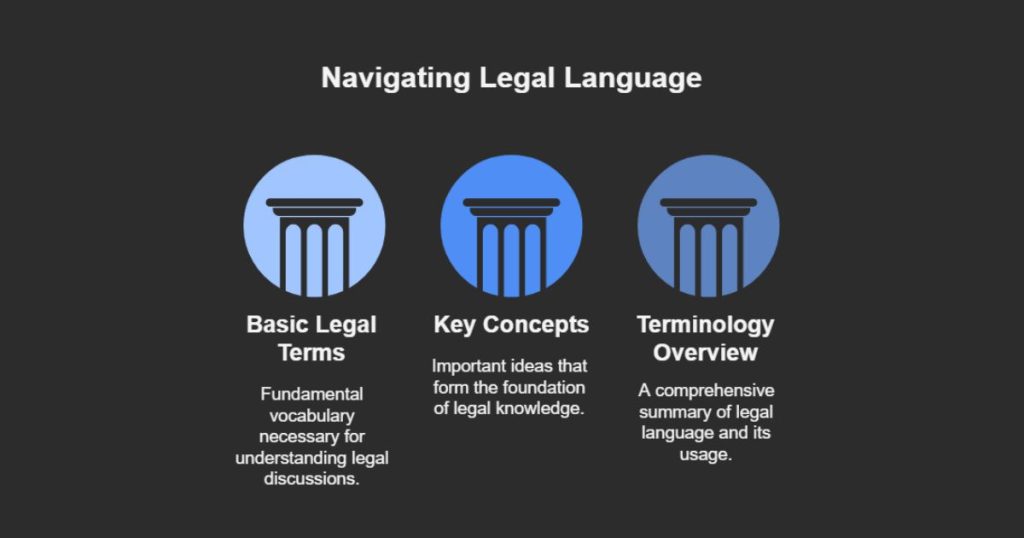
Introduction To Legal Terms
Understanding basic legal terms is essential for everyone. Legal terms often appear complex, but they are part of our everyday life. Whether dealing with a contract, a lawsuit, or just understanding your rights, knowing these terms can be very helpful.
Importance Of Legal Literacy
Legal literacy helps you understand the law. It empowers you to make informed decisions. Knowing your rights and duties is crucial. It can help you avoid legal problems. It also assists in protecting your interests. Being legally aware can save you from exploitation. It can also help you assist others in need.
Who Should Know Legal Terms
Everyone should know basic legal terms. Students need them for their education. Workers need to understand their rights at the workplace. Business owners should know them to run their business legally. Parents should be aware for the sake of their children. Even consumers benefit from understanding their legal rights. So, legal terms are for everyone.
Types Of Legal Terms
Understanding basic legal terms is essential for navigating legal documents and proceedings. There are different types of legal terms, each associated with specific areas of law. This section will cover two primary types: civil law terms and criminal law terms. Knowing these can help you better understand legal situations and communicate effectively with legal professionals.
Civil Law Terms
Civil law deals with disputes between individuals or organizations. Common terms include “plaintiff” and “defendant.” The plaintiff is the person who brings the case to court. The defendant is the person who defends against the complaint.
“Tort” is another important term. It refers to a wrongful act causing harm. Examples include negligence and defamation. “Contract” is also crucial in civil law. It is an agreement between parties that is enforceable by law.
“Damages” refer to monetary compensation awarded to the plaintiff. “Equity” involves fairness in legal proceedings. “Injunction” is a court order requiring someone to do or stop doing something. These terms are fundamental for understanding civil law.
Criminal Law Terms
Criminal law deals with actions deemed harmful to society. Key terms include “prosecutor” and “defendant.” The prosecutor represents the government and brings charges against the defendant. The defendant is the person accused of the crime.
“Felony” and “misdemeanor” are classifications of crimes. Felonies are serious crimes like murder. Misdemeanors are less serious, like petty theft. “Arraignment” is a court proceeding where charges are read to the defendant. “Bail” is money paid for temporary release while awaiting trial.
“Conviction” is a formal declaration of guilt. “Acquittal” means the defendant is found not guilty. “Sentence” is the punishment given by the court. Understanding these terms can help you grasp criminal law procedures.
Common Legal Terms
Understanding basic legal terms can feel like learning a new language. But don’t worry, you’re not alone. Many people find legal jargon confusing. In this section, we will break down some common legal terms that you might encounter. By the end, you’ll feel a bit more confident navigating legal conversations and documents.
Plaintiff And Defendant
In legal cases, you will often hear the terms plaintiff and defendant. The plaintiff is the person who brings the case to court. Think of them as the one making the complaint. For example, if your neighbor sues you over a property dispute, your neighbor is the plaintiff. On the flip side, the defendant is the person who must defend against the complaint. In our example, you would be the defendant. It’s a bit like a game of tag, but in a courtroom!
Jurisdiction And Venue
Two other terms you might encounter are jurisdiction and venue. These words might seem tricky at first, but they are quite simple once you get the hang of them.
Jurisdiction refers to the authority of a court to hear a case. Think of it like the court’s power. Different courts have jurisdiction over different types of cases. For example, a family court handles cases like divorce and child custody, while a criminal court deals with crimes.
Venue, on the other hand, refers to the location where the case is heard. It’s all about geography. For instance, if a crime happens in New York, the venue will likely be a court in New York. The venue ensures that the case is heard in a place that makes sense for everyone involved.
Here’s a simple table to summarize the difference:
| Term | Meaning |
|---|---|
| Jurisdiction | Authority of a court to hear a case |
| Venue | Location where the case is heard |
Learning these basic legal terms might take a bit of time, but with practice, you’ll become more comfortable. Next time you hear someone talk about a court case, you’ll understand more about what’s going on. You might even impress your friends with your new knowledge! Remember, everyone starts somewhere, and you’re doing great just by being here and learning. Keep it up!
Contracts And Agreements
Contracts and agreements are a fundamental part of everyday business and personal transactions. They are binding arrangements between two or more parties that outline the terms of a relationship or deal. Understanding the basics of contracts and agreements can help you navigate these legal documents with confidence. Below, we will delve into essential elements of a contract and types of contracts.
Essential Elements Of A Contract
A contract must have certain elements to be legally binding. These elements include offer, acceptance, consideration, and mutual consent. The offer is a proposal by one party to enter into an agreement. Acceptance is the agreement by the other party to the offer’s terms. Consideration refers to something of value exchanged between the parties. Mutual consent means all parties fully understand and agree to the contract’s terms.
Types Of Contracts
There are various types of contracts, each serving different purposes. Written contracts are documented agreements that provide clear terms. Oral contracts are verbal agreements and can be legally binding. Implied contracts are formed by actions or circumstances rather than written or spoken words. Express contracts explicitly state the terms in clear language. Each type of contract has its own advantages and challenges.
Court Procedures
Understanding court procedures is crucial for anyone involved in legal matters. This process can be complex, but breaking it down helps. Let’s explore the basics of filing a lawsuit and the trial process. These steps will guide you through the legal journey.
Filing A Lawsuit
Filing a lawsuit begins with a formal complaint. This document outlines your case. You must file this complaint with the court. The defendant gets served with a copy. They then have the chance to respond. This starts the legal process officially.
It’s essential to gather all relevant evidence. Proper documentation supports your claims. Legal procedures must be followed precisely. Missing a step can delay or dismiss your case.
The Trial Process
The trial process is where both sides present their arguments. It starts with opening statements. Each side outlines their case. Witnesses then give testimonies. They provide crucial evidence. Cross-examinations follow to challenge these testimonies.
The judge or jury listens to all evidence. They consider the facts carefully. Closing arguments summarize the key points. The decision or verdict comes next. It concludes the trial process. Understanding these steps helps in navigating the courtroom.
Legal Documentation
Legal documentation is crucial in protecting your rights and assets. Understanding basic legal documents ensures you make informed decisions. This section will explore some key legal documents like Wills and Trusts, and Power of Attorney. Knowing these terms can help you manage your legal affairs more effectively.
Wills And Trusts
A will is a legal document that outlines your wishes for your property after death. It names an executor to manage your estate and distribute assets. A trust, on the other hand, holds assets for beneficiaries. Trusts can help avoid probate and provide tax benefits. Both documents ensure your assets are distributed according to your wishes.
Power Of Attorney
A Power of Attorney (POA) grants someone authority to act on your behalf. This can include managing finances, signing documents, and making medical decisions. There are different types of POA, such as general, durable, and medical. Choosing a trusted person as your agent is essential. This document ensures someone can legally act for you if you become unable to do so.
Legal Representation
Understanding legal representation is crucial for anyone involved in legal matters. A lawyer helps you navigate complex legal systems. They provide advice, prepare documents, and represent you in court. Choosing the right lawyer is vital for your case’s success.
Choosing A Lawyer
Choosing a lawyer can seem daunting. Start by identifying your legal needs. Do you need a family lawyer or a criminal defense attorney? Research and ask for recommendations. Check their experience and track record. Ensure they are licensed and in good standing with the bar association. A good lawyer should be communicative and responsive.
Understanding Legal Fees
Legal fees vary based on the lawyer’s experience and the case’s complexity. Understand the fee structure before hiring a lawyer. Some charge hourly rates, while others may have flat fees. Discuss all costs upfront to avoid surprises. Ask if they offer payment plans. Transparency about fees helps build trust and ensures you can afford their services.
Resources For Learning
Understanding basic legal terms is crucial for anyone navigating the legal system. Whether you are a student, professional, or just a curious individual, knowing the right resources can help. Let’s explore some valuable resources for learning legal terms.
Online Legal Dictionaries
Online legal dictionaries are essential tools for anyone studying law. They offer easy access to legal definitions and terms. Websites like Nolo and Cornell Law School provide user-friendly legal dictionaries. These platforms allow you to search for terms and understand their meanings quickly. They are perfect for students and professionals alike.
Legal Aid Services
Legal aid services offer assistance to those who cannot afford legal representation. These services often provide resources for learning legal terms. Many organizations have websites with free educational materials. They aim to help individuals understand their legal rights and responsibilities. Legal aid services are valuable for those seeking legal knowledge.
Frequently Asked Questions
What Are Some Basic Legal Terms?
Some basic legal terms include plaintiff, defendant, litigation, tort, contract, jurisdiction, appeal, deposition, subpoena, and verdict.
What Are Common Phrases Lawyers Say?
Common phrases lawyers say include “objection,” “sustained,” “overruled,” “burden of proof,” “due diligence,” “pro bono,” “motion granted,” “case dismissed,” and “I rest my case. “
What Are 3 Words For Law?
Three words for law are legislation, regulation, and statute. These terms refer to legal rules governing society.
What Is Common Law In Simple Terms?
Common law is a legal system based on court decisions and precedents rather than written laws. Judges interpret and apply these rulings.
Conclusion
Understanding basic legal terms is essential for everyone. It helps in everyday life. Clear knowledge of these terms can prevent misunderstandings. It builds confidence when dealing with legal matters. Always seek advice from a legal professional when needed. Legal terms may seem complex, but they are manageable.
Keep learning and stay informed. This knowledge will serve you well.