
Investing in a business can be a smart move. It can generate significant returns.
Business investment involves putting money into a company. This could be your own business or someone else’s. The goal is to see that money grow over time. Many factors affect this growth, like market trends and business strategies. Understanding these factors can help you make better investment choices.
Whether you’re new to investing or have some experience, knowing the basics is essential. This blog will guide you through the essentials of business investment. You’ll learn what to consider before investing and how to maximize your returns. Stay tuned to discover valuable insights that could boost your financial future.
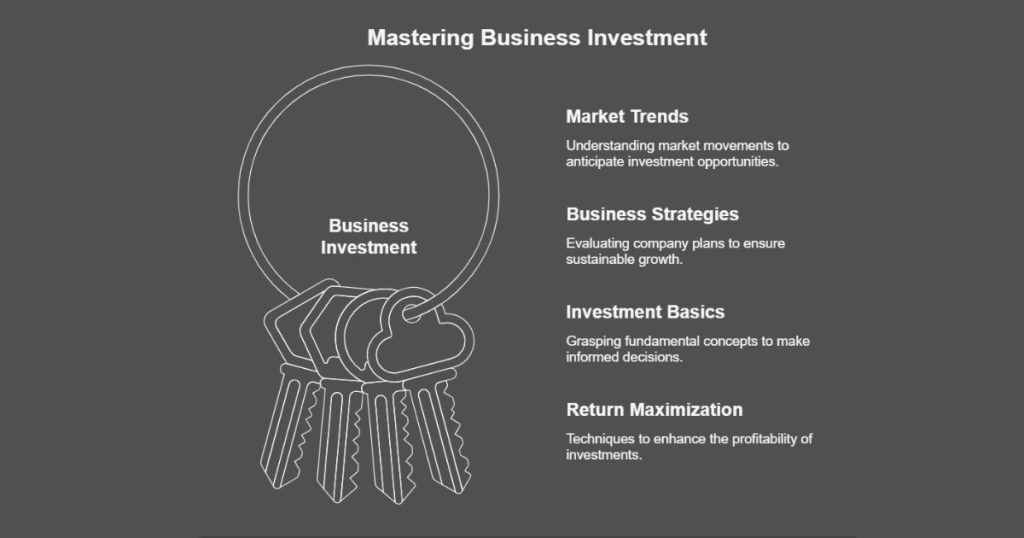
Navigating Market Trends
Understanding market trends is crucial for smart business investments. It helps identify growth opportunities and minimize risks. Stay informed to make strategic decisions.
Navigating market trends is crucial for successful business investments. Understanding these trends allows investors to make informed decisions. It helps to identify opportunities and mitigate risks. Let’s explore some essential factors to consider.
Identifying Growth Sectors
Identifying growth sectors is vital. These sectors show potential for significant returns. Technology often leads the way. Innovations in AI, robotics, and clean energy drive growth. Health care is another promising sector. Aging populations and medical advancements create demand. Consumer goods also offer opportunities. People always need essentials, even during downturns.
Study market reports and industry analyses. Keep an eye on emerging markets. They often show rapid growth. Attend conferences and network with experts. Insights from industry leaders are invaluable. Use data analytics to spot trends. This helps in making timely investments.
Impact Of Global Events
Global events shape market trends. Economic shifts, political changes, and natural disasters impact investments. For example, a pandemic can boost the health care sector. It can also hurt travel and hospitality industries. Trade policies affect international markets. Tariffs can change the cost of imports and exports.
Stay informed about global news. Understand how events affect different sectors. Diversify your investments to manage risks. Consult with financial advisors. They can offer expert guidance. Use historical data to predict possible outcomes. This can aid in planning your investment strategy.
Navigating market trends requires vigilance and adaptability. Stay informed and be proactive. This will help you make smart investment choices.
Diversification Techniques
Diversification Techniques are essential for any investor. They help reduce risk and improve potential rewards. By spreading investments across various assets, investors can create a more balanced portfolio. This approach minimizes the impact of a poor-performing investment.
Balancing Risk And Reward
Balancing risk and reward is crucial in diversification. It involves mixing high-risk and low-risk investments. This way, losses in one area can be offset by gains in another.
Consider the following strategies to balance risk and reward:
- Invest in both stocks and bonds.
- Allocate funds to different industries.
- Diversify across geographical regions.
Exploring Asset Classes
Exploring various asset classes is another effective diversification technique. Each asset class has unique characteristics and risks. Combining them can lead to a more resilient portfolio.
Here are some common asset classes to consider:
| Asset Class | Description |
|---|---|
| Stocks | Shares in companies, offering growth potential. |
| Bonds | Fixed income securities, providing stability. |
| Real Estate | Property investments, offering income and appreciation. |
| Commodities | Physical goods like gold and oil, often a hedge against inflation. |
Diversifying across these asset classes can protect your investment and help achieve financial goals. Use these techniques to build a robust and diversified portfolio.
Technological Investments
Technological investments are crucial for modern businesses. Investing in technology can improve efficiency and drive growth. With rapid advancements, staying updated is essential. Let’s explore some key areas.
Emerging Tech Opportunities
New technologies are emerging every day. Blockchain, 5G, and Internet of Things (IoT) are reshaping industries. These technologies offer unique opportunities for businesses. They enhance data security, connectivity, and efficiency. Businesses must explore these tech trends. Adopting new tech can provide a competitive edge.
Ai And Automation
AI and automation are transforming business operations. They help in reducing human error and increasing productivity. AI can analyze large data sets quickly. Automation streamlines repetitive tasks. This results in cost savings and improved accuracy. Investing in AI and automation is a smart move. It prepares businesses for the future. It enhances customer experience and operational efficiency.
Sustainable Investments
Sustainable Investments are essential for a better future. These investments focus on projects that benefit the environment and society. They aim to provide long-term returns while supporting ethical practices.
Green Energy Projects
Investing in green energy projects is crucial for reducing carbon emissions. These projects include:
- Solar power
- Wind energy
- Hydropower
Solar power harnesses the sun’s energy to generate electricity. Wind energy captures wind using turbines. Hydropower uses water flow to produce power. All these projects aim to reduce reliance on fossil fuels.
Investors can benefit from government incentives. These incentives encourage the adoption of renewable energy sources. They also contribute to environmental conservation.
Socially Responsible Investing
Socially responsible investing focuses on companies with ethical practices. These companies prioritize:
- Fair labor practices
- Environmental protection
- Community development
Investors seek businesses that avoid harmful activities. These activities include pollution, child labor, and unfair wages. By investing in ethical companies, investors promote positive social change.
Socially responsible investing also supports diversity and inclusion. Companies with diverse workforces often perform better. They are more innovative and adaptable to market changes.
Overall, sustainable investments are good for the planet and society. They offer financial returns while promoting ethical practices. Investing in green energy and socially responsible companies supports a brighter future.
Real Estate Ventures
Investing in real estate can be a profitable venture. It offers various opportunities for growth and income. Whether you invest in commercial or residential properties, understanding the market is crucial. Let’s explore some key aspects of real estate ventures.
Commercial Vs. Residential
Commercial real estate includes properties like offices, shops, and warehouses. These properties are used for business purposes. They tend to have higher rental yields. But, they also come with higher risks.
Residential real estate, on the other hand, includes homes and apartments. These properties are used for living purposes. They offer more stability and lower risks. But, rental yields are usually lower compared to commercial properties.
Choosing between commercial and residential properties depends on your investment goals. Do you prefer higher returns with higher risks? Or, do you prefer stability with steady income?
Location Analysis
Location plays a crucial role in real estate investment. A prime location can significantly increase the value of your property. Here are some factors to consider:
- Accessibility: Is the property easily accessible by road or public transport?
- Amenities: Are there schools, hospitals, and shopping centers nearby?
- Safety: Is the area safe and well-maintained?
- Future Development: Are there any upcoming projects or developments in the area?
Conduct thorough research on the location. Look at historical data and future growth prospects. Investing in the right location can make a significant difference in your returns.
Cryptocurrency Strategies
Cryptocurrencies have gained immense popularity as a new investment avenue. Understanding the right strategies can help you navigate this dynamic market. This section will explore key strategies for investing in cryptocurrencies, focusing on market volatility and long-term potential.
Market Volatility
The cryptocurrency market is known for its high volatility. Prices can change rapidly within a short period. To manage this, consider:
- Diversification: Spread investments across different cryptocurrencies.
- Stop-Loss Orders: Set limits to minimize losses.
- Regular Monitoring: Keep track of market trends and news.
- Risk Tolerance: Assess how much risk you can handle.
These strategies can help mitigate the effects of sudden market changes, protecting your investments.
Long-term Potential
Investing in cryptocurrencies with a long-term perspective can be beneficial. Consider the following points:
- Research: Study the technology and team behind each cryptocurrency.
- Adoption Rate: Look at how widely the cryptocurrency is used.
- Market Cap: Higher market cap often indicates stability.
- Future Prospects: Consider potential future developments and partnerships.
Focusing on these factors can help identify cryptocurrencies with strong long-term potential. Investing for the long term can often yield better returns, as it allows for the market to mature.
Stock Market Insights
Understanding the stock market is key to making smart business investments. The stock market offers various opportunities for different types of investors. Knowing the difference between blue-chip stocks and growth stocks can help in making informed decisions.
Blue-chip Stocks
Blue-chip stocks are shares in large, well-established companies. These companies have a history of reliable performance. They often pay regular dividends to shareholders. Examples include companies like Apple, Microsoft, and Coca-Cola. Investing in blue-chip stocks can be less risky. They tend to be stable and have a solid reputation. These stocks are ideal for long-term investments. They offer steady growth and lower volatility.
Growth Stocks
Growth stocks are shares in companies expected to grow at an above-average rate. These companies usually do not pay dividends. Instead, they reinvest earnings to fuel further growth. Examples include companies like Amazon, Tesla, and Netflix. Investing in growth stocks can be risky. They have the potential for high returns but also high volatility. These stocks are suitable for investors willing to take more risks. They can provide significant gains over time if the company succeeds.
Risk Management
Investing in any business involves risks. Effective risk management helps you protect your investments. It ensures stability and growth. Let’s explore some essential techniques.
Hedging Techniques
Hedging is like insurance for your investments. It reduces the impact of market fluctuations. Common hedging techniques include:
- Options Contracts: These give the right to buy or sell assets at a fixed price.
- Futures Contracts: These obligate the purchase or sale of assets at a set price in the future.
- Short Selling: This involves selling an asset you don’t own, betting the price will drop.
These techniques help balance your portfolio. They provide security against unexpected market changes.
Insurance Options
Insurance can safeguard your business. It covers losses from unforeseen events. Key insurance types include:
| Insurance Type | Coverage |
|---|---|
| Property Insurance | Protects physical assets like buildings and equipment. |
| Liability Insurance | Protects against legal claims and damages. |
| Business Interruption Insurance | Covers loss of income during disruptions. |
Choosing the right insurance is crucial. It minimizes potential financial setbacks.
Financial Planning
Financial planning is the foundation of any successful business investment strategy. It involves analyzing your current financial situation, setting clear goals, and creating a budget that supports your investment objectives. Effective financial planning ensures that your business can grow sustainably while managing risks and maximizing returns.
Setting Investment Goals
Setting investment goals is essential for a clear financial roadmap. Start by identifying what you want to achieve with your investments. Consider the following steps:
- Define short-term and long-term objectives
- Determine your risk tolerance
- Estimate the expected return on investment (ROI)
- Set a timeline for each goal
For example, a short-term goal might be to increase cash flow within six months. A long-term goal could be to expand operations in five years. Clearly defined goals help you stay focused and make informed decisions.
Budget Allocation
Budget allocation involves distributing your available funds across different investment opportunities. A well-planned budget ensures that resources are used effectively. Consider these tips:
- Create a detailed budget plan
- Prioritize investments based on potential returns
- Allocate funds for emergency reserves
- Regularly review and adjust your budget
Here’s a simple budget allocation example:
| Investment Category | Percentage of Budget |
|---|---|
| Stocks | 40% |
| Bonds | 30% |
| Real Estate | 20% |
| Emergency Fund | 10% |
This table shows a sample budget allocation. Adjust it according to your specific goals and risk tolerance.
Frequently Asked Questions
What Is Business Investment?
Business investment involves allocating resources to grow a business. This includes buying assets, expanding operations, or investing in new ventures.
Why Is Business Investment Important?
Business investment is crucial for growth, innovation, and staying competitive. It helps businesses increase their market share and profitability.
How To Start Investing In A Business?
Start by researching potential opportunities. Analyze financial statements, market trends, and consult with financial advisors. Make informed decisions.
What Are The Risks Of Business Investment?
Business investment risks include market volatility, financial loss, and economic downturns. Proper research and risk management can help mitigate these risks.
Conclusion
Success in business investment requires smart decisions and patience. Research market trends regularly. Diversify your portfolio to reduce risks. Monitor investments to ensure growth. Stay informed on financial news for better strategies. Seek advice from experts when needed. Consistent effort brings steady returns.
Focus on long-term goals, not quick profits. Invest wisely and watch your business flourish.