
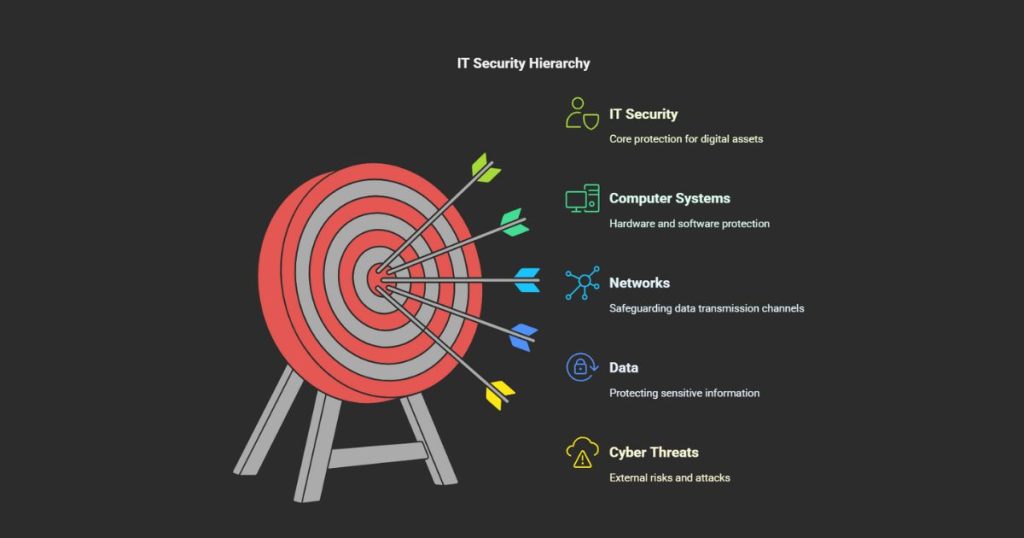
IT security protects digital information from threats. It safeguards data, systems, and networks.
In today’s digital age, information technology (IT) security is crucial. Every day, cyber threats evolve, becoming more sophisticated. Businesses and individuals must stay vigilant. IT security involves various practices and tools. These help to prevent unauthorized access and data breaches.
It’s not just about technology; it also includes policies and procedures. Understanding IT security can protect your data and privacy. In this blog post, we’ll explore the basics of IT security. We’ll discuss its importance, key components, and best practices. Stay with us to learn how to secure your digital world.
Introduction To It Security
In today’s digital age, protecting our information has never been more crucial. Imagine living in a house without locks; it would be an open invitation to intruders. Similarly, without IT security, our digital data is vulnerable to cyber-attacks. Let’s explore what IT security is and why it’s so important.
Importance Of It Security
IT security, or Information Technology security, is like a guardian for your digital world. It ensures that your data, whether personal or professional, is safe from unauthorized access. Here are a few reasons why it’s essential:
- Protection of Sensitive Data: IT security helps in safeguarding sensitive information like passwords, bank details, and personal data from hackers.
- Maintains Privacy: It ensures that your private information remains confidential and is not exposed to malicious entities.
- Prevents Data Breaches: By implementing robust security measures, you can prevent data breaches that can lead to financial losses and reputational damage.
- Ensures Business Continuity: IT security helps in maintaining the smooth functioning of businesses by preventing cyber-attacks that can disrupt operations.
Key Concepts
Understanding the key concepts of IT security is essential for implementing effective security measures. Here are some fundamental concepts:
| Concept | Description |
|---|---|
| Authentication | Verifying the identity of a user before granting access to data or systems. |
| Encryption | Converting data into a code to prevent unauthorized access. |
| Firewall | A security system that monitors and controls incoming and outgoing network traffic based on predetermined security rules. |
| Malware | Malicious software designed to harm, exploit, or otherwise compromise a computer system. |
| Phishing | A technique used to trick individuals into revealing sensitive information, such as passwords or credit card numbers. |
By understanding these concepts, you can better protect your digital environment. Remember, IT security is not just a one-time setup; it’s an ongoing process that requires constant vigilance and updates.
Stay tuned for more insights on how to safeguard your digital life. Got any questions? Don’t hesitate to drop a comment below!
Types Of It Security
Understanding the types of IT security is crucial in today’s digital world. Each type of IT security focuses on different aspects to protect systems and data. Let’s explore the primary types of IT security.
Network Security
Network security involves protecting the network infrastructure. It defends against unauthorized access, misuse, and attacks. Firewalls, encryption, and antivirus software are common tools. They help ensure the safety and integrity of the network.
Application Security
Application security focuses on keeping software applications safe. It involves identifying and fixing security vulnerabilities in apps. Techniques include code reviews, penetration testing, and secure coding practices. These steps help prevent cyber-attacks and data breaches.
Information Security
Information security aims to protect sensitive data. It ensures data confidentiality, integrity, and availability. Methods include data encryption, access controls, and regular audits. Proper information security practices help guard against data loss and theft.
Common It Security Threats
IT security is crucial in protecting digital information. Various threats target systems and data daily. Understanding these threats helps safeguard against potential attacks. In this section, we explore common IT security threats.
Malware
Malware is malicious software. It includes viruses, worms, and trojans. Malware can damage files, steal information, or take control of systems. It spreads through email attachments, downloads, or infected websites. Staying vigilant helps prevent malware attacks.
Phishing
Phishing involves tricking individuals into revealing sensitive information. Attackers use fake emails or websites. They often mimic legitimate organizations. Phishing aims to steal passwords, credit card numbers, or personal details. Recognizing and avoiding phishing attempts is essential.
Ransomware
Ransomware is a type of malware. It locks users out of their systems or data. Attackers demand a ransom to unlock it. Paying the ransom does not guarantee data recovery. Regular backups and secure practices can mitigate ransomware risks.
It Security Best Practices
IT security is crucial for protecting sensitive data and systems. Following best practices helps prevent unauthorized access and cyber threats. Implementing these strategies improves your overall security posture.
Regular Software Updates
Keep all software up-to-date. Regular updates fix security vulnerabilities. They often include patches that address known issues. Automated updates ensure you don’t miss critical patches. This practice minimizes risk and enhances protection.
Strong Password Policies
Enforce strong password policies. Require complex passwords with a mix of characters. Avoid using common words or phrases. Change passwords regularly to prevent unauthorized access. Use password managers to securely store and generate passwords.
Data Encryption
Encrypt sensitive data both in transit and at rest. Encryption protects data from unauthorized access. Use strong encryption algorithms. Regularly update encryption methods to keep data secure. Ensure all devices and storage systems support encryption.
Implementing It Security In Organizations
In today’s digital age, IT security is not just a luxury; it’s a necessity. Organizations, big or small, need to protect their data and systems from potential threats. Implementing IT security within an organization can seem daunting, but breaking it down into manageable steps can make it simpler. Let’s explore how you can implement effective IT security practices.
Risk Assessment
Before diving into security measures, it’s crucial to understand the risks. A risk assessment helps identify potential threats and vulnerabilities within your organization. Here’s how you can conduct a risk assessment:
- Identify assets: List all the valuable data, hardware, and software.
- Analyze threats: Determine what could harm these assets (e.g., malware, phishing).
- Evaluate vulnerabilities: Find weaknesses that could be exploited.
- Assess impact: Consider the potential damage of each threat.
- Prioritize risks: Focus on the most critical areas first.
A thorough risk assessment ensures you know where to focus your security efforts.
Security Policies
Once you understand the risks, the next step is to create security policies. These policies provide a framework for how your organization will protect its assets. Here’s what to include in your security policies:
- Access control: Define who can access what information and systems.
- Data protection: Outline how data will be stored, transmitted, and protected.
- Incident response: Create a plan for responding to security breaches.
- Regular audits: Schedule regular reviews of security measures.
Clear and well-defined security policies ensure everyone in the organization knows their role in protecting data and systems.
Employee Training
Even with the best policies and tools, human error can still pose a significant risk. This is where employee training comes in. Educating your staff on IT security is critical for minimizing risks. Here are some tips for effective training:
- Regular sessions: Schedule frequent training sessions to keep everyone updated.
- Interactive learning: Use hands-on activities and real-life scenarios.
- Clear communication: Keep language simple and instructions clear.
- Encourage questions: Foster an environment where employees feel comfortable asking questions.
Remember, a well-trained team is your first line of defense against cyber threats.
Implementing IT security in organizations is a continuous process. It requires ongoing risk assessment, clear policies, and regular employee training. By following these steps, you can protect your organization from potential threats and ensure a secure digital environment.
Tools And Technologies
When it comes to IT security, understanding the tools and technologies used is crucial. These tools help protect your data, prevent breaches, and keep your systems safe. Here, we’ll delve into some of the most essential tools in IT security. Let’s explore firewalls, antivirus software, and intrusion detection systems.
Firewalls
Think of a firewall as a security guard for your computer network. It monitors incoming and outgoing network traffic and decides whether to allow or block specific traffic based on a set of security rules. By doing so, it creates a barrier between your internal network and untrusted external networks, such as the internet.
Firewalls can be either hardware-based or software-based:
- Hardware Firewalls: These are physical devices that sit between your network and the internet. They are ideal for businesses with multiple devices needing protection.
- Software Firewalls: Installed on individual computers, these provide an extra layer of protection, especially for personal devices.
Imagine having a bouncer at a club. Only those on the guest list get in. Firewalls work similarly, ensuring only the right data gets through.
Antivirus Software
Antivirus software is like having a doctor for your computer. It scans your system for malicious software, such as viruses, worms, and trojans, and takes action to remove them.
Key features of antivirus software include:
- Real-Time Scanning: Constantly monitors your system for threats.
- Automatic Updates: Ensures the software is always up-to-date with the latest virus definitions.
- System Cleanup: Removes or quarantines malicious files.
Remember the last time you caught a cold? You probably took some medicine to get better. Antivirus software works the same way for your computer, healing it from infections.
Intrusion Detection Systems
Intrusion Detection Systems (IDS) are like having a surveillance camera for your network. They monitor network traffic for suspicious activity and alert you when something unusual is detected.
There are two main types of IDS:
- Network-Based IDS (NIDS): Monitors network traffic and protects the entire network.
- Host-Based IDS (HIDS): Installed on individual devices, it monitors and protects each device.
Imagine having a watchdog at home that barks whenever a stranger approaches. An IDS does just that for your network, keeping an eye out for intruders.
These tools and technologies are the backbone of IT security. They help protect your data and keep your systems safe from threats. By understanding and using them, you can safeguard your digital world effectively.
Future Trends In It Security
IT security is evolving rapidly, especially with the rise of cyber threats. To stay ahead, understanding future trends is crucial. Let’s dive into some exciting advancements that are shaping the future of IT security.
Artificial Intelligence
Artificial Intelligence (AI) is revolutionizing IT security. Imagine having a digital guard dog that never sleeps. AI can analyze vast amounts of data quickly, identifying threats before they cause harm. It’s like having a super-sleuth on your side.
Here are some ways AI is enhancing IT security:
- Threat Detection: AI can detect unusual patterns that may indicate a cyber attack.
- Automated Responses: AI can respond to threats faster than any human.
- Predictive Analysis: AI can predict potential vulnerabilities before they are exploited.
Blockchain
Blockchain isn’t just for cryptocurrency. It’s also a powerful tool for IT security. Think of it as an unbreakable digital ledger. Each transaction is recorded in a way that makes it nearly impossible to alter.
Benefits of Blockchain in IT security include:
- Data Integrity: Ensures data can’t be tampered with.
- Transparency: Every transaction is visible, reducing the risk of hidden attacks.
- Decentralization: Eliminates a single point of failure.
Quantum Computing
Quantum computing sounds like science fiction, but it’s becoming a reality. It’s like having a supercomputer on steroids. Quantum computers can process information at unimaginable speeds, which can be both a blessing and a curse for IT security.
Here’s how quantum computing impacts IT security:
- Encryption: Quantum computers can break traditional encryption methods, pushing us to develop quantum-resistant encryption.
- Data Processing: They can analyze and process data much faster, improving threat detection and response times.
In conclusion, the future of IT security is bright and full of innovation. By staying informed about these trends, we can better protect our digital world. Remember, in the world of IT security, staying ahead is the best defense.
Frequently Asked Questions
What Do You Mean By It Security?
IT security refers to protecting systems and data from unauthorized access, cyberattacks, and damage. It ensures information confidentiality, integrity, and availability.
What Are The Four Types Of It Security?
The four types of IT security are network security, information security, endpoint security, and cloud security. Network security protects against unauthorized access. Information security safeguards data integrity and privacy. Endpoint security secures individual devices. Cloud security ensures safe cloud computing services.
What Is The Role Of It Security?
IT security protects systems, networks, and data from cyber threats. It ensures confidentiality, integrity, and availability of information.
What Does An It Security Person Do?
An IT security person protects computer systems from cyber threats. They monitor networks, implement security measures, and respond to security breaches. They also conduct risk assessments, educate staff on security protocols, and ensure compliance with regulations.
Conclusion
IT security is crucial for protecting digital assets. It involves safeguarding data, networks, and devices. Implementing strong security measures is essential. Regular updates and monitoring can prevent breaches. Educating employees on security best practices is important. A robust IT security plan helps maintain trust.
Stay vigilant to protect sensitive information. Invest in security tools and policies. IT security is a continuous effort. Don’t overlook its importance in today’s digital age.